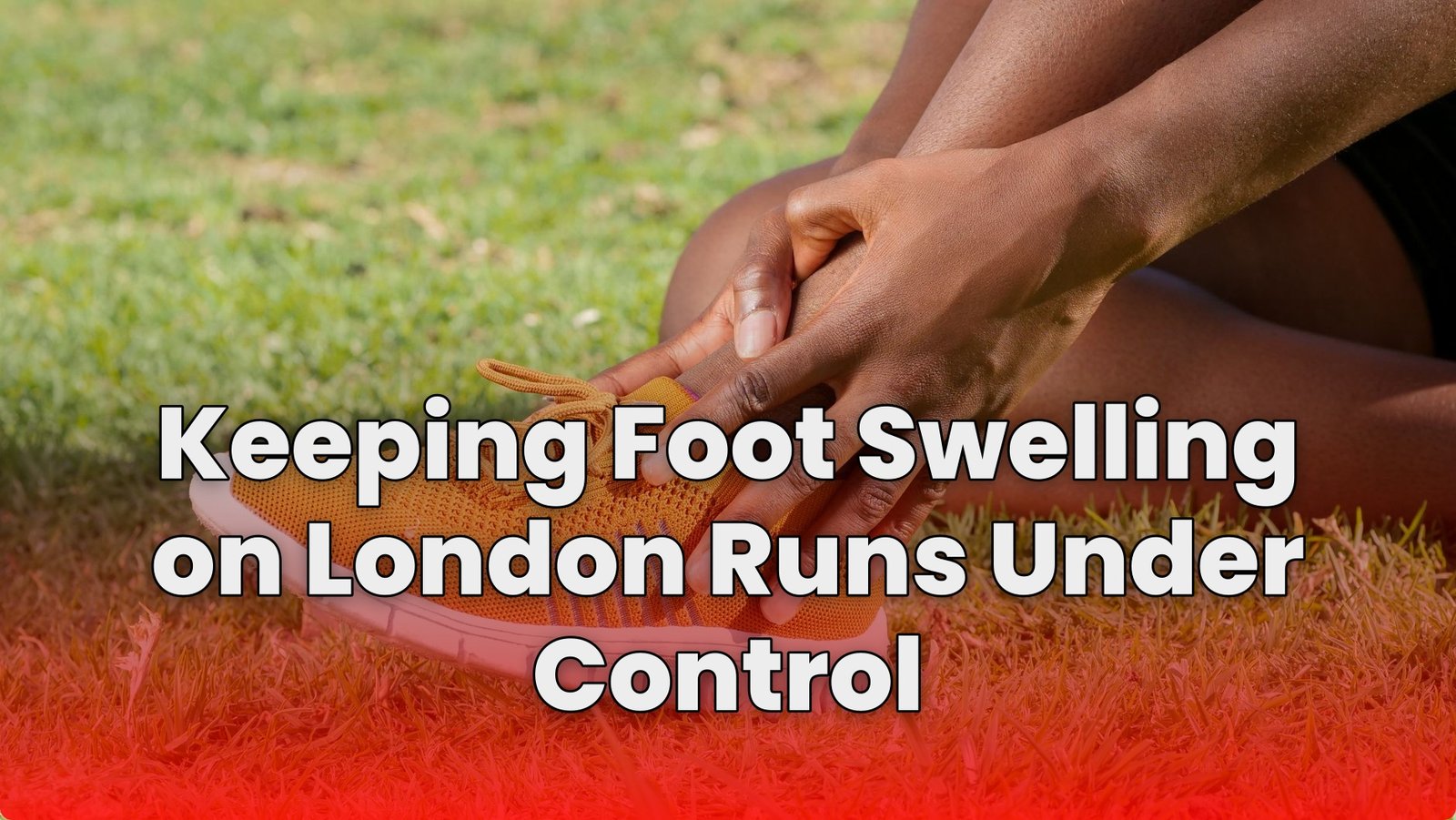
Foot swelling on long London runs is predictable, and ignoring it is what turns a manageable issue into a miserable one. You do not need to “run through it” when simple prevention can keep your ankles comfortable and your stride stable. This article argues that the best results come from stacking smart socks-and-compression habits with brief in-run recovery breaks, not from one-off fixes.
Start with properly fitted graduated compression socks that feel snug at the ankle and ease up the calf, because that design helps reduce fluid pooling and supports circulation over time. Choose moisture-wicking materials and give the socks a clean, dry base before you pull them on, then wear them consistently for the full run window. Add short breaks to reset your “leg pump,” including a few minutes of easy walking and gentle calf activation, especially after steady sections where swelling tends to creep in.
For recovery, elevate your feet above heart level and keep the return to normal gradual, since swelling usually improves faster when you control blood flow and reduce lingering pressure. If you notice redness, warmth, pain that is worsening, numbness or tingling, or toes that turn pale, blue, or cold, get urgent medical advice, because those signs can point beyond routine exertion. With the right compression support, moisture-friendly socks, and intentional breaks, you can make long London runs feel like miles, not an injury waiting to happen.
Swelling Is Not a Mystery, It’s a System Signal
If your feet balloon on long London runs, don’t treat it like bad luck. Foot swelling is usually your circulation and fluid balance reacting to load, heat, footwear pressure, and time. The longer you run without addressing those drivers, the more edema wins by default.
Managing foot swelling on long london runs, socks, compression, and breaks is not a niche obsession. It is basic self-management that keeps your stride efficient and your recovery predictable. The question is simple: will you plan for swelling, or will you hope it doesn’t happen again?
Yes, some swelling is normal. But normal does not mean ignorable. When swelling changes your gait, socks feel tight too soon, or you finish with heavy throbbing, you need an intervention strategy, not a shrug.
Compression Beats Guesswork for Long Runs
Compression works because it applies a graded pressure that helps reduce fluid leakage from capillaries and supports the “pump” of your lower leg. That means less fluid pooling in the foot and ankle during sustained effort, and fewer that-tight-later moments when you still have miles left.
But here’s the real argument: you can’t out-stretch swelling every time. You need a tool designed for the job. Proper compression worn consistently is one of the few interventions that targets the mechanism, not just the symptom.
Counterargument you might hear: “I tried compression once and it didn’t help.” Often that failure was fit, pressure level, or inconsistent use. Compression is not magic; it is engineering plus correct sizing.
Choose the Right Socks, Not Just the Right Size
Swelling control starts before compression. Socks affect moisture, friction, and how pressure spreads across your foot. If you run in cotton or overly thick fabric, you trap moisture and allow micro-slippage that can inflame tissue and worsen the feel of swelling.
Use moisture-wicking running socks with a stable knit. For many runners doing London routes, a knee-high compression sock paired with a supportive running sock liner is unnecessary and can bunch. Better to match the sock system to the pressure garment you choose.
On race-day style questions like “Should I go up a size in socks?” answer this instead: does the sock stay smooth at the forefoot and ankle during changing foot volume? If it creases, it will squeeze. And squeezing is exactly what you are trying to manage.
Fitting Matters More Than Brand
A compression garment that is “close enough” can still be wrong where it counts. The pressure gradient depends on accurate sizing around the ankle and calf. That is why the best results come from proper fitting, ideally measured professionally.
If you buy based only on shoe size, you gamble. Your ankle circumference can differ widely from the next runner’s, and swelling on long runs makes those differences matter more. The goal is snug support, not pain.
Look for garments that feel firm but tolerable during the first hour and remain comfortable through the last hour. If you feel numbness, tingling, or cold toes, the fit is not right for you.
How to Wear Compression Without Making It Worse
Compression should feel snug, not painfully tight. If you yank and tug hard enough to twist fabric, you can create pressure points that irritate skin and worsen swelling in the wrong place. Your routine matters.
Put them on first thing in the morning, before you get out of bed. This timing helps because your legs start less distended, and you can achieve the correct fit from the beginning. Wear them all day, then remove before sleep unless a clinician tells you otherwise.
- Dry the legs first, then smooth out wrinkles
- Avoid pulling on the top edge; use donning aids if needed
- Replace garments every 3 to 6 months because elasticity drops
Counterargument: “I’ll just keep adjusting while I run.” That’s exactly how you end up with hotspots. Put on compression correctly once, then focus on technique and breaks.
Match mmHg to Your Worst Mile
Compression levels are not interchangeable. Choosing the right mmHg is how you balance control with comfort. Think of it as a tool selection problem, not a personal preference problem.
Here is a practical mapping you can use when planning for London routes where pace, pavement, and duration can all increase fluid pooling.
| Compression Level | Use Case on Long Runs | Typical Target |
|---|---|---|
| 8–15 mmHg | Minor tiredness | Light swelling support |
| 15–20 mmHg | Travel or prevention | Minor edema reduction |
| 20–30 mmHg | More significant edema | Stronger circulation support |
| 30–40 mmHg | Medical-grade cases | Maximum edema management |
| Knee-high | Foot and ankle swelling | Support the calf pump |
For many runners, knee-high styles are sufficient for foot, ankle, and calf swelling. Still, match the pressure to your reality, not your hope. If you routinely finish with tight socks and heavy forefoot pressure, step up thoughtfully, then reassess after a few long runs.
Breaks Are Training for Your Circulation
Long runs without breaks can turn into a slow fluid accumulation experiment. You do not need long stoppages, but you do need periodic resets that give your leg pump a chance to work. If you never change the load conditions, you teach your body to pool.
Build in short breaks every so often, even if you keep a light pace between them. During breaks, do gentle ankle activation and light walking. That helps circulation move fluid back up rather than letting it collect in the lowest, most dependent parts of the foot.
Ask yourself: when you stop, does your foot feel less “stuck” afterward? If it doesn’t, your break strategy is too infrequent or too static. Motion beats stillness when swelling is the enemy.
Hydration and Electrolytes Reduce the Fluid Pressure
Dehydration can make blood thicker and heat handling worse, while overreliance on plain water without electrolytes can shift how your body manages fluid. On long London runs, the safest bet is consistent hydration with electrolytes when the effort is long enough.
If you’re running long or warm conditions, consider electrolytes rather than only water. The goal is to support circulation and thermoregulation so your vessels are not forced to compensate in ways that increase pooling.
Counterargument: “My swelling is too local to be hydration.” Local swelling can still be influenced by systemic fluid management. If you ignore the basics, you make every other strategy harder to succeed.
Footwear and Lacing Decide Whether Swelling Stays Local
Compression and breaks help, but shoes can sabotage you. A shoe that is perfect at mile 5 can become constricting at mile 18. When swelling pushes your foot forward or widens your forefoot, poor fit turns manageable edema into painful compression.
Choose well-fitting shoes with room for swelling. Some runners do better with a half-size up for long sessions. Use lacing that supports your ankle while preventing forefoot pressure points, and consider a wider toe box if you repeatedly feel tightness across the metatarsals.
Also check socks and laces for bulk at the tongue and instep. Anything that creates a ridge will feel sharper as your foot volume increases.
Recovery Moves the Water Back Up the Leg
After the run, do not just collapse. Recovery actions influence whether swelling lingers into the next day. Elevating your feet above heart level encourages fluid to move away from the foot and ankle.
Consider cold therapy soon after finishing. Short 15 to 20 minute sessions can reduce post-run inflammation and help you feel better faster, especially when swelling comes with heat and tenderness.
Then keep it gentle. Use ankle circles and light walking to restore range and help the calf pump clear residual fluid.
When to Skip Self-Help and Call a Clinician
Compression and smart breaks are not a substitute for medical care when symptoms signal risk. If swelling comes with new or worsening pain, numbness or tingling, or toes that turn pale, blue, or cold, seek urgent medical advice.
Also take seriously redness or warmth, or swelling that persists beyond about a day or so. Those patterns can suggest vascular, cardiac, or kidney issues, and certain medications can worsen fluid retention.
- New sharp pain with swelling
- Numbness, tingling, or color change in toes
- Redness or warmth lasting beyond a short window
Remote runners sometimes delay care because they assume it’s training stress. Training stress does not turn toes cold.
Stop Treating This Like a Mystery, Use a Repeatable Routine
You do not need a complicated system. You need a consistent one you can execute on the next London route. That means selecting the right socks, wearing the appropriate compression at the right time, and scheduling breaks so your circulation does not fall behind.
Make the routine measurable. Track when swelling starts, how your shoes feel at mile markers, and whether your feet look better by the next morning. If you get no improvement after a few sessions, adjust pressure level or consult a fitter.
If you want a reference point for safe compression practices, a careful compression stocking guidance can reinforce the basics you should never skip.
The uncomfortable truth is that ignoring swelling costs performance, comfort, and sometimes health. The better truth is that your next run can be quieter, lighter, and more predictable because you planned ahead.
How Can You Manage Foot Swelling on Long London Runs With Socks, Compression, and Breaks?
Do Graduated Compression Socks Help Reduce Foot Swelling on Long Runs?
Yes, graduated compression socks are designed to be tighter at the ankle and less tight up the leg, which can reduce fluid leakage, improve circulation, and lessen edema during long runs when they fit properly.
What Compression Level Should You Choose for Foot Swelling, Socks, and Recovery?
For minor tiredness or mild swelling, mild compression (about 8–15 mmHg) may be enough, while moderate (15–20 mmHg) can suit longer efforts and travel-related swelling; firmer ranges (20–30 mmHg or higher) are typically for more significant edema or specific medical needs and should be guided by a clinician.
How Should You Wear Compression Socks on Long London Runs and When Should You Take Breaks?
Put compression on first thing in the morning before you get out of bed, wear them consistently throughout the run, and remove them before sleep unless your clinician advises otherwise; use planned short breaks for gentle calf movement and stretching to support the “pump.”
How Do Hydration, Electrolytes, and Gentle Calf Breaks Reduce Edema on Run Day?
Staying hydrated and using electrolytes for longer sessions can help maintain fluid balance, while frequent short breaks with light walking and ankle circles or simple calf activation can improve circulation and reduce puffiness.
What Socks and Running Footwear Choices Help Prevent Foot Swelling During Long Runs?
Choose well-fitting shoes with enough space for swelling (often a half-size up), use lacing that supports the ankle without crushing the forefoot, consider wider toe boxes, and avoid cotton socks that trap moisture.
When Should Foot Swelling After a Long London Run Be Checked by a Doctor?
Seek urgent medical advice if swelling comes with new or worsening pain, numbness or tingling, toes that turn pale/blue or feel cold, redness or warmth, or if swelling persists beyond a day or so, since it may indicate an underlying vascular, cardiac, kidney, or medication-related issue.
Manage Swelling With Smart Compression and Real Breaks
For managing foot swelling on long London runs, socks, compression, and breaks are the key combination, not a single magic product: wear properly fitted graduated compression socks for consistent day-long support, pair them with shoes that leave room for swelling, and build in short, purposeful breaks plus gentle calf activation to restore the “pump” instead of grinding through. If the swelling is painful, one-sided, discolored, or comes with numbness or warmth that does not settle, treat it as a medical issue, not a training problem. Take control of your routine now, and your feet will keep up with your pace.

I am Ozan, a London-focused running writer and marathon enthusiast with a passion for helping people discover the city’s best races, running routes, walking trails, and fitness events. I research and write practical, up-to-date guides covering marathons, race preparation, training tips, running gear, and everything related to staying active in London.
My goal is to create reliable, easy-to-follow content that helps runners and walkers of all experience levels explore London with confidence, whether they’re preparing for their first 5K or their next marathon.