
Race-morning nutrition should feel boringly dependable, not like a gamble. For the London Marathon, the “best” breakfast is the one you can digest comfortably under pressure, because your stomach reacts to timing, fiber, fat, and nerves more than it reacts to fancy ideas.
To keep it reliable, build your breakfast around easy-to-digest carbs, moderate protein, and minimal fat and fiber, then eat it with enough time to settle, usually 2 to 4 hours before the start. If you cannot manage that window, scale the meal down and go simpler 1 to 2 hours pre-race, because a consistent pre-race routine beats last-minute experimentation. Many runners aim for roughly 1 to 2 g of carbs per kilogram of body weight, and popular dependable options include porridge or lower-fiber oats with honey or fruit, a bagel or toast with jam, or a warm rice porridge base with banana.
Keep reliability even higher by sticking to what you know works from training and by avoiding common stomach trouble on marathon morning, including high-fat or high-fiber loads, spicy foods, and sugar alcohol products that can cause GI issues. Hydrate early with water and consider an electrolyte drink with breakfast if you tolerate it well, so you start the race calm, fueled, and ready to absorb your in-race carbs instead of fighting digestion.
Start With Timing Not Hope
“Best pre-race breakfast choices for London Marathon morning” sound like a food question, but the real test is timing. Your stomach needs predictable work before the gun. If you eat too close to start time, you trade a reliable plan for unpredictable digestion.
General guidance is 2–4 hours before for a proper breakfast. If you cannot manage that, scale down the volume and choose lower-fiber, simpler carbs 1–2 hours pre-race. Ask yourself: do you want a heroic meal, or a predictable one?
Carb Targets That Actually Reduce GI Stress
Remote nutrition advice is useless if your gut is the bottleneck on race day. Carbohydrates are the point. Many runners aim for roughly 1–2 g carbs per kilogram (sometimes wider ranges are quoted), which helps you start stocked without overloading. For a 150 lb runner, that often lands in a practical band that many people can execute.
Some insist carbs are always “too much.” That view ignores the evidence and the mechanism. Carbs fuel the effort; the problem is the portion, not the category. If you want a concrete baseline, breakfast guidance is clear: match carbs to your tolerance and give yourself digestion time.
Keep Fat and Fiber Low for Moving Legs
Fat and fiber are not villains, but they are risky on race morning because they slow gastric emptying and can irritate the gut when intensity rises. That is why “healthy breakfast” and “race-ready breakfast” are not always the same thing.
So aim for low-to-moderate protein, minimal fat, and low-to-moderate fiber in the 2–4 hour window. In other words, you can eat food that is sensible, just not food that is heavy.
Reliability Beats Novelty Every Single Year
The best strategy is boring on purpose. If your breakfast works for you in training, it has a real advantage over something you “feel like trying” for the biggest day of the calendar.
People argue that the marathon “deserves” a special meal. But your gut does not care about sentiment. It cares about what you have proven you can digest at race intensity. Keep it reliable, keep it repeatable.
Porridge, Toast, Rice Porridge Use the Familiar Carbs
For London Marathon morning, pick carbs that are easy to digest and easy to portion. Reliable staples include porridge or oats (often instant or lower-fiber), bagel or toast with jam, and rice-based options like rice porridge. These foods deliver the kind of steady carbohydrate intake that supports the first hours without turning your stomach into a chemistry experiment.
If you do well with it, top with simple additions like honey, maple syrup, fruit, or raisins. If you do poorly with fiber, do not “upgrade” your bowl with bulky extras. Your goal is smooth start line function, not breakfast bragging rights.
Hydration and Electrolytes Without Overthinking
Hydration is part of your breakfast plan, not an afterthought. Drink water with breakfast, and consider an electrolyte drink if you sweat heavily or you know plain water leaves you flat.
Common practical guidance for many runners is roughly 2–3 cups in the 2–4 hours pre-race. The counterargument is always the same: “I’ll just drink more when I feel like it.” That sounds flexible, but it is how you end up either under-hydrated or chasing bathroom timing.

A Simple Menu That Scales From Big Appetite to None
When you keep your breakfast choices predictable, you can adjust portions without reinventing the plan. That is the real meaning of keeping it reliable. Below is a simple menu structure you can scale depending on appetite and digestion time.
| Breakfast Option | Typical Carbs (g) | Why It Works |
|---|---|---|
| Instant porridge or oats | 60-90 | Warm, easy carbs |
| Bagel with jam | 70-110 | Fast, familiar starch |
| Toast or English muffin | 50-80 | Simple, portionable |
| Rice porridge | 60-85 | Gentle on the gut |
| Banana smoothie or sports drink | 40-75 | Low-fiber option |
If you are eating 3–4 hours pre-start, you can usually tolerate a fuller portion. If you are closer to the start, shrink the carbs and switch to what digests fastest for you. Does your stomach trust solids today, or does it want a smoother ride?
What to Avoid When Your Stomach Lines Up Against You
Race morning is not the time for experimentation, spicy experiments, or “healthy” fiber bombs. Avoid high fat, high protein, and high fiber loads that feel comforting in normal life but can become a liability once effort ramps up.
Also skip items that are common stomach traps: spicy foods, and diet sugar-free products with sugar alcohols like xylitol or sorbitol, which can trigger GI issues for many runners. If you have known triggers like lactose intolerance or IBS-related foods, the best choice is the one that already respects your body.
If Breakfast Starts Too Late Use Very Simple Carbs
Timing failures happen. Flights run late, mornings run chaotic, and sometimes you simply cannot manage 3–4 hours. The answer is not to “try to make up for it.” The answer is to scale down and simplify.
When you can only eat 1–2 hours pre-race, keep the meal smaller and lower in fiber. Stick to basic carbs you know and accept that you will top up later during the race. Your stomach will thank you for reducing complexity when minutes are tight.
Choose One Starchy Base and Build On It
Most race-day stomach problems come from a complicated breakfast with multiple variables. A bagel plus jam is simpler than a “balanced” spread. Porridge plus syrup is simpler than oats plus heavy toppings. A single base helps you predict digestion, and prediction is the whole point.
Why gamble on two new foods when you can fix the equation? If you want a little variety, adjust toppings within the same category. Keep the main carb source consistent across training and race week.
Toppings That Add Safety Not Surprise
Toppings can help or hurt. If you tolerate it, small amounts of peanut butter can work for some runners, but it also adds fat, which is not what you want when your goal is fast, easy digestion. Fruit can be helpful when it is ripe and lower fiber, and syrup or honey can boost carb intake without adding bulk.
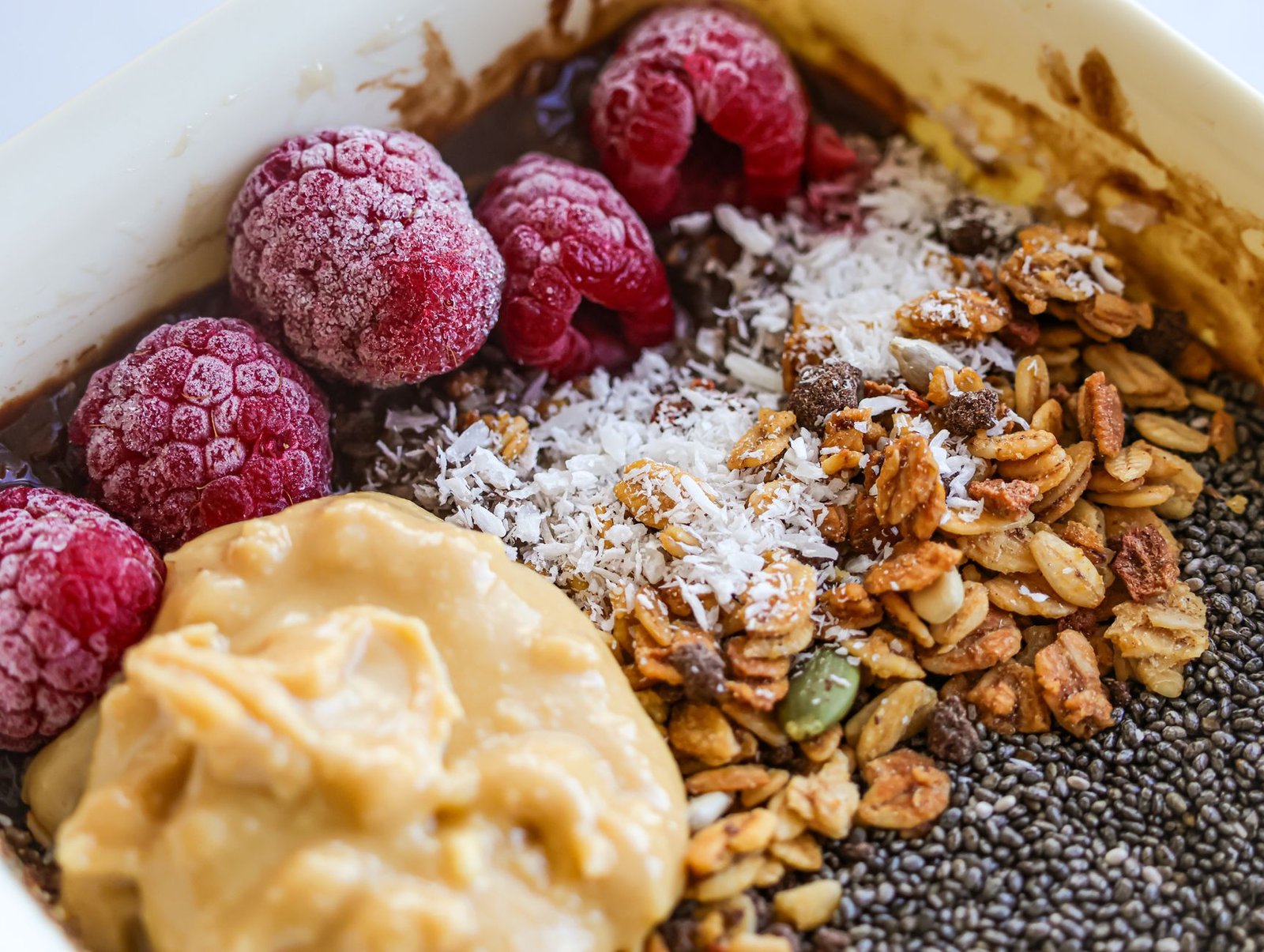
The editorial rule is simple: keep extras minimal. You are not preparing a gourmet breakfast; you are staging fuel that should move through your system smoothly.
Lunchbox Logistics Preempt Race-Day Mistakes
Reliable breakfast choices are not only about nutrition. They are about logistics. Can you get the same food you trained with, in the same portion, at the same time? If not, you are inviting stress, and stress is a GI accelerant.
Pack what you can, and reduce decision-making in the final hours. If you are using sports drinks or electrolyte drinks, have them ready. If you depend on a specific brand of instant oats, do not rely on “maybe there will be something similar.” What you do not control is where race morning goes wrong.
Fuel Later During the Race and Trust the Plan
Your breakfast does not carry the entire marathon. It is the starting line deposit. Later, you should top up carbs during the race in a way you practiced, commonly on the order of 30–60 g carbs per hour, with a final 20–30 g in the 30–60 minutes before start when that matches your routine.
The counterargument says, “I’ll just eat more at breakfast.” That is exactly how you increase GI risk. Trust the split. Keep breakfast light and predictable, then follow your practiced in-race fueling so your performance is driven by strategy, not stomach roulette.
What Are the Best Pre-Race Breakfast Choices for London Marathon Morning?
How Should You Time and Portion Carbs for a Reliable London Marathon Morning Breakfast?
For a reliable London Marathon morning, aim to eat 2–4 hours before the start, focusing on mostly carbohydrates with low-to-moderate protein and minimal fat and fiber, targeting roughly 1–2 g carbs per kilogram of body weight (or up to about 1–4 g/kg if you tolerate it).
Which Breakfast Foods Are Most Reliable for London Marathon Morning Energy?
Reliable choices include porridge/oats (prefer lower-fiber versions, topped with honey, maple syrup, fruit, or raisins), bagel or toast with jam, English muffin or waffles with bananas and maple syrup, rice porridge/rice-based options, and simple sports drinks or smoothies made with lower-fiber fruits like ripe bananas.
What Should You Avoid With Pre-Race Breakfast Choices for London Marathon Morning to Prevent GI Issues?
Avoid high-fat, high-protein, high-fiber, and spicy foods, and also avoid “diet” sugar-free items containing sugar alcohols like xylitol or sorbitol; choose foods you already know you tolerate well to reduce the risk of stomach upset.
Should You Add Electrolytes or Drinks to Your London Marathon Morning Breakfast?
Yes—have water with breakfast and consider an electrolyte drink, especially if you run in warm conditions, aiming roughly for 2–3 cups of fluids in the 2–4 hours before the race and keeping everything easy on your stomach.
What Pre-Race Breakfast Options Work If You Can’t Eat 3–4 Hours Before the London Marathon?
If timing is tight, scale down the breakfast and rely on very simple, lower-fiber carbs 1–2 hours pre-race (such as toast/jam, a banana, or a small bowl of oats), then increase fueling during the race with carbohydrate intake typically around 30–60 g per hour.
What Is a Reliable London Marathon Morning Breakfast Example for Different Runner Appetites?
For most runners, a reliable option is a bowl of lower-fiber porridge or oats with honey plus a banana, or a bagel/toast with jam; if nerves reduce appetite, a banana-based smoothie or sports drink with a small carbohydrate snack can be more reliable than a large solid meal.
Keep It Reliable On Marathon Morning
Best pre-race breakfast choices for london marathon morning, keep it reliable means sticking to an easy-to-digest, mostly carbohydrate meal you have practiced before, keeping fat and fiber low, and giving it enough time to settle, because race-day confidence comes from a plan that your stomach trusts. If timing is tight, scale the breakfast down and count on simple carbs later during the race, then start hydrated with water and a light electrolyte option. Your best advantage is not novelty, it is reliability.

I am Ozan, a London-focused running writer and marathon enthusiast with a passion for helping people discover the city’s best races, running routes, walking trails, and fitness events. I research and write practical, up-to-date guides covering marathons, race preparation, training tips, running gear, and everything related to staying active in London.
My goal is to create reliable, easy-to-follow content that helps runners and walkers of all experience levels explore London with confidence, whether they’re preparing for their first 5K or their next marathon.