Run-walk training can prepare you for London without making every session a test. Lengthen the running parts slowly, keep the effort controlled, and retain walk breaks if they help you cover the distance late in the race. The goal is a repeatable pattern that still works when fatigue builds.
Begin with short, easy run segments and change only one part of the training load at a time. Hold each change long enough to see how your breathing, legs, and recovery respond. The 8-hour race cutoff belongs in your pacing plan, not in every easy workout.
Key takeaways
- Walk breaks can stay in your London race plan if they help you cover the distance and protect your legs.
- When changing your run-to-walk ratio, keep weekly mileage unchanged until the new pattern settles.
- Persistent or worsening muscle pain, or knee and ankle pain that returns, means stop running and seek medical advice before resuming.
- Once distance-based intervals feel practical and controlled, you may switch from timed intervals; add faster work only when your endurance is stable.
Starting With a Comfortable Run-Walk Pattern
A practical beginner workout uses 1 minute of running followed by 3 minutes of walking, repeated five times for about 20 minutes. Do it two or three days a week, with at least one rest day between sessions at first.
The walk should feel like about 2 out of 10 for effort, while the run should feel like 3 or 4 out of 10. You should be able to speak in short sentences without fighting for air. Pace matters less than control, so use a slow jog if a faster one changes your breathing. The walk break is part of the workout: it lets you recover before the next segment and helps you finish without turning an easy session into a hard one.
Use these checks during each workout:
- You can speak a short sentence during the run.
- Your breathing starts to settle during the walk.
- Your legs feel worked but not unstable or sharply painful.
- You finish the final interval without sprinting to get it over with.
If a run leaves you gasping, stop the workout rather than setting a minimum recovery time. Seek medical care if your breathing is severe or does not settle.
The First Gradual Progression
Hold the beginner pattern for 3 to 4 weeks while the effort and breathing remain under control.
| Phase | Walk Time | Workout Length | Weekly Frequency |
|---|---|---|---|
| Starting pattern | 3 minutes | 20 minutes | 2-3 workouts |
| Shorter walk phase | 2 minutes | 20 minutes | 2-3 workouts |
| Longer single workout | 2 minutes | 30 minutes | 2-3 workouts |
| One-minute walk phase | 1 minute | 30 minutes | 2-3 workouts |
| Full weekly duration | 1 minute | 30 minutes | 3 workouts |
Stay with the shorter-walk phase for another 3 to 4 weeks before making one weekly session longer. Keep the other sessions at the earlier duration during that stage. After another 3 to 4 weeks, shorten the walk to 1 minute. Wait through a further 3 to 4 weeks before increasing all three weekly workouts to 30 minutes.

Running shoes beside a stopwatch and training schedule
Sleep, heat, hills, and a missed session can make a familiar pattern feel harder. When that happens, repeat the current stage instead of advancing because the calendar says it is time. Once all three sessions reach the longer workout, keep the pattern steady before adding more running.
Adding Run Time Without Losing Control
When the current pattern feels comfortable, keep the walk interval unchanged and add 1 minute to each run segment. A fixed recovery period makes it easier to tell whether the longer run, rather than a shorter walk, caused the extra strain.
A runner with an established run-walk pattern can use a smaller increase. Add 30 seconds to each run segment and leave the walk segment unchanged for 2 to 3 weeks before advancing. This suits someone who trains consistently but finds a full additional minute too demanding.
Progression can move through 2½ minutes running and 1 minute walking, then 3 minutes running and 1 minute walking, followed by 3½ minutes running and 1 minute walking. Keep the pattern unchanged through each holding period, even if the first few workouts feel easy. Tendons and joints may need more time than your breathing system, so cardiovascular comfort is not the only sign that you are ready.
Do not increase weekly mileage during the same week that you increase the run-to-walk ratio. Keep the route and total training load steady while the new ratio settles, then raise distance later as a separate change.
Breathing, Pain, and Other Signs to Hold Back
Normal effort makes your breathing faster but still controllable during the walk. Chest tightness, dizziness, gasping, or breathing that does not settle means you should stop rather than complete the planned repetitions. If symptoms are severe or persist, seek medical care.
Pain needs a different response from heavy breathing. Muscles that feel sore but ease as you warm up are not the same as sharp knee or ankle pain that changes your stride. Persistent or worsening muscle pain also calls for stopping and assessment, rather than running through it because the soreness seems familiar.
If knee or ankle pain appears during the transition, stop increasing the run time and return to the previous ratio only after the pain has settled. If pain persists, returns when you resume, remains during ordinary walking, worsens from workout to workout, or causes swelling, stop running and seek medical advice before trying again. When you do resume after medical advice, add only 15 to 20 seconds to each run segment every 2 to 3 weeks.

Runner walking during a structured track interval workout
The route and total training load should remain steady while a new ratio settles. That separation gives you a clearer indication of whether the running change caused trouble and prevents a distance increase from hiding the source.
When Run-Walk Becomes Continuous Easy Running
A useful readiness sign is the ability to run for 5 to 6 minutes at an easy effort, recover with a one-minute walk, and repeat the pattern without gasping or losing form. Once that feels controlled, try making one easy workout continuous. Keep the pace slower than the run segments if needed; you are testing steady effort, not proving that every walk break must disappear.
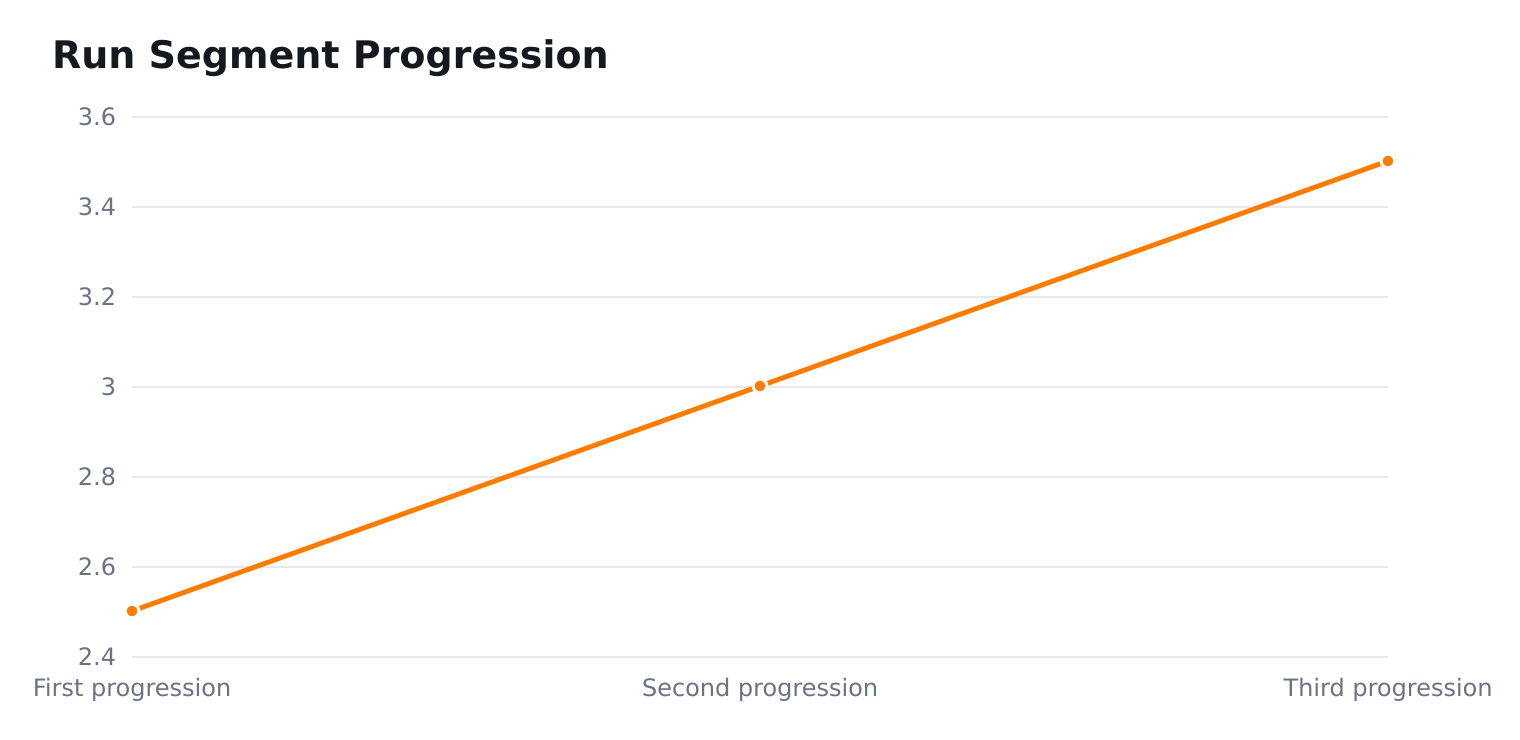
Run-segment lengths increase gradually while the walk segment stays fixed.
Walk breaks still have a place in longer training. Use them for comfort, take them at planned landmarks, or save them for the final part of a long run when fatigue makes your stride less reliable. Taking a planned break is easier to control than waiting until you are exhausted.
A transition from a pattern such as two minutes of running and one minute of walking to mostly continuous easy running commonly takes 8 to 12 weeks. Heat, hills, strength limitations, missed sessions, and pain can extend that period.

Person with knee pain in denim jeans.
For London preparation, continuous easy running is optional. Regular walk breaks can remain part of your race plan if they let you keep moving for the full distance and protect your legs.
Moving From Time-Based to Distance-Based Intervals
Timed intervals can give way to distance-based intervals once distance feels practical and controlled. Running 1 mile without a walk break is one possible point to make that change, not a requirement.
A sample distance pattern is running 0.75 mile and walking 0.25 mile. Keep the running easy and use the walking section to lower your breathing before the next running section. Repeat the pattern on longer outings rather than increasing speed at the same time.
Distance-based intervals help you plan around water stations, mile markers, or familiar sections of a route. They also make it easier to estimate how many walk breaks you may take during a marathon. Do not treat the distance as a reason to run faster.
Stay with distance-based intervals for several weeks before adding faster work. Limit faster sessions to once or twice a week, and keep the rest of your running easy. A short walk halfway through a repetition is an optional example for runners whose endurance is already stable.
A practical order is:
- Build easy distance with planned run-walk breaks.
- Hold that distance for several weeks.
- Add one faster session while keeping other runs easy.
- Add a second faster session only if your legs recover without pain.
Fast repetitions do not replace the long run or make up for a run-walk plan that starts too quickly.
London Marathon Time Limits and Run-Walk Planning
The TCS London Marathon has an 8-hour cutoff, measured from the final starter crossing the start line. That equals about 18 minutes 18 seconds per mile, but it is a race-time limit, not a training pace target.
Stops, crowded sections, toilets, water stations, hills, and slower final miles all use part of that window. A run-walk strategy that averages exactly the cutoff pace on paper leaves no useful margin on race day.
TCS London Marathon pacing groups may support planned run-walk strategies. Use that support alongside a plan that includes your walk breaks, rather than building the entire day around the last legal minute. Planned intervals need to leave room for aid stations and unavoidable delays.
Before race day, check three parts of your plan:
- Your planned average pace includes every walk break.
- Your long runs use the same run-walk ratio you expect to use in London.
- Your target finish leaves time for stops and late-race slowing.
If your planned intervals do not fit the available race window, do not solve the problem by suddenly running every segment faster. First reduce unnecessary stops, improve the consistency of your easy running, or revise the target finish. A pace group can help you hold a steady plan, but it cannot make an unsustainable ratio safe.

Marathon runners following a pace group with course signs
Practice the exact strategy you intend to use, including the length of your walk breaks and when they occur. On race day, start conservatively, take the first planned walk break before fatigue builds, and keep the early miles easy enough that the same pattern still works after the halfway point.
A Plan You Can Carry
A run-walk schedule works best when you can follow it without making decisions under fatigue. Write the exact sequence on a small card and tape it to your race bib before your next long outing.
Frequently Asked Questions
How should I cool down before stretching after a run-walk workout?
Walk for five minutes after the workout before doing your stretches. This gives your breathing and effort time to come down gradually, while the walking keeps you moving as your body shifts out of the running session.
Where can I use a longer run-walk pattern later in London training?
A later London training phase can use 15 minutes of running followed by 5 minutes of walking during long runs. Repeat that pattern at an easy, sustainable effort so the walk breaks remain useful as the distance grows.
When should I replace a run with another form of training or extra rest?
Replace the session with cross-training or take extra rest when injury or significant soreness makes running unsuitable. If conditions make running unsafe, do not try to preserve the workout by forcing the planned intervals.

I am Ozan, a London-focused running writer and marathon enthusiast with a passion for helping people discover the city’s best races, running routes, walking trails, and fitness events. I research and write practical, up-to-date guides covering marathons, race preparation, training tips, running gear, and everything related to staying active in London.
My goal is to create reliable, easy-to-follow content that helps runners and walkers of all experience levels explore London with confidence, whether they’re preparing for their first 5K or their next marathon.