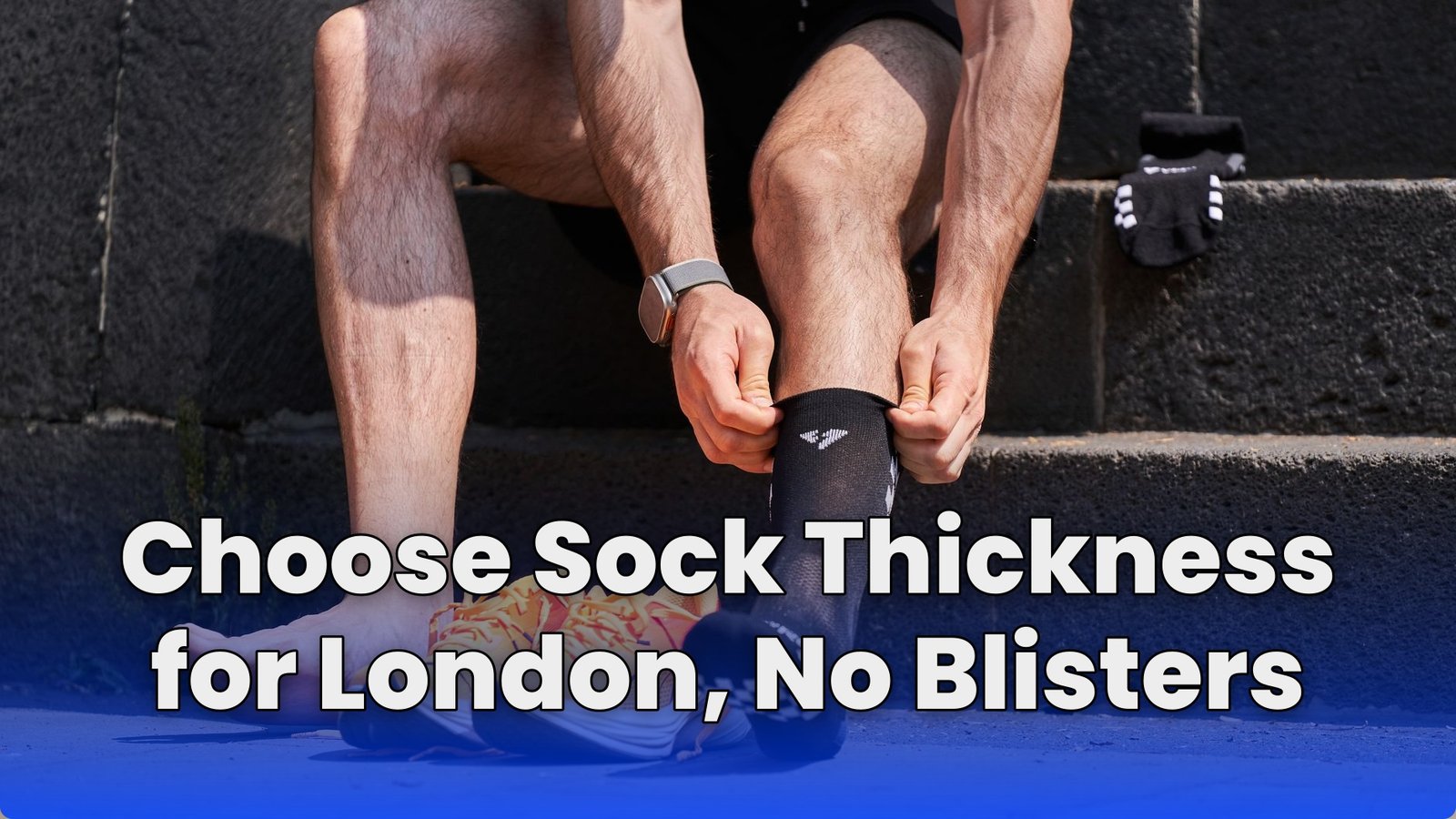
Blisters rarely come from your feet, they come from a mismatch between sock thickness and shoe fit. London’s weather flips fast, and your footwear turns that swing into sweat, slight swelling, and friction at the heel and toes. If the sock is too thick, it crowds the boot and creates pressure points; if it is too thin, your foot shifts and every step grinds skin against fabric.
Start with a midweight sock as your default, especially in cool, changeable conditions that London loves. Midweight fabric, often merino or a merino blend, balances warmth with cushioning, and it usually manages moisture better than lightweight options over a longer walk. Then adjust based on heat and boot volume: go lighter for hotter, short, well-ventilated walks, and go thicker only when your shoes have room to spare so your toes do not get compressed.
The easiest way to get this right is to choose thickness the way you will actually wear it: try socks on with the exact boots or trainers you plan to use, and pick the thickest option that still keeps toe room and heel hold. Look for reinforced heel and toe, a smooth toe seam, and cushioning where you feel pressure, while avoiding cotton that stays wet and prolongs friction. With the right thickness, your stride stays stable, moisture stays managed, and those “mystery” blisters stop showing up.
London Weather Means Your Socks Must Adapt
When you walk in London, you are not dressing for one temperature. You are dressing for a moving target: cool mornings, muggy afternoons, sudden drizzle, and damp ground that steals warmth. That is why how to choose sock thickness for london’s mixed weather, no blisters starts with flexibility, not a single “correct” weight.
Blisters do not care what the forecast promised. They care what your feet experienced for the next 30 minutes. If your sock thickness traps heat during a warm spell, your skin softens and friction gets worse. If your sock is too thin when conditions chill or soak, your foot slips, and pressure points multiply.
Fit Comes First Thick Socks Can Steal Toe Room
Thicker socks add volume, and volume changes fit. In tight boots, that extra padding can crush toes, restrict circulation, and create concentrated pressure where the boot presses. The result can look like “bad socks,” but it is really math: more thickness equals less free space.
So how do you choose? Pick the sock thickness that stays comfortable in the exact boots you will wear. Try the sock you plan to hike in, then test toe room with a small forward lean. If your toes brush the front, you already lost.
Blisters Start When Your Foot Slides Or Overheats
Blisters form when friction repeats across the same spots. That friction comes from two enemies: moisture and movement. Moisture softens skin. Movement shifts the sock, the boot liner, or the skin itself. Either way, the contact pattern becomes unstable.
People blame socks for blisters, then buy thicker socks to fix the problem. But thicker is not a cure if the real issue is slide. If your sock cannot hold your heel, a thicker fabric layer still lets your foot move. Control friction first by matching thickness to fit and cushion.
Blisters are earned by contact, not by weather reports.
Use London Temperatures to Set a Baseline
Start with a baseline that matches the day’s temperature trend, not the highest number you see on your phone. In mixed London conditions, you often need a middle layer of warmth and cushioning, because your body heats up during hills and cools down when the rain starts.
For most walkers, a midweight sock is the practical default because it balances warmth with enough structure to reduce micro-movement. Lightweight can work, but it asks more of your boot fit and your pace. Heavyweight is for clear cold stretches, because the extra bulk can become self-inflicted injury when boots run snug.
Hike Length and Terrain Decide Cushion Needs
Longer days turn small discomfort into major pain. The skin absorbs friction over time, and the foam in your sock gets compressed. If you go too thin for a long hike, you may feel fine for the first hour, then the pressure points arrive like a schedule.
Terrain matters because uneven ground increases foot motion. More steps on roots, gravel, and muddy climbs mean more potential for slip and rub. For longer routes or mixed terrain, choose a thickness that supports heel and toe cushioning without forcing your toes into a smaller box.
Yarn Weight Controls Bulk and Breathability
Sock thickness is not just “how tall.” It is how the yarn carries padding, airflow, and moisture. Yarn weight changes bulk, and bulk changes boot fit. That is why the best weight for your route is the one that protects your pressure points while still leaving space for circulation.
Before you buy, remember that the real decision is bulk, and sock weight tips can keep you from overthickening. If the sock makes the boot feel like it is closing in, reduce thickness or change the sock style.
- Midweight yarn often balances cushioning and airflow in changing temperatures.
- Heavyweight only makes sense when cold is sustained and boots have volume to spare.
Match Sock Height to Boot Volume With a Quick Check
Even the perfect sock material fails if the boot has the wrong volume. The test is simple: wear the sock you plan to hike in, then lace as you normally would and flex forward. If your toes tighten or your heel loses hold, you need a different thickness, not a different hope.
| Thickness Class | Approx Cushion (mm) | Fit Result |
|---|---|---|
| Lightweight | 1.5-2.5 | More toe room, less padding |
| Midweight | 3-4.5 | Balanced cushion and hold |
| Heavyweight | 5-6.5 | Higher risk of toe crowding |
| Trail Runner Fit Lite | 1-2 | Stable if heel hold stays firm |
| Cold Snap Backup | 3.5-5 | Warmer feel without full bulk |
For London’s mixed weather, this is the key idea: choose the thickest sock that still preserves toe room and heel grip. That single constraint prevents the two classic blister pathways, toe pressure from thick socks and heel slide from thin ones.
Merino and Blends Handle Sweat Without Guesswork
Wet feet turn blisters into inevitabilities. Merino wool and merino-synthetic blends handle sweat better than cotton because they regulate temperature and move moisture away from the skin. When you switch thickness, you should also consider how the sock manages moisture under changing conditions.
Merino often performs well in mixed London weather because it can stay comfortable when temperatures swing. If you sweat easily or expect repeated puddles, a blend that wicks plus cushions usually beats “warm and thick” alone.
Seams and Reinforcement Beat Marketing Every Time
The safest sock weight will still blister you if the construction targets the wrong pressure points. Look for a smooth toe seam, reinforced heel and toe, and cushioning in the zones that rub in your boots. Those features reduce hot spots regardless of whether the weather is mild or cold.
And skip cotton. Cotton holds moisture, dries slowly, and encourages the exact skin-softening that makes friction cut deeper. If your plan includes wet cobbles or long grass, prioritize moisture-wicking over “cozy” fabric.

Test With the Exact Boots and the Exact Socks
The strongest rule is also the simplest: fit testing beats theory. Sock thickness is only relevant inside a specific boot model, with your lacing habits, your foot shape, and your stride. Two people can wear the same sock and get opposite results because their boots create different pressure maps.
Try the socks on with the exact boots you will hike in. Walk around for a few minutes, then check heel hold and toe comfort. If you feel tightness, downshift thickness or try a sock with lower bulk. If your foot slides, add cushion or choose a model with stronger heel grip.
Carry a Spare Pair for Wet Hours
London drizzle is predictable in the way that discomfort is predictable. A spare pair is what converts “miserable” into “manageable.” Wet socks cool your feet, soften skin, and increase friction. When conditions turn, your best move is to change your sock thickness by changing the sock, not by powering through.
Pack a dry pair for long days or multi-terrain routes. Rotating socks also resets cushioning performance. Even a midweight sock loses effectiveness when it stays damp and compressed for hours.
Stop Blister Prevention Myths and Commit to Adjustments
People fixate on one trick, like “always wear thicker socks” or “double up.” That is backward. Thickness is a tool, not a personality. Your job is to match sock bulk to boot volume and match moisture handling to the day’s reality.
If you want no blisters, build a decision process: start from midweight, adjust based on boot fit, and change socks when wet. When the weather shifts, your socks should shift with it, because friction rewards adaptation and punishes stubbornness.
How to Choose Sock Thickness for London’s Mixed Weather to Avoid Blisters
How Does Sock Thickness Affect Blister Risk in London’s Mixed Weather?
Sock thickness changes cushioning and the way your foot sits in the shoe, so too thick can create toe pressure while too thin can let your foot slide, both of which increase rubbing and hot spots that turn into blisters.
What Sock Weight Works Best for Most Day Hikes Around London?
A midweight sock is a good starting point for London conditions because it balances warmth with padding and helps manage sweat, which reduces friction during long walks.
When Should You Choose Lightweight Socks for Warmer, Drier Walks?
Choose lightweight socks for hot or short outings on well-maintained paths when you want more airflow and less bulk, and make sure the sock still holds your heel and keeps toe space comfortable.
When Should You Choose Heavyweight Socks for Cold Conditions or Stiff Boots?
Use heavyweight socks only when the weather is clearly cold or your boots feel stiff, because extra thickness can push toes forward in flexible shoes and cause pressure points.
How Do Yarn Weight and Boot Fit Help Prevent Toe Pressure and Foot Slide?
Yarn weight determines the sock’s thickness, so try the thickest sock that still leaves toe room and keeps the heel from lifting, since a poor fit creates sliding and concentrated rubbing.
Which Sock Features and Materials Reduce Friction and Stay Comfortable?
Look for reinforced heel and toe, a smooth toe seam, and targeted cushioning where your foot rubs, choose wool or a wool-synthetic blend for moisture control, avoid cotton, and bring a spare dry pair for wet days.
Stop Blisters Before They Start
For how to choose sock thickness for london’s mixed weather, no blisters, get the thickness right by matching temperature and hike conditions to what your boots can tolerate, not by guessing. Start with a midweight merino or merino blend for most UK days, because it balances warmth, cushioning, and moisture control, then go lighter for hot, short walks and go heavier only when it stays comfortable in your footwear. The real test is fit with your exact boots, since thick socks can crowd toes and create pressure points while too-thin socks let your foot slide; choose the thickest sock that preserves toe room and heel hold, avoid cotton, and carry a spare dry pair for long or wet outings.

I am Ozan, a London-focused running writer and marathon enthusiast with a passion for helping people discover the city’s best races, running routes, walking trails, and fitness events. I research and write practical, up-to-date guides covering marathons, race preparation, training tips, running gear, and everything related to staying active in London.
My goal is to create reliable, easy-to-follow content that helps runners and walkers of all experience levels explore London with confidence, whether they’re preparing for their first 5K or their next marathon.