Running form does not improve from random stretching and a few drills. If your mobility and technique work never meet the moment you actually run, you are training stiffness reduction on one day and guessing mechanics on the next. My view is simple: strength-to-stride integration wins because it connects what your body can do in drills to what it does under speed.
Strength-to-stride integration is the sequencing. You start by preparing the hips, ankles, and legs so joint positions feel usable, then you practice mechanics that match the stride you want. Mobility work like leg swings and hip-opening stretches makes range available, and drills like A-skips, B-skips, high knees, butt kicks, and quick feet teach the pattern. The payoff comes when those cues carry into strides or pick-ups, where you can work around 80 to 90 percent effort without exhausting yourself into sloppy form.
To make it stick, keep it consistent and progress gradually. Aim for a short routine before strides or after easy running, with a few reps of each mobility movement, then mechanics drills for controlled distance, then limited volume of pick-ups like 4 to 8 sets of short efforts on flat or hill. Pair the whole plan with targeted single-leg and hip strength work so mobility turns into hip extension, leg spring stiffness, and better ground contact over time.
Mobility Without Mechanics Is Costume Running
Runners keep chasing mobility drills as if wider hips automatically produce faster feet. They stretch, swing, and open, then sprint with the same old swing of the torso and the same lazy under-rotation at toe-off. What changed besides the range of motion?
Strength-to-stride integration: using mobility and drills to improve form means motion quality has to show up in the stride. Mobility that never touches foot strike, knee drive, and turnover is decoration. It feels good in warm-up, then disappears the moment effort rises.
Range of motion is a tool, not a training outcome.
If your plan never reconnects the new joint positions to ground contact, you are practicing stiffness with better lighting. That is why form improves briefly and then stalls for weeks.
Why Random Drills Fail to Create Strength-to-Stride Integration
Sprinters do not need endless variety. They need consistent cues, consistent mechanics, and a sequence that prepares joints for what speed demands. Random drills feel productive because they add activity. But activity is not integration.
Here is the logic many runners ignore: mobility prepares tissue, form drills teach patterns, and strides prove whether the pattern survives at near-max intent. Skip one link and the chain breaks. You end up with hip extension in the mirror and poor mechanics on the track.
Some coaches claim drills are “just for feel,” and that training should stay playful. Fine, but feel without structure becomes placebo. Integration requires repetition with the same targets: land under your center of gravity, drive the knee, then turn the foot over quickly.
Warm Joints Before Speed, Not After It
Stride quality improves when hips, knees, and ankles enter speed already ready for extension and rapid contact. That is why pre-run mobility matters, but it must be timed. Warm joints early so you are not borrowing motion from stiffness when the ground gets heavy.

A practical approach is short mobility work before runs: hurdle drills forward and backward, leg swings in lateral and front-to-back ranges, and hip-opening stretches such as couch stretch or hip flexor stretching. Keep it compact, about 5 to 10 reps per leg per drill, then move on.
When you start strides without that preparation, you compensate. The stride may look “fast” for a few steps, but the mechanics are unstable. Would you trust a ladder that wobbles on the first rung?
Hurdle Drills and Leg Swings Train Motion Then Demand Direction
Hurdles are not magic. They are a constraint that forces clean movement through hip extension and knee drive. Forward and backward hurdle variations teach the body to coordinate motion in both directions rather than freelancing the legs during acceleration.
Leg swings complete the setup. Lateral swings challenge pelvic control. Front-to-back swings help you stop the legs from flailing while you chase range. The cue is simple: move the leg through the planned arc, then return it with control instead of snapping.
Five to ten reps per leg is enough to wake up the right joints. The goal is not exhaustion. It is readiness, so the stride mechanics you want can actually occur when you add form drills.
A Skips B Skips and High Knees Teach Land and Turn
Form drills are where mobility becomes a pattern. A-skips and B-skips should aim to land under your center of gravity, not reach forward and crash. If your feet land ahead, your hips will be forced into a broken compromise later when you try to run faster.
High knees with butt kicks reinforce the rhythm of knee lift and heel recovery. This matters because an efficient stride does not just extend the hip. It also cycles the leg quickly enough to keep ground contact brief.
- Land under center of gravity instead of reaching
- Keep knee lift organized, then recover the heel without panic
Do these drills for around 20 meters per drill, and repeat often enough to engrain the movement, not to collect novelty.
Quick Feet Means Quicker Ground Contact Not Wild Strides
Quick feet or ankling drills improve turnover by teaching the foot to return faster under the body. The error many runners make is “speeding up” by flailing. Fast turnover without control turns into slap-and-scrape mechanics.
So what should you aim for? Short, crisp contacts with disciplined alignment. Your ankle and foot should feel active, while the body stays tall and stable. If your shoulders are fighting or your hips drop, your ankles are not actually owning the motion. They are just reacting.
Keep quick feet work paired with the rest of your form sequence rather than isolated. It becomes most useful when it supports knee drive and hip extension you just trained.
Strides at 80 to 90 Percent Make the Drills Stick
After mobility and form drills, you need a bridge to actual running. That bridge is strides or pick-ups at around 80 to 90 percent effort. You practice mechanics without forcing the system into all-out fatigue, where compensation takes over.
If you want structure that keeps mechanics ahead of exhaustion, stride training tips are a helpful reference point for many athletes who want to refine this exact transition.
Here is a simple supplementary template you can use to plan the session and keep the work connected.
| Session Piece | Mechanics Target | Typical Amount |
|---|---|---|
| Mobility Prep | Hip extension readiness | 5-10 reps per leg |
| Hurdles and Leg Swings | Range with control | 1-2 drills each |
| Form Drills | Foot strike under control | 20 m per drill |
| Quick Feet | Turnover and contact | Short reps, clean form |
| Strides or Pick-Ups | Same cues at speed | 4-8 x 20 sec |
Example executions fit the logic: 4 to 8 x 20 seconds on the flat or 4 to 8 x 10 to 15 seconds on hills, once or twice per week. Optionally add 5 to 8 strides after an easy run. The primary goal is not exertion. It is good mechanics you can repeat.
Falling Strides and Hill Pick-Ups Build Mechanics Under Pressure
Falling strides teach rhythm while keeping the trunk organized and the foot placement honest. Hills add resistance, which makes sloppy posture show up fast. That combination is why hill strides often improve mechanics even for runners who feel “too efficient” on the flat.
The key is to resist ego pace. If your pick-ups turn into heavy, grinding steps, you are not practicing form. You are practicing fatigue-driven compromise. Keep intent high but volume controlled, so each repetition stays crisp.
When you connect the earlier drills to hill or falling strides, your body learns that proper hip extension and knee drive hold up when the ground fights back.
Strength Work Gives the Hip Extension Something to Do
Mobility can open the hip, but strength controls whether that extension stays reliable at speed. That is why strength-to-stride integration needs targeted single-leg work and posterior chain support.
Use exercises that train the exact roles the stride requires: split squats, step-ups, and lunges for controlled knee alignment and hip stability. Add glute and hamstring work that supports propulsion and reduces the common pattern of collapsing at foot strike.
Mobility and drills create opportunity. Strength makes it durable. Without that transfer, you can improve for a week and then slide back as soon as the stride gets demanding.
Schedule It 2 to 4 Times Weekly With Clear Progression
Consistency beats sporadic hero workouts. A good cadence is 2 to 4 times per week for the drills and mechanics work, typically before strides or after easy running. Keep the mobility and drills compact. Then place strides or pick-ups where your technique can be best observed.
Progress gradually. Add a few reps, not a new sport. If you increase drill volume and strides at the same time, how will you know what actually helped? Mechanical training needs feedback. Your body needs time to adapt and lock in the new pattern.
Some runners insist that daily sprinting is the fastest path. If you treat every session like an all-out test, fatigue will erase your cues. You cannot integrate form when the next step is always survival.
The Goal Is Better Foot Strike Under Control, Not Just Higher Effort
Foot strike mechanics determine whether knee drive turns into propulsion. The cue is simple: land under your center of gravity, reinforce correct foot strike, and keep turnover quick enough that contact stays brief. If you reach forward, your stride length may grow, but efficiency collapses.
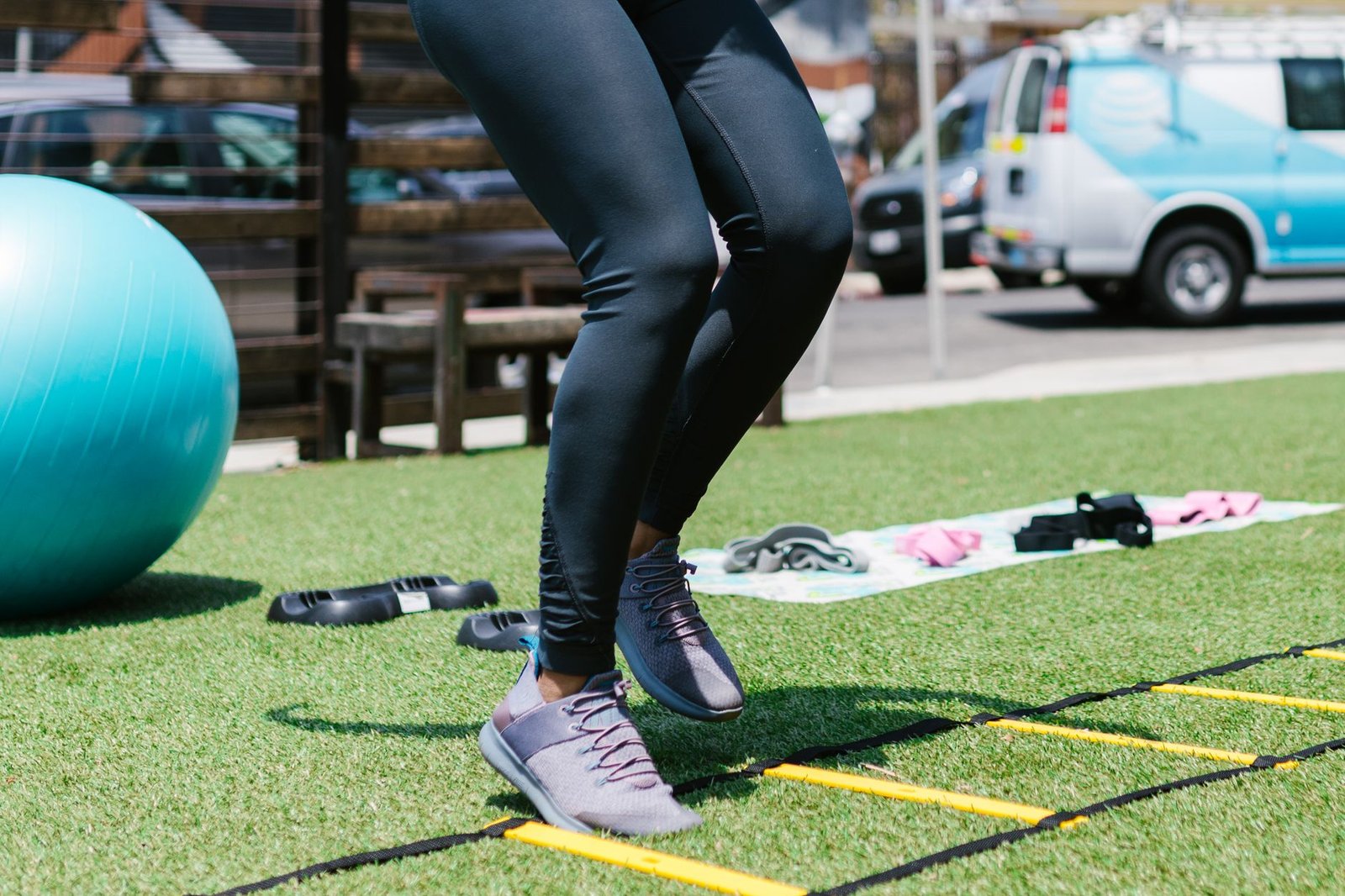
Drills train these priorities at low risk. Strides test them at near-max intent. Strength supports them when the session gets tough. That is the integration loop that moves form from warm-up confidence to on-track reality.
Ask yourself a harsh question: after your workout, do you feel the same mechanics when you walk away? If not, your routine is still teaching your muscles one thing and your nervous system another.
Stop Chasing Form and Start Building Reproducible Speed
“Good form” is not a vibe. It is a repeatable set of mechanics you can call up on demand. The best runners do not think about their hips for every step. They train a chain of actions until the body executes it automatically.
That is why strength-to-stride integration must include mobility, form drills, and strides that preserve the same cues at 80 to 90 percent effort. When you do it, mechanics stop being fragile. They become resilient.
Choose the routine you can repeat with discipline. Measure outcomes by how your stride looks and feels across weeks, not by how hard your lungs burn on a single day. That is how you turn training into speed that lasts.
How Strength-to-Stride Integration Improves Running Form With Mobility and Drills
What Is Strength-to-Stride Integration and Why Does It Improve Running Form?
Strength-to-stride integration links your mobility and running drills to the exact mechanics you want during faster running, so hip extension, knee drive, and quick ground contact show up with less stiffness and better coordination.
Which Mobility Exercises Support Hip Extension, Knee Drive, and Fast Ground Contact?
Use mobility that increases range and looseness before you train mechanics, such as leg swings in front-to-back and lateral directions, hurdle-style movement drills, and hip-opening stretches like the couch stretch or hip flexor stretching.
Which Form Drills Reinforce Foot Strike, Knee Lift, and Turnover for Strength-to-Stride Integration?
Pair your mobility with form drills like A-skips and B-skips for better alignment and landing under control, high knees with butt kicks to sharpen knee lift and heel recovery, and quick feet or ankling to improve turnover.
How Should You Structure a Session for Strength-to-Stride Integration With Mobility, Drills, and Strides?
Start with mobility work, then follow with form drills, and finish with strides or pick-ups at about 80% to 90% effort so you practice the mechanics without turning the session into a full sprint; keep the main goal to look good while you move.
How Do You Progress Strength-to-Stride Integration Without Losing Technique?
Progress gradually by adding small amounts of drill volume or stride counts while keeping form consistent, and support the stride with targeted single-leg and hip strength work like split squats, step-ups, and lunges so mobility and drill cues carry into durable hip extension and leg spring.
How Many Times per Week Should You Use Strength-to-Stride Integration and When Should You Scale It Back?
Many runners do drills and mobility about 2 to 4 times per week, then add strides or pick-ups about 1 to 2 times per week, and you should scale back if you feel joint pain, form breaks down, or you get unusually stiff despite warming up.
Make Strength to Stride Integration Nonnegotiable
Run your training around strength-to-stride integration: using mobility and drills to improve form, with a simple, repeatable routine that prepares the hips and ankles, then reinforces mechanics through A-skips, B-skips, high knees, butt kicks, and quick feet before you practice 80 to 90 percent strides. Add a little sprint work, but keep “good mechanics” as the standard and progress gradually so mobility and drills actually carry over to hip extension, knee drive, and fast, clean ground contact. If you want better form, you have to make it the default every week, not a temporary experiment.

I am Ozan, a London-focused running writer and marathon enthusiast with a passion for helping people discover the city’s best races, running routes, walking trails, and fitness events. I research and write practical, up-to-date guides covering marathons, race preparation, training tips, running gear, and everything related to staying active in London.
My goal is to create reliable, easy-to-follow content that helps runners and walkers of all experience levels explore London with confidence, whether they’re preparing for their first 5K or their next marathon.