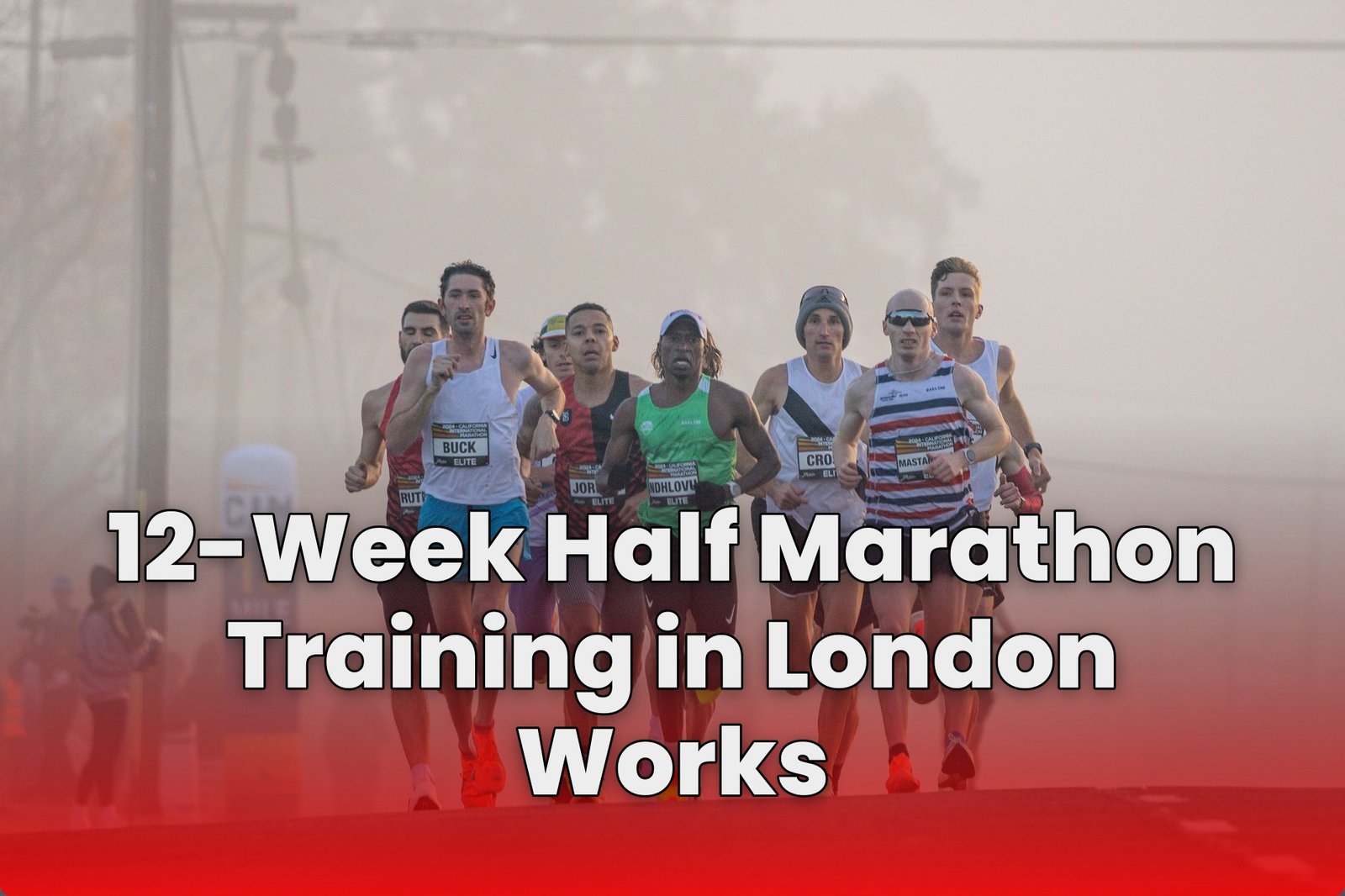
A good plan beats raw motivation. If you are training for a half marathon in London, you do not need a “new personality” to get fitter, faster, and more confident. You need a structure that tells you exactly what to do when your legs feel great, when they feel tired, and when life inevitably messes with your routine.
The reason a 12-week approach works is simple: it matches progressive overload with recovery. You build your long run steadily, keep most runs easy enough to stay “chatty,” and reserve the harder sessions for targeted speed and race-pace work. Add a little strength and cross-training, and you lower your injury risk while keeping your engine improving week after week.
In this guide, you will get a practical training roadmap that culminates in race week, including a taper so you arrive at 13.1 miles feeling sharper, not depleted. Your goal is not just to survive the distance, but to finish it with control, especially in London’s mix of flat stretches and rolling challenges.
Stop Chasing New Paces
If you are doing training for a half marathon in London: 12-week schedule, your biggest enemy is not your fitness. It is your obsession with finding the “right” pace every run. London rewards consistency, not constant tinkering.
Pick targets you can hold on your best days and your worst days. Then build the engine that makes those targets realistic. When runners adjust pace based on mood or watch readings, their long runs suffer first, and their race day confidence follows.
Run Easy Most Days
The simplest evidence-based rule is the one people ignore. Keep most of your running effort “chatty,” around 80% easy, and save the harder work for a smaller slice of your week. That mix protects your ability to train again tomorrow.
Easy does not mean sloppy. It means your breathing stays controlled, your form stays smooth, and you finish thinking, “I could do a bit more.” If every run feels hard, your plan is not a plan, it is a daily gamble.
Progressive Long Runs Win
Your long run is the backbone of every 13.1-mile attempt, especially on a London route with crowds that tempt you to sprint early. Start around 3 to 4 miles in the first weeks and increase steadily, often reaching about 10 miles in weeks 9 to 11.
Then taper without drama. In week 12, shorten the long run and reduce overall strain so your body arrives sharp, not wrecked. What matters most is the cumulative time on your feet, not one heroic attempt.
Strength Work Is Speed Insurance
Many runners treat strength training as optional because it does not feel like progress you can measure in minutes. That is a mistake. Strength reduces injury risk, improves running economy, and makes “easy” feel easier.
Plan 1 to 2 sessions weekly of resistance work, focusing on hips, glutes, calves, and core. Simple patterns like squats, step-ups, hinges, calf raises, and planks create the durability your schedule assumes.
London Terrain Demands Specific Preparation
London is not just flat. Bridges, rolling sections, and wind corridors can turn a steady run into a test. You do not need a mountain expedition, but you do need targeted hill practice.
Use short hill reps, like 60-second climbs that gradually become more manageable as weeks progress. Keep the goal controlled power, not all-out suffering. When race day throws a stingy incline at you, you will recognize the effort level and hold your form.
Your Schedule Must Protect Recovery
Hard sessions without recovery are wasted sessions. The 12-week structure works because it builds a rhythm: easy running, one key session, and enough time to absorb the work. If you cut rest days to “fit” extra mileage, you break the logic of the plan.

After a hard workout, aim for about two recovery days before your next quality push. Recovery is not downtime. It is training.
Match Effort to Evidence
If you want better remote training outcomes at the office, you manage inputs. For half marathon preparation, you manage effort inputs. Most plans succeed when “hard” actually means hard, and “easy” actually stays easy.
Below is a practical effort map you can use inside your training for a half marathon in london: 12-week schedule, regardless of whether you track pace, perceived exertion, or heart rate.
| Session Purpose | Typical Effort | Measurable Guideline |
|---|---|---|
| Easy Running | Conversational | About 80% of runs |
| Steady Work | Rhythm | 60 to 75% effort |
| Tempo Segments | Controlled Tough | Repeatable pace |
| Intervals | Fast, Brief | Short reps |
| Race Pace Simulation | Focused | Last long-run miles |
Some runners argue that they should run everything “slightly uncomfortable” to build grit. Grit has a cost. Hard work works when it is concentrated and recoverable. The rest of your week should earn you the right to feel strong.
Taper the Ego Not the Legs
In week 12, your goal is not to prove you are still tough. Your goal is to arrive with legs that snap. That means fewer miles, fewer hard minutes, and a long run that drops compared to your peak.
Keep running, but reduce strain. The race will feel faster than your training paces because you will be fresh. If you treat taper week like a normal build week, you cancel the advantage.
Cross Training Beats Cross Fingers
Cross training is not decoration. It fills time with movement while sparing the impact that your schedule expects your body to tolerate. Cycling, swimming, rowing, or Pilates can keep conditioning without turning your week into a series of bruises.
Aim for one midweek cross-training session plus optional light strength. The benefit is not only fitness. It is the ability to show up for the next run with quality intact.
The Week Should Feel Predictable
Predictability is a performance tool. A common structure uses two easy runs plus a longer run, often on the weekend, supported by a midweek cross-training session. That rhythm makes it easier to keep easy days truly easy.

Here is the real test. After week one, you should not feel like you are constantly negotiating your plan. You should feel like you are following it, and that is how training becomes reliable enough to finish.
Pacing Practice for a London Race
London race conditions change effort perception. Crowds can pull you forward, and wind can stretch effort when pace looks “fine.” That is why pacing practice should happen before race day, not during it.
Practice holding steady race effort during your later long run miles. If your target finish time implies a pace, use it as a reference for effort discipline, not as a command to sprint. If you go out too fast, the city will collect your debt.
Race Day Plan and the Final Mile
On race day, start slightly restrained. You will feel slower than you expect in the first miles, and that is the point. Your training built a plan for the second half, not the adrenaline of the first half.
When the last miles arrive, form and breathing matter more than hero pacing. You earned that fatigue buffer through long-run progression, mostly-easy running, strength work, and the discipline to taper. So why risk it with bravado on mile one?
What Is the Best 12-Week Schedule for Training for a Half Marathon in London?
What does a 12-week half marathon training schedule in London include?
A solid 12-week half marathon training schedule in London typically combines 3–4 running days per week (occasionally up to 5–6), 1–2 rest days, and weekly cross-training or strength work, with a long-run progression and a taper in the final week.
How should you structure your weekly training days for a half marathon in London?
A common weekly structure is two easy runs plus one longer run (often on the weekend), paired with a midweek cross-training session such as cycling, swimming, Pilates, or weights, while keeping the rest of the week focused on recovery and consistency.
How do the long runs progress in a London 12-week half marathon schedule?
The long run usually starts around 3–4 miles in weeks 1–2 and then rises steadily, reaching about 10 miles in weeks 9–11, followed by a taper in week 12 where the long run is shortened before race day.
What paces and effort levels should you use during training for a half marathon in London?
Most of your training should feel easy (about 80% “conversational”), with only around 20% in harder sessions like intervals, tempo, or race-pace work, so you build endurance without excessive fatigue.
Which cross-training and strength work helps during half marathon training in London?
Including one cross-training session per week plus targeted strength can improve stability and reduce injury risk, focusing on movements for hips, glutes, core, and calves while using rest days to absorb harder workouts.
How should you taper in the final week of a 12-week half marathon training schedule in London?
In the final week, reduce your overall volume while keeping a couple of short, controlled sessions to stay sharp, with the long run dropping significantly and race-week runs culminating in comfortable, confident pacing on race day.
Train Smart and Stay Consistent for Race Day
Training for a half marathon in london: 12-week schedule works when you keep the easy running truly easy, build your long run step by step, and reserve the hardest efforts for a small share of sessions, all while adding strength and cross training to protect against injury. If you treat the plan like a checklist instead of a rough guideline, you will arrive at 13.1 feeling prepared, not depleted.

I am Ozan, a London-focused running writer and marathon enthusiast with a passion for helping people discover the city’s best races, running routes, walking trails, and fitness events. I research and write practical, up-to-date guides covering marathons, race preparation, training tips, running gear, and everything related to staying active in London.
My goal is to create reliable, easy-to-follow content that helps runners and walkers of all experience levels explore London with confidence, whether they’re preparing for their first 5K or their next marathon.