Most runners blame their lower back for late-race tightness, but the real culprit is usually posture drift once fatigue hits. This is the heart of how to prevent lower back tightness from posture drift in late miles, and it is far more controllable than people want to believe.
When you slump, your lumbar curve flattens and your ribs start to collapse toward your pelvis, and that tension becomes the “warning light” your body can no longer ignore. The fix is not a heroic stretch mid-run, it is frequent re-centering: check alignment like you mean it by setting up against a wall and using a full-length mirror to confirm level shoulders and hips, then bring your pelvis to a neutral, stacked position without letting your lower back sway.
Do short resets every 20 to 30 minutes during training, especially as you tire, and use reminders to “stretch your head toward the ceiling” so the space between ribcage and pelvis stays open. Build the back-up systems too with simple strength and mobility work for the core and upper back, plus regular chest stretching to reduce compensations, and consider a physical therapist if the tightness persists or your form cannot hold despite good effort.
Fatigue Doesn’t Ruin You Slumping Does
Late miles tighten the lower back because your body is trying to compensate for posture drift. When fatigue hits, many runners tip the pelvis, collapse the rib cage, and let the lumbar curve flatten. That is not “normal soreness.” It is a mechanical overload pattern that your tissues pay for minute by minute.
So why do people blame age, shoes, or genetics when the simplest culprit is right there on the form check you can do mid-run? If your alignment sags, your muscles must contract longer to hold you upright. More time under strain equals more tightness.
The good news is that posture drift is predictable. If fatigue is the trigger, then frequent alignment resets are the countermeasure. The goal is not perfect posture for 90 minutes. The goal is to prevent your spine from staying in a compromised position long enough to lock up.
Stop Guessing About Alignment Use Wall Checks
Before you can prevent drift, you need a reference point. Use a wall check: stand with your back to a wall about 3 inches away, then confirm with a full-length mirror that your ears, shoulders, hips, knees, and ankles line up vertically. Kneecaps should point straight ahead, and shoulders and hips should be level.
This is how you train your sense of “neutral” so you can re-create it when your legs get heavy. Without a reference, runners rely on memory and effort, which are exactly what fatigue distorts.
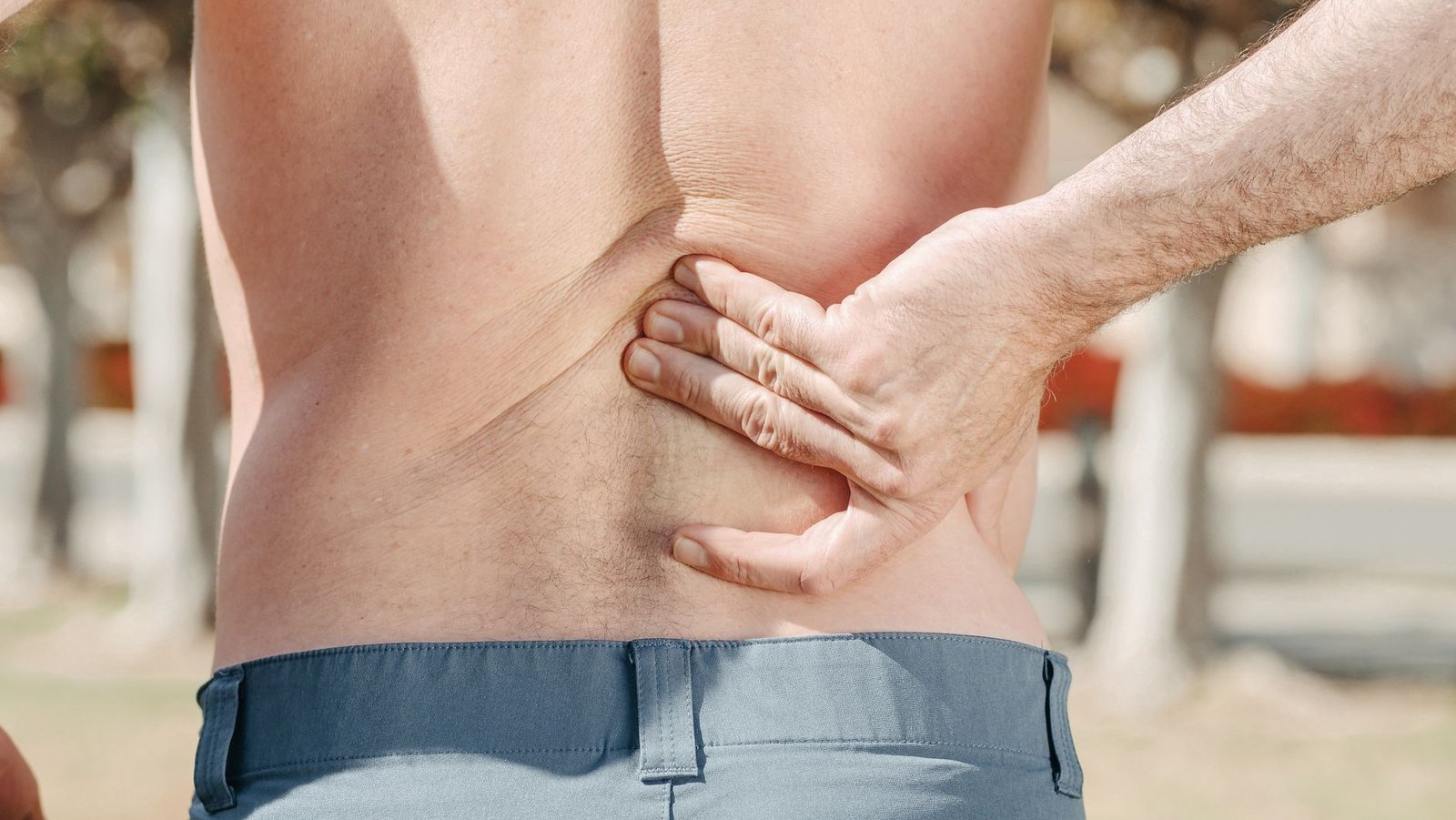
Once you can feel level alignment at rest, you can carry it into motion: think about stacking your ribs over your pelvis instead of letting the torso fold forward as your pace fades.
Reset Every 20 Minutes Not Every Injury
Posture drift is not a single event. It is a slow slide that accelerates after you start feeling “heavy.” That is why your plan should interrupt the pattern regularly. A practical approach is to re-center every 20–30 minutes or at scheduled breaks, instead of waiting until the low back tightens enough to force a stop.
Use short prompts during the run to interrupt the slump. If you want a simple protocol, treat it like a checklist you repeat at predictable times.
| Reset Cue | Timing | Measurable Target |
|---|---|---|
| Stack Ears Over Ribs | Every 20–30 min | Neck feels long |
| Level Shoulders | At water stops | No shrug on inhale |
| Quiet Hips | After hills | Pelvis stays steady |
| Straight Kneecaps | Each mile mark | Tracking stays forward |
| Neutral Rib Cage | Late miles | Less low-back sway |
And yes, you will feel awkward at first. That discomfort is the point. You are teaching your spine that it does not get to settle into a faulty position just because you are tired.
Hold a Level Pelvis Without Letting the Back Sway
Re-centering is not about clenching your low back harder. It is about holding a level pelvis while you prevent lumbar sway. A useful mental image is “stretch head toward the ceiling” to increase the space between your rib cage and pelvis.
Try it like a skill: during late miles, take a breath, tallen through the crown of your head, and let your ribs stack over your pelvis. Your lower back should feel less busy, not more. If it immediately clamps, you are likely over-arching instead of lengthening.
What happens if you keep running while your pelvis tips? Your posture drift turns into sustained lumbar extension effort, which is exactly what you feel as tightness later. This cue interrupts the process before it becomes a habit.
Run With a Brace Not a Lean
Many runners “fix” drift by leaning their torso back or forcing the chest up. That can temporarily look better while adding stress to the exact structures that tighten. The better approach is to brace around the midline: rib cage stacked, pelvis level, and the trunk stable as your legs tire.
Think “hold your shape” rather than “pull your spine out of danger.” A stable torso lets your hips and glutes share the load instead of forcing your lumbar area to do all the maintaining.
When your form starts slipping, your instinct may be to shorten stride and tense harder. Use a two-step correction instead: brief reset for alignment, then a controlled brace through your core so you can keep moving with less low-back work.
Stretch the Right Thing Open the Rib Cage
Lower-back tightness often persists because runners compensate with a stiff upper body and a jammed rib cage. If your chest and upper shoulders lock up, the spine tries to find freedom somewhere else, usually in the lumbar area.
That is why chest opening matters. Use a corner stretch for 20–30 seconds, and add an arm-across-chest stretch about 20 seconds each side, repeating 3 times. Do it when your body is warm, not when you are already tight.
This is not “fluff stretching.” It reduces the pull that encourages slumping and helps you keep the rib cage positioned so the lumbar curve does not have to compensate.
Build the Midline Chin Tucks Pull-Ins Rows
Posture drift is partly a control problem, and control improves with specific strengthening. Start with the basics that teach alignment and core coordination. Do chin tucks for 10 reps, shoulder-blade squeezes for 3–4 sets of 5-second holds, and abdominal pull-in exercises where you exhale for a 5-count while drawing the lower abdominals up and in.

These movements train the small stabilizers that prevent your trunk from collapsing when fatigue rises. If you only stretch the low back, you miss the engine that keeps posture from drifting.
Pair that with upper-back and core work such as rows, modified planks, and abdominal bracing. The goal is a trunk that holds its shape for longer, so late miles do not turn into a low-back endurance test.
Stop Treating Soreness Like a Seasonal Weather Report
Tightness is information, not a calendar event. When you consistently feel lower-back tightness late in runs, you are seeing the cost of posture drift. If you change nothing, your body keeps learning the wrong lesson: that it must survive fatigue by clamping through the lumbar spine.
Consider what you are actually doing. Are you tracking your form during the last third of a run, or only feeling outcomes after the fact? Outcome-only training is why problems persist. You need in-the-moment feedback.
Use simple check-ins during your run: reset alignment, hold level pelvis, and brace. Over time, you will notice a change in sensation: less tightening, smoother breathing, and a lower-back that feels like it is working less, not just enduring more.
Upgrade Your Ergonomics So Running Has a Head Start
Late-mile posture drift is often reinforced all day long. If your desk setup encourages slumping, your spine starts the run already trained to collapse. Fix the carryover with supportive seating that maintains the normal lumbar curve, such as a lower-back support or rolled towel. Keep your screen at eye level to reduce forward head posture and upper-body hunching.
Even small changes can matter because they shape the default position your body falls into under stress. Guidance from posture and back pain emphasizes that posture habits influence how the back feels over time.
When daily posture is better, your late-mile resets require less force. You are not just correcting running mechanics. You are stacking the deck before you even start the first warm-up step.
Stretching Alone Won’t Save Late Miles Add Control
Many runners chase relief with stretching and wonder why tightness returns on the next long run. The low back is tight because it is compensating. If you stretch the symptom without improving alignment control, you are trying to manage the result of mechanical stress, not the cause.
So what is the real plan? Frequent re-centering prompts plus targeted core and upper-back work. Stretch the chest to reduce slumping pressure, but also train your abdominal pull-in and bracing so you can keep the pelvis level when fatigue rises.
Think of it as reducing load and improving tolerance at the same time. If you do both, your low back stops acting like a structural backup generator.
Train Specific Timing How to Prevent Lower Back Tightness From Posture Drift in Late Miles
If you want results, practice the situation, not just the exercise. During long runs or late-run segments, deliberately schedule the resets: every 20–30 minutes, after hills, and at predetermined mile markers. This is how you turn a strategy into an automatic response when your body wants to slump.

Then add training sessions that emphasize posture control under fatigue. For example, do a portion of your run slightly slower but with stricter alignment cues, and repeat the reset behavior. You are teaching your nervous system that “late” is not a free pass to lose lumbar curve.
This is the core of how to prevent lower back tightness from posture drift in late miles: alignment reference plus interruption plus control. When those three are in place, your form is no longer optional.
When It Keeps Coming Get a Physical Therapist Early
There is a point where self-correction should be paired with professional evaluation. If you have sharp pain, numbness, radiating symptoms, or a persistent pattern that does not improve with re-centering and strength work, consult a physical therapist. Early assessment can help you address mechanics and build a program that fits your body.
Look for guidance that focuses on strengthening and stretching across the abdominal, back, shoulder, neck, and chest, plus training for how you move when you are tired. That is where posture drift becomes fixable, because the plan targets the drivers of overload.
You do not need to wait for injury to justify help. If the low back is consistently tightening late, treat that as a signal worth investigating, then keep training with better feedback and better mechanics.
How Can You Prevent Lower Back Tightness from Posture Drift in Late Miles?
How do you reset posture to stop lower-back tightness during late miles?
Periodically “reset” your alignment by stacking your ears, shoulders, hips, knees, and ankles as straight as possible, then consciously set a level pelvis so your lower back doesn’t sway as you fatigue; think “stretch your head toward the ceiling” to create space between your ribcage and pelvis.
What alignment checks help prevent posture drift in the final part of a run?
Check that your shoulders and hips stay level (not dropping on one side) and that your kneecaps point straight ahead; you can practice this by standing with your back to a wall about 3 inches away and using a full-length mirror to confirm alignment before heading into late-mile effort.
How often should you use posture re-centering prompts to avoid late-mile slumping?
Interrupt posture drift frequently with short re-centering cues, such as every 20–30 minutes or at planned breaks, and avoid staying in one slumped position for long; a quick check-and-reset keeps your lumbar curve from collapsing as form breaks down.
Which strengthening and mobility work reduces lower back tightness from posture drift?
Strengthen and mobilize the muscles that support your trunk: try chin tucks (10 reps), shoulder-blade squeezes (3–4 sets of 5-second holds), and abdominal “pull-in” bracing (exhale to a 5-count while drawing lower abdominals up), plus core and upper-back training like rows, modified planks, and controlled bracing.
How can chest and upper-body stretching prevent slumping that tightens the lower back?
Counter the forward-slump that often drives posture drift by stretching the chest and upper body regularly, such as a corner stretch for 20–30 seconds, then an arm-across-chest stretch for about 20 seconds per side, repeated about 3 times, to reduce compensatory rounding.
When should you see a physical therapist for posture drift and lower-back tightness?
If tightness becomes persistent, sharp, or limits your training, or if you notice numbness/tingling, uneven alignment that won’t improve with self-corrections, or recurring late-mile breakdowns, a physical therapist can assess mechanics and tailor strengthening, mobility, and running-specific posture retraining.
Fix Posture Drift Now Or Pay Later
When fatigue hits late miles, the real problem is posture drift, not “tight muscles,” so the answer to how to prevent lower back tightness from posture drift in late miles is simple: reset alignment often, keep a neutral pelvis, and interrupt slumping before it becomes your default. Back the habit with targeted core and upper-back strength plus chest mobility so your running form stays stacked when your legs slow. Commit to this system now, and you will finish strong without the creeping ache that usually follows.

I am Ozan, a London-focused running writer and marathon enthusiast with a passion for helping people discover the city’s best races, running routes, walking trails, and fitness events. I research and write practical, up-to-date guides covering marathons, race preparation, training tips, running gear, and everything related to staying active in London.
My goal is to create reliable, easy-to-follow content that helps runners and walkers of all experience levels explore London with confidence, whether they’re preparing for their first 5K or their next marathon.