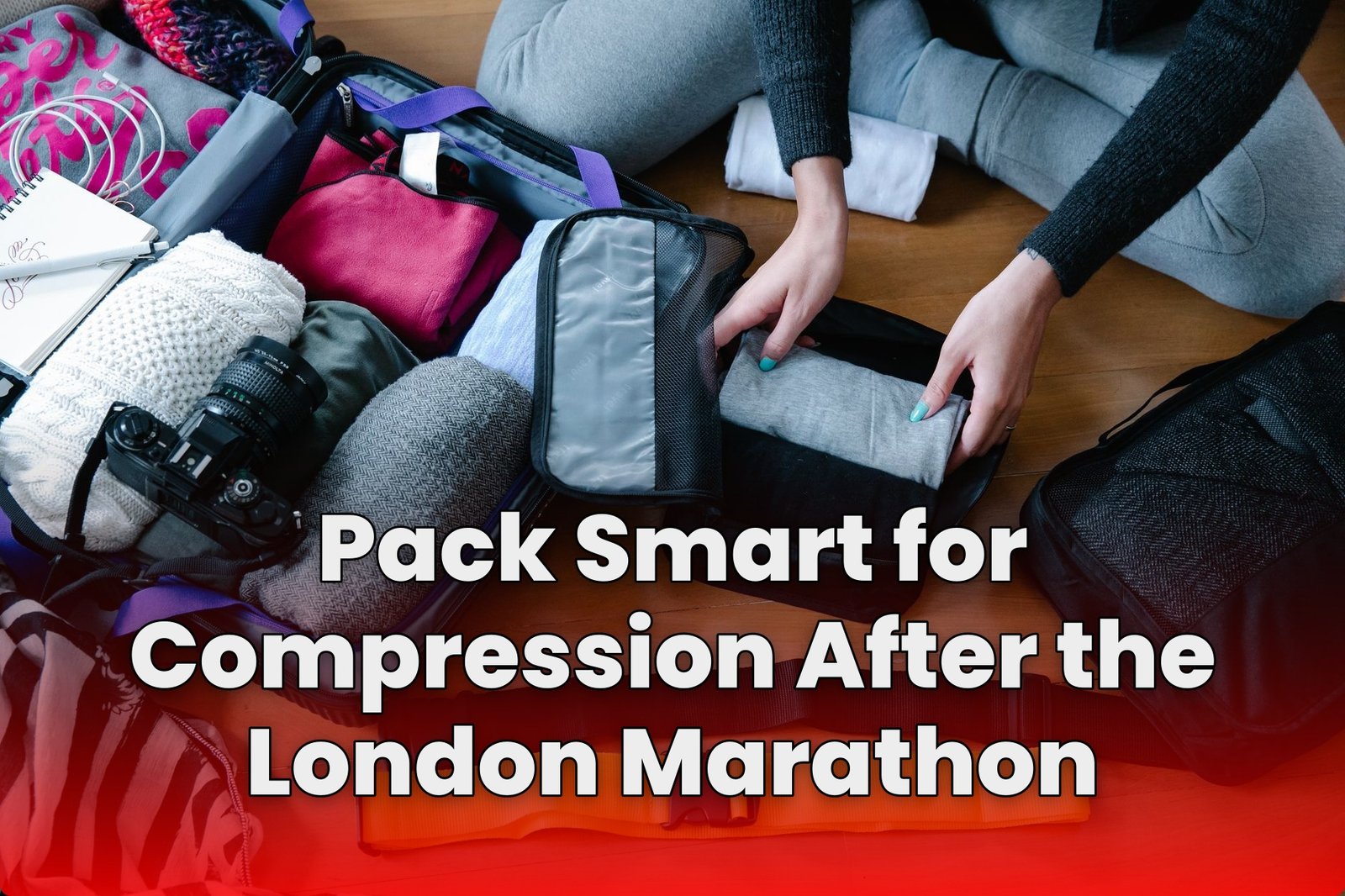
Your Recovery Plan Starts at the Airport. Most runners treat london marathon travel packing for compression and recovery gear like an afterthought, and then wonder why they feel stiff for days. The truth is simple: if your clothes, socks, and recovery essentials are hard to reach or poorly planned, you lose the benefits of acting early, staying comfortable, and supporting circulation right after the race.
Plan for fast-changing London weather and tight travel transitions, then make recovery the easiest option. Bring a rain-ready outer layer and a small packable umbrella so you are not scrambling at the start line or soaked on the way to transport. Keep compression gear simple and accessible in your hand luggage, because wearing it soon after finishing, and again during the journey, is where comfort and blood-flow support actually start to matter.
Don’t overcomplicate it, but do pack like you want to feel good tomorrow: a fresh spare set, lightweight “get comfortable” clothes, flip-flops for walking around post-race, and practical hygiene items like wipes and plasters. Add your easy-to-digest fuel so you are not relying on whatever is available, and include a portable charger for quick access to logistics. Recovery is not luck, it is preparation, and this is the packing approach that turns a tough day into a manageable one.
Weather Swings Decide Your Kit
If you are serious about london marathon travel packing for compression and recovery gear, you cannot pack for an average forecast. London weather punishes the overconfident. Wind, drizzle, and sudden cold snaps turn a “good enough” outfit into an uncomfortable finish, which then ruins your recovery window.
Bring a waterproof or water-resistant outer shell or an ultralight rain jacket, plus sunglasses. For true variability, throw in a small packable umbrella and a hat or head protection you can keep dry. For packing list advice on all-weather essentials, start with the basics that keep your core temperature stable.
Compression Gear Is Your Post-Race Insurance
Compression is not a fashion choice. It is a practical attempt to improve comfort, support blood flow, and reduce the “heavy legs” feeling that can derail the rest of your travel day. If you accept that your race ends at the finish, compression becomes a must, not a maybe.
Use lightweight compression crew socks and, if you prefer, sleeves. Merino or alpaca compression can feel more comfortable for flights and for that first hour after you change out of sweaty kit. Still thinking you will just “deal with it”? Dehydration and fatigue make “dealing with it” harder than you remember.
Recovery planning is part of training, because your body still pays the bill after the timer stops.
Carry-On Thinking Keeps You Moving
Travel is where good intentions go to die. The most common mistake is stuffing recovery items into one deep bag and discovering them only after you are wet, cold, or standing in a line without what you need.
Pack for access. Keep a waterproof or water-resistant bag for pre-start and finish-line items separate from your main luggage. Put your compression and fresh dry change where you can reach them quickly after the race. On flights and public transport, you want the ability to switch from performance mode to comfort mode immediately.
Build A Finish-Line Comfort Swap
After the race, you are not trying to win a second contest. You are trying to feel decent while you cool down, wait, and travel. That means a compressible “get comfortable” layer system and shoes you can walk in without negotiating every step.
Choose items that solve specific problems: staying warm, staying dry, reducing friction, and keeping your legs feeling supported. Here is a compact way to match gear to needs.
| Comfort Item | When You Use It | Measurable Benefit |
|---|---|---|
| Compression crew socks | After shower or change | 0 extra hassle for legs |
| Spare merino socks | Right after warm-down | 2 dryness switches |
| Flip-flops or sliders | Walking around post-race | Less shoe friction |
| Soft warm layer | Cold finish moments | Stays packable |
| Rain poncho | Finish exit and transfer | Quick dry protection |
Do not overcomplicate it. Keep one “finish swap” set ready, and treat it as a ritual. You are reducing stress and protecting comfort at the exact moment your body is least interested in clever logistics.
Fuel Smartly Before You Start Running
Fuel for travel and fuel for running are linked. If you arrive underfed or anxious about finding food, you will lose control of your energy levels and your recovery later. That is why easy-to-digest options matter.
Pack snack bars, nuts or trail mix, fruit, and protein shake packets so you can keep intake steady without hunting. You do not need fancy. You need predictable calories and simple digestion, especially if you are dealing with nerves or a change in routine.
Hygiene And Blister Prevention For Real Life
In a wet, crowded environment, hygiene is not vanity. It is injury prevention. Sweat, friction, and damp fabric create the conditions for blisters and skin irritation that can linger long after the race.
Carry baby wipes, deodorant, and plasters or bandages with antiseptic cream. Also include a face mask for public transport, and remember that clean hands reduce the chance of aggravating irritated skin. “I will just grab something when I need it.” That sounds neat until you are exhausted, cold, and still trying to get blisters under control.
Transport Logistics Demand Power And Privacy
Recovery includes what happens between the finish and your bed. Your phone battery should not be the limiting factor when you need ride updates, contact messages, or a simple map to get back to your accommodation.
Pack a portable phone charger and a universal outlet adapter if needed. Add earphones so you can reset mentally in transit. These small choices help you sleep better and manage stress, which indirectly supports recovery.
Raincoat Ponchos And Waterproof Bags Are Worth The Weight
Weather-ready packing is not only about what you wear. It is also about what you protect. A waterproof bag or a couple of garbage bags give you control over wet layers after warm-up, after the race, and during transfers.
Bring at least one reliable method to keep wet items contained. Use a poncho or raincoat for warm-up and the walk to the start when drizzle is possible. Keep your dry essentials ready, because the fastest way to ruin recovery is sitting in damp clothing while you wait for transport.
Timing Matters When You Wear Compression
Compression works best when you use it intentionally. The body tends to be stiff and sensitive immediately after the race, and your legs respond better when you change out of sweaty gear promptly and then put on the socks or sleeves.
Have a plan for the window you care about: after you cool down, after shower if you can, and before the travel segment that keeps you seated. If you are flying, compression during the flight and again after is the easiest way to keep comfort consistent.
Spare Sets Prevent The Small Failures
Minor problems snowball when fatigue is high. One damp sock, one missing layer, or one forgotten underwear backup can turn an orderly recovery day into a scramble that ruins your routine.
Pack enough underwear and outfit backups that you are never caught without dry basics. Include spare socks in multiple heights if you expect variable conditions. Plan for cold starts with extra warm throwaway layers, and pack them so you can shed quickly without losing track.
What To Skip Buying On The Day
Do not rely on last-minute convenience purchases. Lines, limited options, and wrong ingredients can derail your nutrition and stomach comfort at exactly the wrong time. Your stomach is already dealing with exertion.
Skip decision-making under pressure. Pack your easy-to-digest items in advance, plus an optional stomach soother like ginger chews or Tums. And if you want a practical travel tip, avoid Pepto liquid to reduce friction with screening by packing chews instead.
Your Checklist Should Favor Recovery Over Ego
Most people pack for the race they imagine, not the recovery they must live. If you want remote certainty in your travel day, you pack like recovery is part of the event itself. That means compression gear, dry swaps, rain protection, hygiene tools, and power for transport.
Build your checklist with one hard rule: anything that keeps you warm, dry, supported, and comfortable earns space. Everything else is optional. Ask yourself, before you zip the bag, what will you still need when you are tired, wet, and moving slower than you planned.
London Marathon Travel Packing Checklist for Compression and Recovery Gear
What compression and recovery gear should you pack for London Marathon travel?
Bring lightweight compression crew socks or compression sleeves for flights and the post-race period, plus packable “get comfortable” layers like spare socks and soft warm basics (such as merino/wool) to help you cool down comfortably and keep circulation supported.
How should you pack rain-ready basics for changing London Marathon weather?
Pack an ultralight, water-resistant or waterproof rain jacket (or poncho) plus a small packable umbrella, sunglasses, and a rain-friendly hat/cap, and include waterproof bags or extra garbage bags to keep wet clothes separated before and after the race.
Which compression socks or sleeves work best during flights and after the race?
Choose breathable compression socks/sleeves that feel comfortable for extended wear, ideally lightweight merino or similar soft materials, and plan to put them on during travel and again after finishing to support blood flow and reduce discomfort while you’re walking around.
What comfortable post-race clothes and footwear help recovery after the London Marathon?
Pack a fresh change of warm, soft layers (including a dry option for the finish), extra socks in multiple heights, and easy walking footwear like flip-flops or sliders for around-the-city recovery, so you can stay dry, warm, and comfortable between transport and rest.
What hygiene, injury-prevention, and transport essentials should be in your bag?
Include baby wipes, deodorant, plasters/bandages with antiseptic cream, and a face mask for public transport, plus practical extras like earphones and a portable phone charger (with a universal outlet adapter if needed) to stay functional and reduce the chance of irritation or minor issues becoming problems.
How do you pack easy-to-digest fuel for London Marathon recovery travel?
Don’t rely on buying snacks: pack easy-to-digest options like snack bars, nuts/trail mix, fruit, or protein shake packets, and consider a stomach soother such as ginger chews or chewable antacids for comfort if needed.
Pack Smarter for Compression and Recovery
For a smoother trip to race day, your london marathon travel packing for compression and recovery gear has to be deliberate and weather-proof: bring a rain-ready outer layer and spare dry essentials, then pack lightweight compression socks and sleeves plus comfy post-race layers so your body can settle fast after the finish. The fastest way to waste momentum is to arrive unprepared for wet conditions or forget the gear that helps you feel human again on the journey home.

I am Ozan, a London-focused running writer and marathon enthusiast with a passion for helping people discover the city’s best races, running routes, walking trails, and fitness events. I research and write practical, up-to-date guides covering marathons, race preparation, training tips, running gear, and everything related to staying active in London.
My goal is to create reliable, easy-to-follow content that helps runners and walkers of all experience levels explore London with confidence, whether they’re preparing for their first 5K or their next marathon.