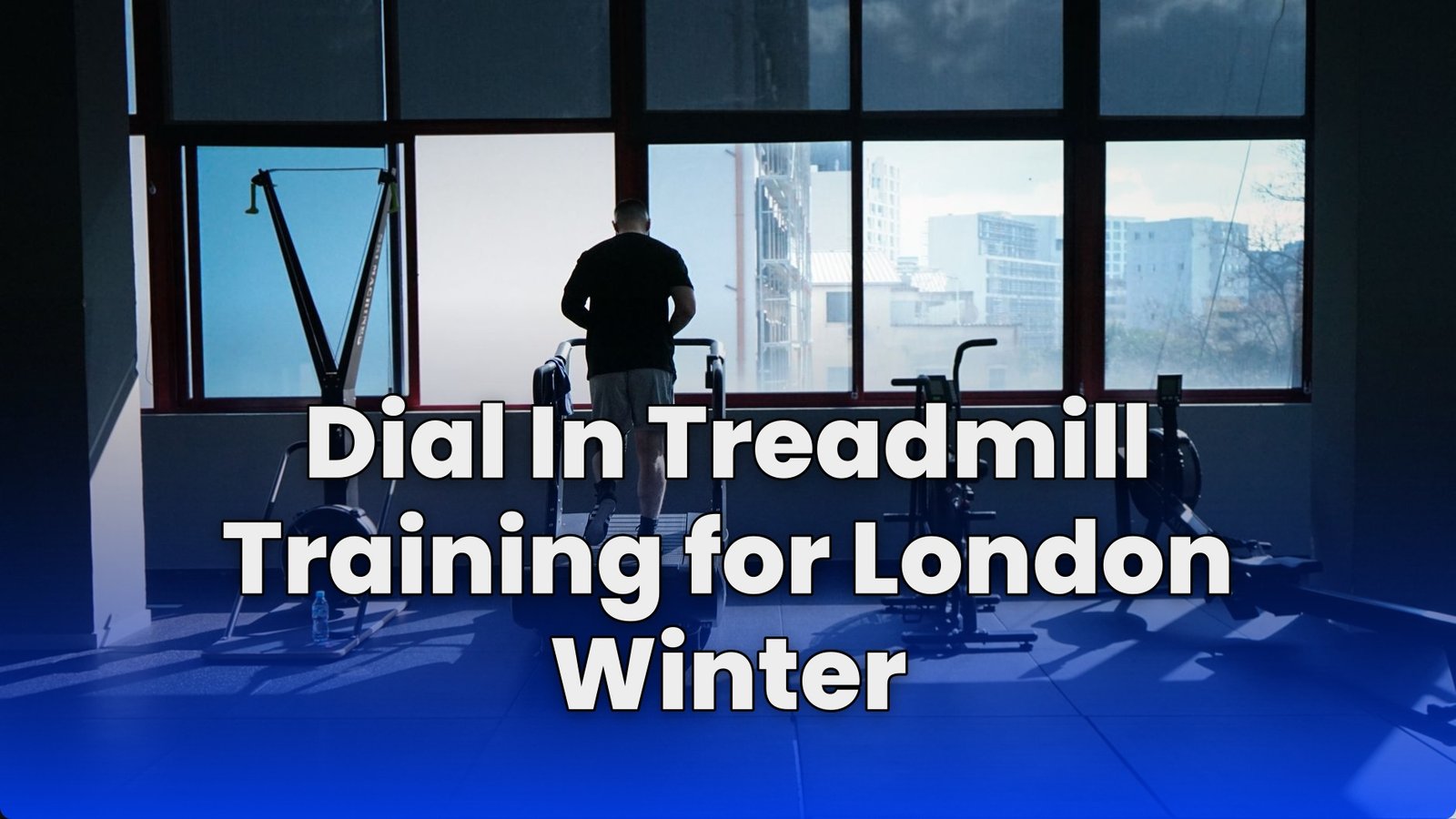
Winter in London does not ruin your fitness, but your setup can. If you treat treadmill sessions like an emergency substitute for outdoor running, you will burn motivation fast and wonder why consistency slips every cold week. I think the fix is simple: dial the treadmill so it removes the outdoor variables, then judge success by habits you can repeat.
The easiest way to stay steady is to stop chasing “pretty” treadmill pace and start tracking effort and time on feet. Commit to 1 to 2 easy runs per week at first, around 30 minutes, and make the win “I showed up and I finished,” not “I hit a certain number.” Use cues that keep you on rails, like your watch for time, a podcast for distraction, and a clear effort level that feels sustainable even when the weather feels hostile.
Once the habit is alive, aim for about 3 to 5 treadmill workouts per week, balancing harder days with lighter ones so you do not pay for consistency with injuries. Repeat low-risk formats you can trust, like short intervals with jog and walk recoveries, or incline step-ups you can scale up slowly. Add a proper dynamic warm-up and keep your treadmill environment winter-friendly, because the best treadmill plan is the one you actually want to repeat.
Stop Letting Black Ice Decide Your Fitness
London winters punish outdoor plans, but they do not have to ruin your training. If your goal is treadmill training for London winter consistency, your first job is to remove the one variable you cannot control: the ground. Why gamble on slip risk when the treadmill can deliver the same stride, same surface, and same rhythm every session?
The treadmill is not a compromise. It is a controllable environment. You can set speed, incline, and even time-on-feet, then repeat the same workout week after week until your body adapts. That repeatability is what builds consistency, not optimism.
Opponents will say the treadmill feels artificial. Fine. Use that as a reason to dial it in, not to abandon it. A controlled setup beats an unpredictable run that turns into two minutes of sprinting and the rest of the walk home.
Define Productivity as Time on Feet and Effort
Remote work productivity debates taught one lesson: visibility is not the same as output. Fitness works the same way. In winter, remote-looking treadmill pace can mislead you because your pace will wobble with cold muscles, tight hips, and thicker layers.
So judge progress by what you can reproduce. Measure time on feet, rate of perceived effort, and whether you hit the intended work blocks. If your effort matched your plan and you completed the session cleanly, the workout did its job.
Dial in effort first. Pace will follow when your consistency stops breaking.
Build a Weekly Rhythm with 3 to 5 Treadmill Sessions
London winter consistency comes from a schedule you can keep when the sky is gray and your motivation is thin. Aim for 3 to 5 treadmill sessions per week, then protect the rest of the week with mobility, easy walks, or light strength work.
What happens if you go 6 or 7 days? You may log time, but you will trade quality for irritation in the calves, feet, and knees. Overtraining does not show up as dramatic pain at first. It shows up as slower recoveries and a growing dread of your next session.

Use the treadmill to build habit, not to prove toughness. Commit to the frequency that lets you finish strong and start the next week without bargaining with your body.
Warm Up Like You Mean It Before You Touch Speed
Cold air and stiff legs make runners chase speed too early. That is a common route to a disappointing treadmill session. If you want predictable workouts, you need a warm-up routine that reliably raises body temperature and improves range of motion.
Start with dynamic prep like leg swings, high knees, and arm circles, then follow with a slow walk or light jog. Keep the early minutes easy enough that your breathing stays controlled. When warm-up is consistent, effort targets become consistent too.
Do you skip the warm-up because it feels like extra time? That is the mistake. Those minutes are how you prevent the rest of the workout from turning into damage control.
Use Effort Bands and Treadmill Incline to Stabilize Pace
When outdoor conditions change, runners blame the weather. On a treadmill, you can blame the settings if you let pace become your only compass. Instead, use effort bands and incline as your stabilizers, then let speed be the variable you adjust last.
Create simple markers. Easy should feel conversational. Tempo should feel demanding but repeatable. Intervals should feel hard but controlled, with form intact. Once those effort bands work, small pace changes stop feeling like failures.
Incline is also a tool. A modest rise can keep your legs working while you prevent the “flat treadmill shuffle” that frustrates winter runners who expect the ground to do more for them.
Fast 15 Intervals Train Consistency, Not Just Speed
If your winter plan is vague, your workouts will be random. Fast 15 is a structure you can repeat with confidence: jog, fast, walk, repeat. The point is to build the habit of starting, settling into rhythm, and finishing without quitting early.
Use the template below to keep effort honest and prevent treadmill drift.
| Segment | Target Effort | Time |
|---|---|---|
| Jog | Easy to controlled | 3 min |
| Fast | Hard but smooth | 2 min |
| Walk | Recovery | 30 sec |
| Repeat Work | Same effort each round | 2 to 4 cycles |
| Cool Down | Very easy | 3 to 5 min |
When you repeat this set week after week, you learn what “fast” means on your machine. If your body needs slightly less speed on a colder day, adjust speed and keep the effort. Consistency wins because you protect the pattern.
Pace Booster Turns Warm-Up Into a Skill
Pace Booster is the most underrated winter treadmill workout because it treats the warm-up as training, not a prelude. The structure is simple and repeatable: start with alternating jog and walk, then progress into repeated 30/30 cycles with a controlled step up in effort.

Why does that matter for how to dial in treadmill training for London winter consistency? Because it removes the all-or-nothing trap. You do not “hope” you can hold a harder pace later. You earn it gradually, and your legs adapt while your mind stays calm.
Push the increase only if your form and breathing remain stable. If your shoulders creep up or your steps shorten, you already know the right adjustment. Slow down and keep the rhythm.
Distance Runs Use Run Walk Ratios That Actually Stick
Winter runners often chase a single long pace and then wonder why they break. Run-walk ratios fix that by turning duration into something you can control. A Distance Run might start with a 2:1 run-walk structure, then progress to 3:1, then finish with faster mixed segments.
This approach builds consistency through completion. You are not guessing. You follow the ratio and record the time-on-feet. Over weeks, your easy sections feel easier, and your run sections feel steadier.
Want a practical cue? Use a watch and keep the transitions crisp. When you can hit the same ratio three weeks in a row, you have built a winter habit.
Hill Climb Work Builds Engine Power Without Outdoor Grit
Incline training is your answer when London hills are wet, icy, or simply exhausting in the wrong way. A Hill Climb workout uses step increases in treadmill incline so you can raise effort without relying on outdoor footing.
Start at an easy-run pace, then raise incline in timed steps, such as 2% for 1 minute and 4% for 1 minute, with flatter recovery between efforts. Keep the goal steady: maintain controlled breathing and prevent over-striding.
Yes, incline work burns. That is the point. But because it is structured, you learn to finish hard while still moving efficiently. That is what makes your next outdoor run feel less intimidating.
Dial Your Machine Setup So You Show Up Every Time
Consistency collapses when the setup is annoying. If your treadmill is tucked away, cluttered, or feels inconvenient, you will postpone the workout when winter hits. Fix that now. Put the treadmill near a window if possible, use warm lighting at night, and keep water, a towel, and your phone within reach.
Consider noise-canceling headphones so podcasts and focus take over from discomfort. Add a sturdy mat to reduce vibration and keep your feet feeling stable. Small friction kills routines; tidy setup protects them.
Should training require a “special mood”? No. Winter should meet you halfway with a setup that makes starting feel effortless.
Plan Progress Targets You Can Track in Seconds
Your brain needs feedback that is fast enough to trust. For winter treadmill training, use progress targets that are measurable and simple: weekly workout count, total time-on-feet, and whether each session hits its effort pattern.
An app or journal is enough. Record the date, session type, total minutes, and your perceived exertion for each main block. You do not need perfect data. You need data that tells the truth about consistency.
If you want a quick reference for treadmill session structure, winter treadmill consistency can help you avoid the common trap of random workouts that never build.
Train the Mind With Repeatable Cues and Frictionless Sessions
Motivation is unreliable in winter. Discipline grows when the session feels repeatable. Build a ritual: same playlist style, same warm-up timing, same order of cues, and the same way you start the first minute. When that routine is automatic, you stop negotiating with yourself.

Use cues tied to effort. “Relax shoulders” for easy segments, “smooth cadence” for fast sections, “long exhale” during recovery. Then use entertainment like podcasts to prevent time from feeling like an enemy.
This is the psychology of remote work productivity applied to running: reduce uncertainty, increase consistency, and let outcomes follow your process.
Recover to Protect the Next Week’s Quality
If you finish every winter session feeling wrecked, you are not training for consistency. You are training for short bursts. Recovery is part of how to dial in treadmill training for London winter consistency, because it keeps your legs ready for the next quality workout.
Mix easy workouts with rest or lighter exercise, and watch for the signals that say you are accumulating too much stress. Sleep, hydration, and calf and foot care matter. A stiff morning after intervals is a cue to adjust the next session’s effort rather than to “push through.”
Some will argue that pain means progress. Winter punishes that mindset. Progress means you arrive again, on time, ready to repeat the work that actually builds fitness.
How Do You Dial In Treadmill Training For London Winter Consistency?
How Can You Use a Treadmill to Remove London Winter Outdoor Variables?
A treadmill helps you keep speed, footing, and surface conditions steady, so black ice, wind, and traffic delays in London stop breaking your routine; set a consistent warm-up, choose a planned session length, and repeat the same workout format until it feels automatic.
What Should You Track to Keep Consistency When Treadmill Pace Feels Slower?
Judge success by effort and “time on feet” rather than how fast the treadmill number looks, using a simple watch or phone timer and an effort scale like easy, steady, or hard so you stay consistent even when winter conditions would have slowed you outdoors.
How Often Should You Run on a Treadmill in a London Winter?
Aim for about three to five treadmill runs per week, with rest days or other low-impact exercise in between so you build the habit without overtraining, and keep at least one session easy to protect recovery.
Which Easy Run Plan Helps You Build Habit for Winter Treadmill Sessions?
Use one to two easy runs each week as your anchor, starting with around 30 minutes easy, then progress by adding a little time or keeping the duration the same while improving how controlled your breathing feels.
How Do You Choose Interval Workouts on the Treadmill for Safe Progress?
Pick low-risk intervals you can repeat, such as short “Fast 15” style work with jog and walk sections, a “Pace Booster” with short run and walk alternations, or run-walk ratios like 2 minutes run and 1 minute walk, then progress by adding a small amount of time or intensity while keeping the overall session manageable.
What Setup Tips Make Treadmill Training Repeatable in Cold, Dark London Weather?
Make the session easy to start by setting the treadmill by a window if possible, using warm lighting at night, keeping water and a towel within reach, and using noise-canceling headphones or a podcast so the workout feels predictable every week.
Time To Dial In Your London Winter Treadmill Rhythm
To get real London winter consistency, focus on how to dial in treadmill training for london winter consistency by removing outdoor friction and measuring success by effort and time on feet, not by chasing a pace number that changes every day. Keep it repeatable with short, easy sessions that build the habit, use simple interval structures you can run again next week, and track only what you can control. If you make the treadmill feel like routine rather than a workaround, consistency stops being a goal and starts being automatic.

I am Ozan, a London-focused running writer and marathon enthusiast with a passion for helping people discover the city’s best races, running routes, walking trails, and fitness events. I research and write practical, up-to-date guides covering marathons, race preparation, training tips, running gear, and everything related to staying active in London.
My goal is to create reliable, easy-to-follow content that helps runners and walkers of all experience levels explore London with confidence, whether they’re preparing for their first 5K or their next marathon.