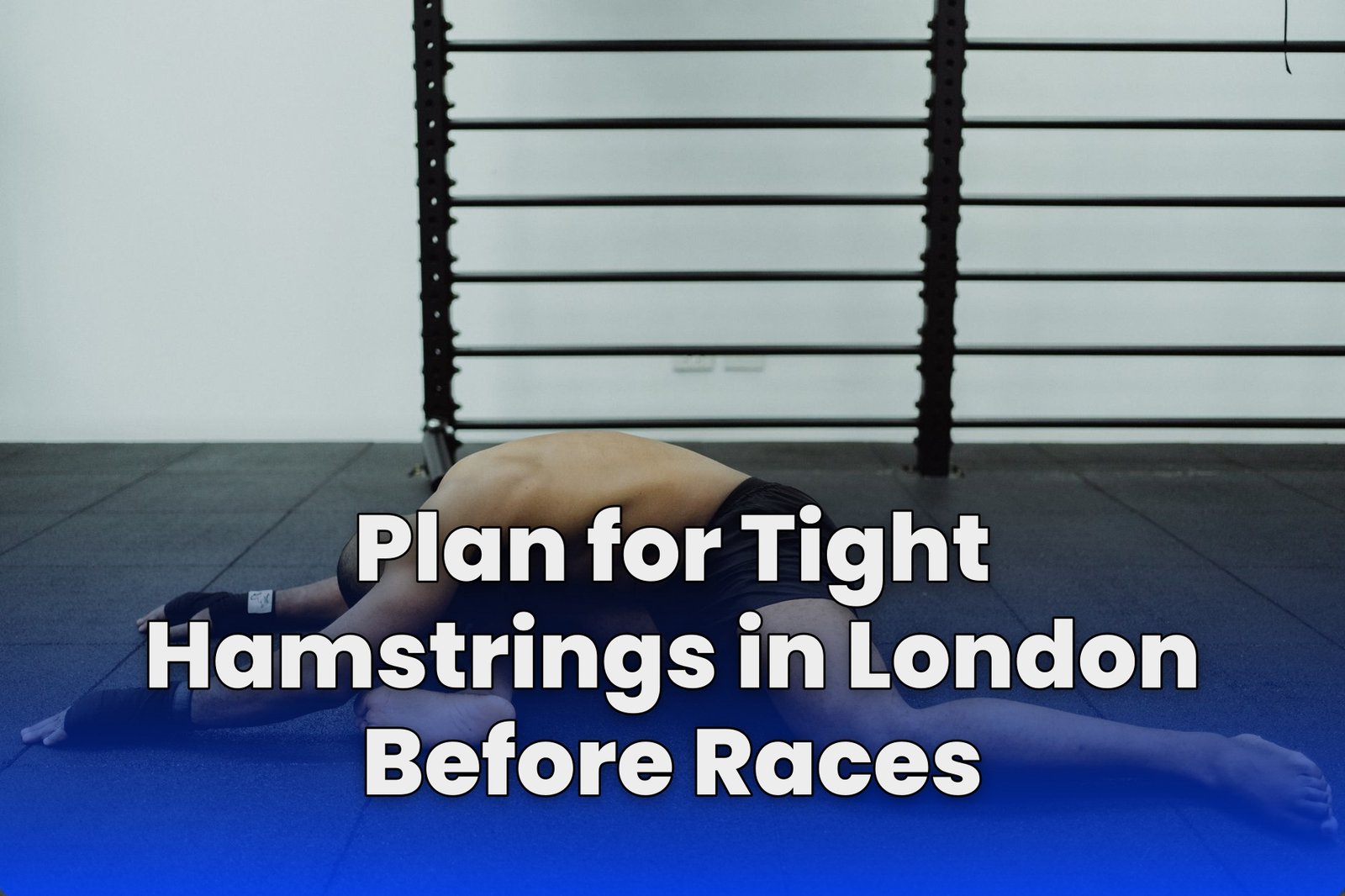
Stop relying on long, painful static stretches before race day. If your hamstrings feel tight, the fix is not to yank them into stillness. It is to wake them up with movement so they can handle faster strides without fighting you.
Here is the pre-race stretching schedule that actually makes sense: do a short dynamic warm-up, not a long hold. After a light jog or brisk walk to get warm, run Frankenstein for about 30 seconds on one side and 30 seconds on the other, then do Scoops the same way. Keep a straight knee and a solid torso for Frankenstein, and hinge and “scoop” smoothly for Scoops. Work at a tightness level that feels like “discomfort, not pain,” and breathe deeply as you move.
Only add static stretching if you still want it, and keep it for after the run or once you are fully warmed up. Pick two to four hamstring stretches and hold briefly, around 40 to 60 seconds per side, repeating the set if you are feeling good. Keep a slight bend in the knee so you stretch the hamstring, not the sciatic nerve. In London, where weather can swing fast, this movement-first approach is your safest bet to feel loose when it matters.
Stop Chasing Long Static Holds Before You Run
If your goal is faster, freer running, your current habit is probably working against you. Long static stretching right before a race can leave tissue feeling temporarily less springy, which matters when you need pop out of every stride.
So here is my position: build your pre-race stretching schedule for tight hamstrings in London around a dynamic warm-up first, then sprinkle in only brief static holds after you are fully warm. Tight hamstrings feel stubborn. Your warm-up must feel useful.
Time Your Warm-Up Like It Costs Money
Stretching is not a ritual you perform on autopilot. It is a timing tool. If you do dynamic work too early, the benefit fades. If you do it too late, you arrive at the start feeling rushed and overcooked.

For race day, treat your stretch plan as a ladder: build heat, then refine range, then keep moving. The moment you stop moving, tension returns and your hamstrings tighten again.
London Conditions Demand Smart Progression
London mornings can be damp, cool, and unpredictable. That does not mean you need more time than the person next to you. It means you need a progression that respects how quickly muscles can stiffen in the minutes before the start.
Dynamic hamstring prep helps because it warms the movement pattern, not just the sensation. A gentle static hold can feel soothing, but it does not replace the mechanical rehearsal your hamstrings want.
Use Frankenstein to Train Range Without Bending Forward
Frankenstein is simple, and the details matter. Stand tall with your core tight, extend your arms in front, lift one knee up, and bring your foot as close to the opposite arm as possible. Keep a straight knee and do not fold forward.
The cue is not height at all costs. The cue is clean alignment. When you maintain posture, you stretch the right muscles and avoid turning the drill into a twisty, low-value mobility move.
Scoops Wake Up Your Hamstrings Through a Smooth Hinge
Scoops start with a hip-width stance. Step one foot forward with the heel down and toes flexed, keep the other knee slightly bent, hinge, and scoop your arms toward the forward foot in one smooth motion. Repeat for 30 seconds on one side, then 30 seconds on the other.
Why does this work for tight hamstrings? Because the movement combines controlled hip hinge mechanics with active ankle position. Your hamstrings lengthen while you stay in motion, which keeps the tissue responsive.
Pick a Tight-Hamstring Routine You Can Repeat Reliably
Here is a practical framework you can run in London on race day. It is designed to be consistent across weather, crowding, and nerves. After all, if your plan requires perfect conditions, it will fail at the worst time.
Use this as a baseline, then adjust only the length of the final warm-up block.
| Block | Time | Focus |
|---|---|---|
| Easy jog or brisk walk | 5 to 8 min | Heat up |
| Frankenstein | 30 sec each side | Active hamstring range |
| Scoops | 30 sec each side | Hinge with control |
| Race-specific strides | 4 to 6 reps | Rebuild speed |
| Optional brief static | 40 to 60 sec per pose | Lock in comfort after warm-up |
If someone tells you to chase a long stretch immediately before the start, ask yourself: do you want comfort, or do you want performance? Choose the version that keeps you moving and responsive.

Static Stretching Has a Place Only After Full Warm-Up
Static stretching can help when your tissues are already warm. But right before race pace, static holds can shift your nervous system toward “range available” rather than “range ready.” That is why the schedule prioritizes dynamic work first.
If you still want static stretching, select 2 to 4 positions and hold each briefly, about 40 to 60 seconds per side. Some runners like 45 to 60 seconds for the “optimal benefits” window, but keep the number of holds small so you do not drain your legs.
Stretch Discomfort, Not Pain, Every Single Time
There is a clean rule you should not negotiate with yourself: stretch “discomfort not pain.” Tight hamstrings should feel challenging, not sharp, and never like something is being injured.
If pain shows up, stop. Deep but safe is the goal. And if you feel symptoms that do not match hamstring tension, reassess your technique before you add more time.
Keep a Slight Knee Bend to Protect the Sciatic Nerve
A straight-knee hamstring stretch can irritate the sciatic nerve for some people, especially when your posterior chain is already sensitized. That is why the schedule uses a strategy that many runners ignore: keep a slight bend in the knee.
This approach stretches hamstrings with less risk. It also makes your static holds more repeatable, which matters when you are juggling pre-race logistics in London.
Fight the Hidden Trap of “Feels Good” Stretching
“It feels good, so it must be right.” That thought is common and dangerous. Comfort can be a sign you stretched aggressively into the wrong tissue, or that you numbed the sensation you actually need to address through movement.
For a better mental check, base decisions on what your legs do next. After stretching, can you increase stride quality? If you cannot, your routine is too long or too static, and your hamstrings will tighten again fast.
Anchor the Plan With a Runner-First Reference
When you need a quick technique refresher, rely on guidance that focuses on runner mechanics and safe progression, such as hamstring stretching tips that emphasize timing and range control.
Use the source to correct form, not to replace your judgment. Your body is the dataset that matters on race morning.

Turn Your Warm-Up Into a Speed Rehearsal
Dynamic stretching should not be the last thing you do. After your hamstrings are warm and mobile, add short strides or race-like movement so the nervous system links range to speed.
This is where many schedules fail. People stretch, feel slightly looser, then stand around. That waiting erases the advantage and brings tightness back in time for the start gun.
Stop Reinventing the Schedule on Race Day
The final message is simple: your pre-race stretching schedule should be a routine you trust, not a gamble you change because you “feel tight.” Tightness is normal. Panic is optional.
On race morning, choose dynamic warm-up first, keep static work brief and warm, and respect discomfort rules. Your hamstrings will respond better to repetition than to last-minute experimentation.
Pre-Race Stretching Schedule For Tight Hamstrings In London
How Should You Warm Up Before A Race Day Run With Tight Hamstrings In London?
Start with 5 to 10 minutes of easy walking or jogging, then move into a dynamic warm-up that gradually increases range of motion, because long static holds before the start can leave hamstrings feeling tight or slow.
What Is A Simple Dynamic Stretching Schedule For Tight Hamstrings Before Your Race In London?
Do Frankenstein for 30 seconds on one side, then 30 seconds on the other, followed by Scoops for 30 seconds per side, repeat the whole set once more, and finish with 1 to 2 minutes of easy movement to keep blood flowing.
When Should You Stop Stretching Tight Hamstrings During Your Pre-Race Routine?
Stretch to discomfort, not pain, and stop when you feel sharp pulling, burning, numbness, or pain that changes your stride, while keeping steady breathing and avoiding a deep bend in the back.
Should You Add Static Hamstring Stretching Before The Start, And For How Long?
If you want static stretching, do it after you are fully warmed up or after the run, hold 40 to 60 seconds per side in 2 to 3 positions, repeat 1 to 2 sets, and keep a small bend in the knee to protect the sciatic area.
Which Hamstring Stretches Work Best For Tight Hamstrings In A Pre-Race Schedule?
Use a standing hamstring stretch, a seated hamstring stretch with the foot to the inner thigh, and a kneeling or lying towel or band hamstring stretch, aiming for smooth range, a slight knee bend, and a gentle hinge rather than forcing the leg higher.
What Should You Do After Your Warm-Up To Keep Hamstrings Loose On Race Day?
Do a few short, easy strides or light accelerations, then keep moving with small position changes until the start, avoid new deep stretching in the last minutes, and finish hydration and a light snack if needed so your muscles stay ready.
A Better Pre Race Stretching Plan For Tight Hamstrings In London
Your pre-race stretching schedule for tight hamstrings in london should be built around a dynamic warm-up, not long static holds, so your hamstrings wake up and your stride feels free on race day. Use Frankenstein and Scoops to move blood and motion through the back of the leg, keep stretching at “discomfort not pain,” and breathe through the tightness. If you want static stretching, do it after the run or when you are fully warmed up, keeping a slight knee bend so you target the hamstring instead of irritating the sciatic nerve. Stretch smart, arrive loose, and let your legs do the work.

I am Ozan, a London-focused running writer and marathon enthusiast with a passion for helping people discover the city’s best races, running routes, walking trails, and fitness events. I research and write practical, up-to-date guides covering marathons, race preparation, training tips, running gear, and everything related to staying active in London.
My goal is to create reliable, easy-to-follow content that helps runners and walkers of all experience levels explore London with confidence, whether they’re preparing for their first 5K or their next marathon.