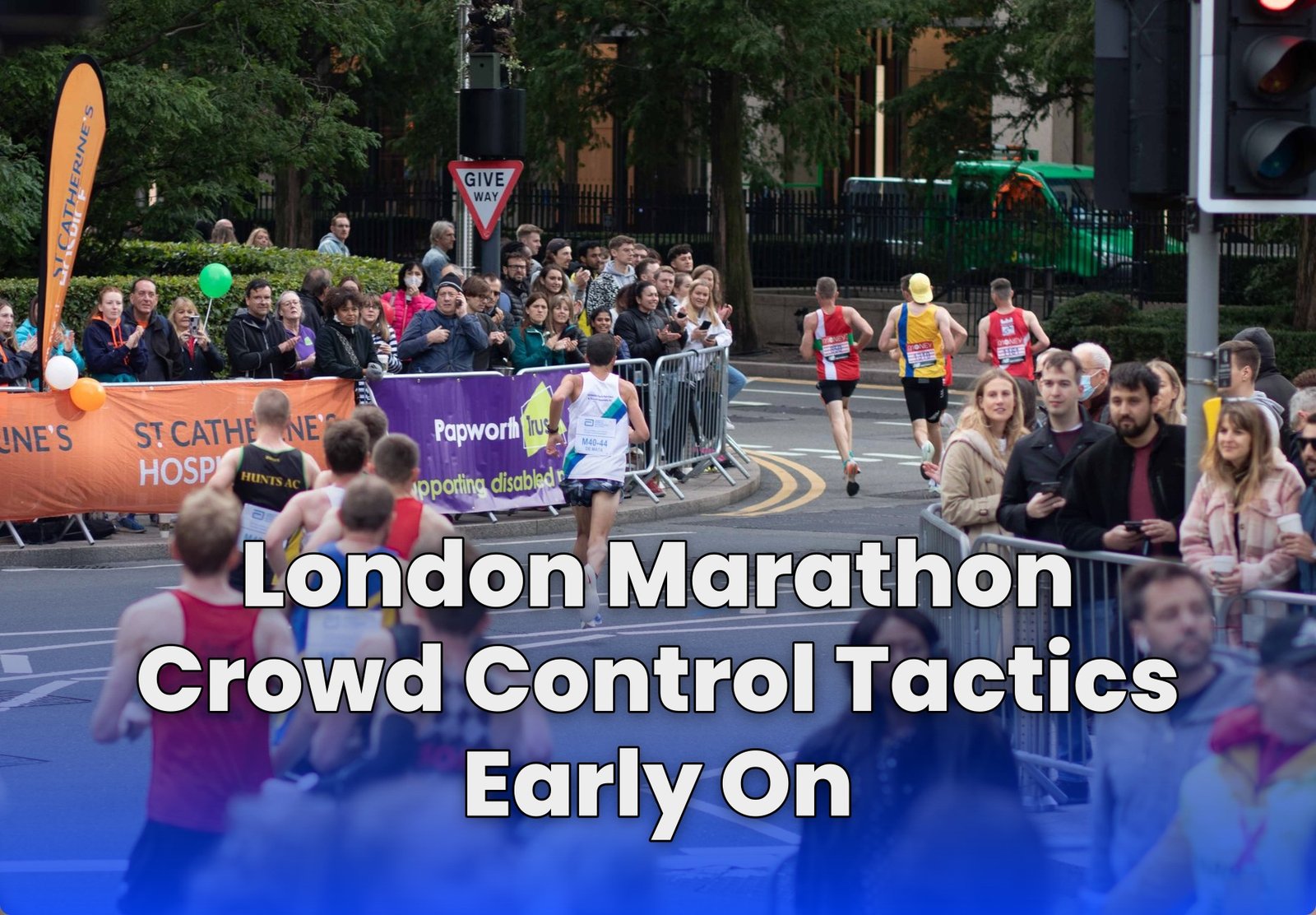
Your time will not be lost to your fitness in the London Marathon, it will be lost to the chaos of the first miles. Treat crowd control like the main event at the start, then speed becomes the easy part. The first stretch is chaotic by design, and weaving burns energy fast while teaching your legs to panic.
Settle into a steady lane early and stop trying to “thread the needle.” You will feel temptation on the first downhill, especially if adrenaline kicks in, so run the descent conservatively until you regain order. Plan to start about 5 to 10 seconds per mile slower than goal pace for the first 15K, with the first few kilometers even more disciplined, because that is exactly where surges from different start areas try to pull you off rhythm.
After the opening merge, bring it back under control deliberately and lock into your personal cadence as the route flattens. Use effort and official mile markers, not shaky GPS, and run clean tangents, since small GPS drift in central London can turn into real over-distance. When the crowd energy spikes later near Tower Bridge, soak it in without letting people shove your pace upward, and you will finish stronger because your start was managed, not reacted to.
Treat the First Miles Like Crowd Traffic, Not a Speed Test
Many runners lose the London Marathon before Mile 1 because they treat the start like a personal stopwatch. The first stretch is chaotic by design: different starting groups mingle, gaps close, and your body gets yanked toward other people’s energy. That is why london marathon crowd control tactics: find your rhythm in the first miles must come before any fantasy about negative splits.
What should you optimize? Not pace in the abstract. Optimize position and effort. When you start weaving, you add distance, break your breathing, and turn every small bump into a mini red zone.
Your first job is to stay on a line the crowd cannot steal.
Yes, you feel amazing early. The crowd amplifies that feeling. The fix is simple: settle first, accelerate later. If you do it right, the marathon becomes a sequence of controllable problems instead of one long improvisation.
Pick a Lane Early and Stop Zigzagging
The first mile is the loudest place to be wrong. If you weave to chase a cleaner pocket of space, you will keep paying that cost every few seconds. Stop negotiating with the crowd and choose a steady lane that matches your effort.
But won’t that leave you boxed in? Sometimes. The answer is to trade one short-term annoyance for a long-term rhythm. Choose a lane where people around you share a similar pace and where you can pass with small, planned moves instead of constant corrections.
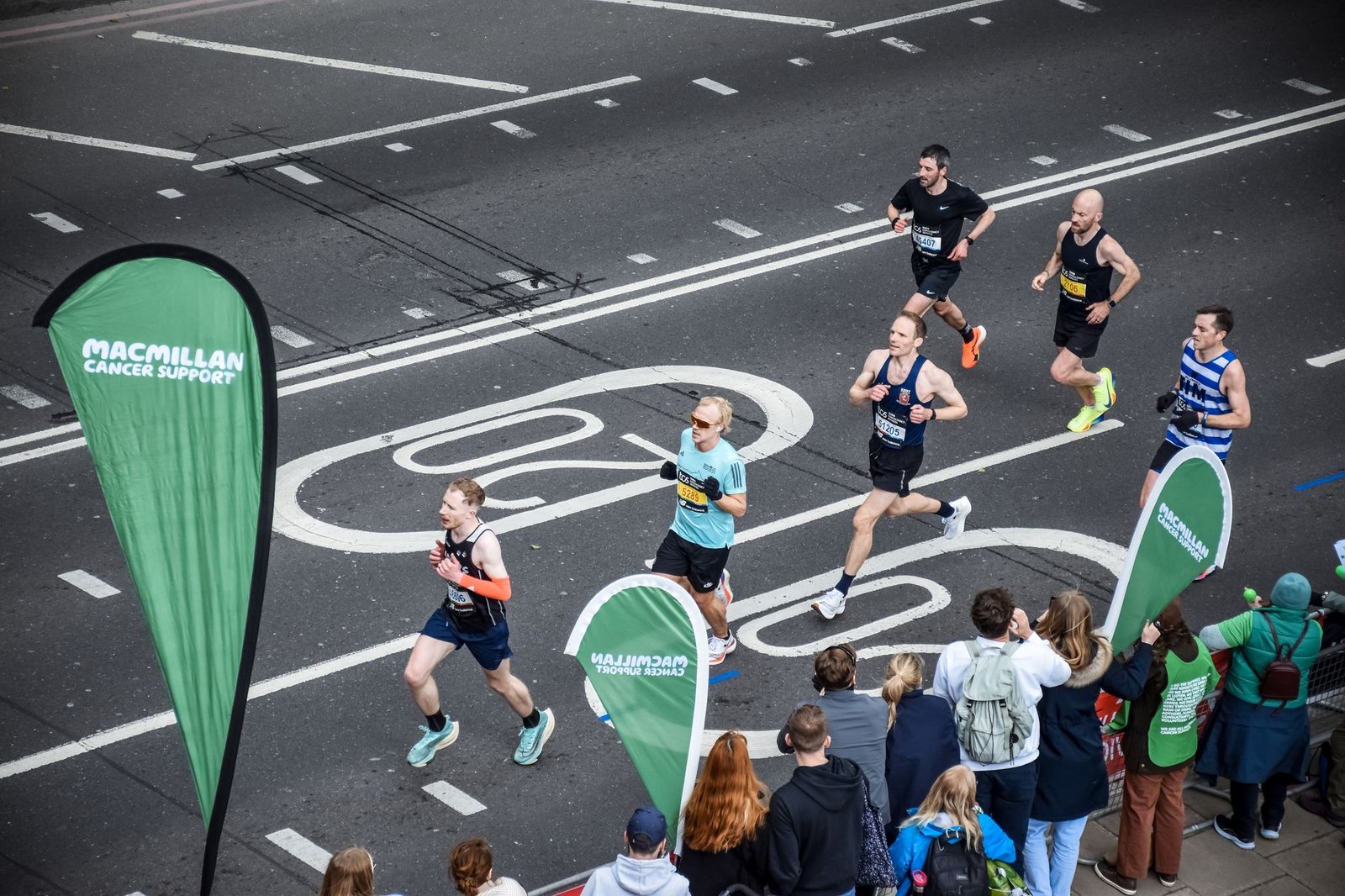
Think of your early kilometers as crowd management, not speed chasing. Your goal is consistent contact with the road, consistent stride cadence, and consistent breathing. When those align, pace starts to look after itself.
Downhill Adrenaline Is a Trap You Can Train Around
That early downhill tempts everyone to run too fast. Your legs feel light and your brain mistakes that sensation for progress. But the descent from roughly the first half of the course toward Woolwich, including a steep drop of about 140 feet over about 1.25 miles, steals braking time from your muscles.
If you want control, go conservatively on the grade. Let your effort stay capped while your speed lags behind the excitement. Uphill later will thank you, and so will your calves.
This is a race where physics always wins. You either respect gravity in the early miles or you pay for it with discomfort at the point where discomfort can no longer teach you anything useful.
Mile Three Merges Demand Patience, Not Panic
Around Mile 3, runners from different starting areas merge and the road turns into a controlled chaos problem. People surge, merge, and instantly try to reassert their “real pace.” If you react to those surges, you will spend the next stretch playing catch-up with your own plan.
The tactic is to hold your lane discipline and watch for changes in crowd density. When the merge happens, aim for smooth overtakes, not sudden jumps. You can pass slower runners without sprinting, but you cannot recover wasted effort after you sprint every time the pack shifts.
Ask yourself a hard question: are you running your marathon, or are you being carried by everyone else’s start? A steady decision at Mile 3 often decides how calm you feel at Mile 20.
Start 5 to 10 Seconds Per Mile Slower and Earn the Surge
Plan your opening with deliberate restraint. A practical rule is to start about 5 to 10 seconds per mile slower than goal pace for the first 15K, especially the first 0 to 5K. That buffer buys you two things: breathing stability and a chance to settle into form before fatigue hits.
When you feel “caught up” because the crowd is flowing around you, do not mistake that for being on pace. Flow is not pace. Efficiency is pace. And efficiency comes from controlled effort.
If you want external support for the logic, use pacing guidance to pressure-test your own numbers before race day. Then keep your promise to your plan when the early energy gets loud.
Use Effort, Official Mile Markers, and the Tangent Line
GPS can wobble when you’re surrounded by tall buildings and tight sight lines. In central London, that wobble tempts you into accidental overshooting. Your fix is old-school discipline: effort and official mile markers, not wrist anxiety.
Run your tangents and treat the thin blue line as a real training cue. You should not drift toward the outside just because it feels like a shortcut. Each inch adds up, and the early miles are long enough already.
| Course Cue | What to Track | Measured Risk |
|---|---|---|
| Official Mile Markers | Seconds per mile | GPS drift can reach 0.1 to 0.3 mi |
| Tangent Control | Distance staying true | Wider lines add extra steps early |
| Effort Level | Breathing and cadence | Adrenaline pushes you 5 to 10 sec fast |
| Lane Discipline | Smooth overtakes | Zigzagging increases disruption |
| Merge Awareness | Density shifts | Overreacting spikes workload |
The point is not to become a robot. It is to remove uncertainty. When you trust markers and effort, the crowd loses its ability to hijack your decisions.
Overtake With Strategy, Not With Anger
There is a difference between moving through a gap and fighting for one. In crowded sections, anger looks like sudden accelerations, sharp lateral moves, and late dives across traffic streams. That pattern costs you twice: it burns legs and it creates more congestion behind you.
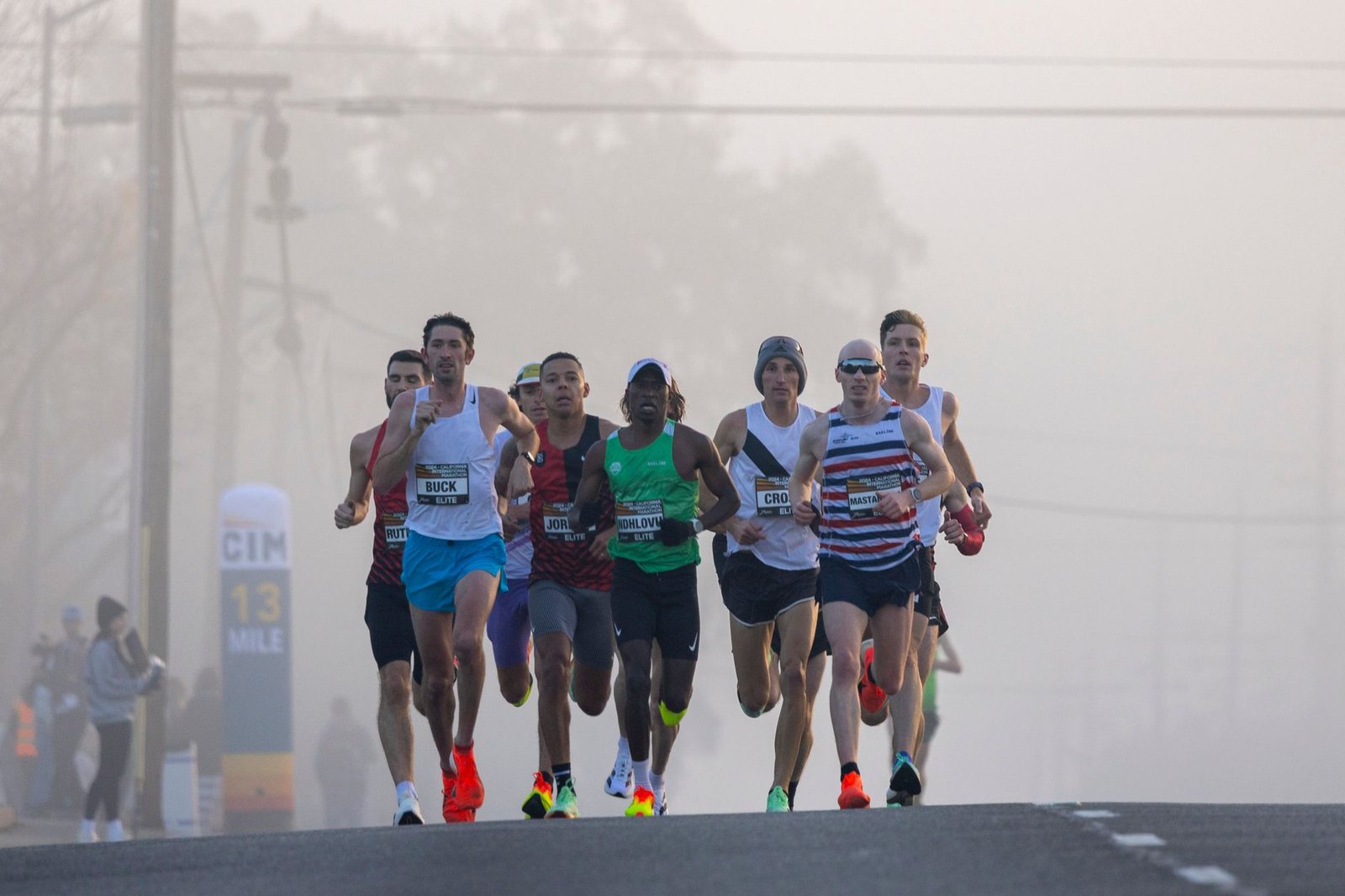
Instead, overtakes should be smooth and committed. Look for steady windows, use a clean line, and re-center immediately after you pass. If the gap does not hold for a few seconds, you do not have a strategy yet, you have a gamble.
Here is the simple rule most runners ignore until it hurts:
- Small openings require small moves
- Large openings require planned commitment
Greenwich and Cutty Sark Are Your Control Reset
By the time you move through areas like Greenwich and toward Cutty Sark around about Mile 6.5, you should start bringing your running back under control. This is where discipline pays off. If you overshot early, this stretch will feel like a correction forced on you by reality.
Your job here is to shift from crowd-response to rhythm. That means cadence steadiness, relaxed shoulders, and effort that matches your plan. Let the street noise fade and let your internal pacing take the lead.
Do you feel tempted to “make up” time now? That temptation is how you end up racing the marathon instead of running it.
Tower Bridge Later Loves to Steal Your Pace
Tower Bridge is a high-energy trap. Even seasoned runners get carried by the spectacle, the crowd, and the emotional momentum of being so far along. But energy is not pace. A burst here can rearrange the rest of your day.
Soak it in, then keep your mechanics steady. Your plan should already include the fact that crowds will be loud and that your job is to keep effort consistent through the noise.
When you hold control over the bridge moment, you protect your ability to run strongly when the course stops giving you easy reasons to feel good.
Run the Line You Planned, Not the Line the Crowd Offers
Tangents are not a nerdy detail. They are your distance insurance. In London, small drifts happen constantly because crowds funnel people inward, then outward. If you accept those drifts, you run extra work without earning it.
Pick a personal line and defend it with gentle steering. Let people pass you when needed. Do not pay attention to who looks fast. Pay attention to whether your stride is consistent and your path is controlled.
If you want to protect remote-style rhythm as a mindset, you must do it physically here. The marathon responds to clean inputs.
Practice Crowd Control Before Race Day
Crowd management does not live in your head. It lives in your habits. If you have never run in dense groups, you will learn on the job when the road is loud and the stakes are high.
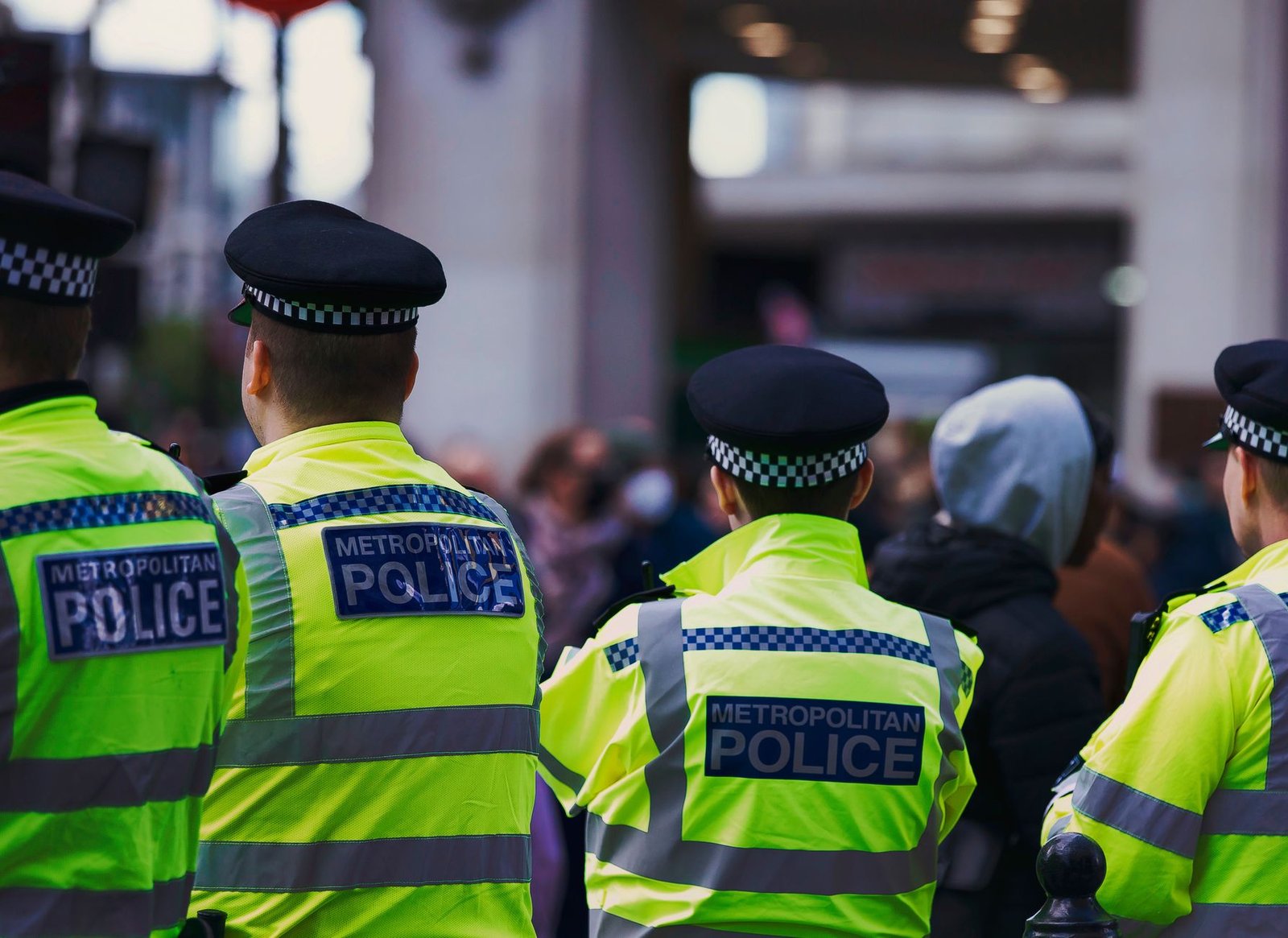
Train by running at planned effort in busier routes, practicing lane discipline in small group runs, and rehearsing how you pass without sprinting. You do not need a perfect simulation. You need reps that make controlled decisions feel normal.
Won’t that feel different from the marathon? Of course. The goal is not identical conditions. The goal is to build the reflex to settle, cap effort, and then progress.
Trust Your Rhythm and Stop Bargaining With the Start
The biggest counterargument is emotional: “If I start slower, I will fall behind and lose the race.” That belief mistakes early separation for permanent defeat. The truth is that controlled early pacing keeps your system ready, which makes late pacing possible.
From about 15K to 32K, you should gradually settle toward goal pace rather than chasing early crowd surges. That is where your rhythm becomes a tool instead of a hope. Your confidence grows because your body feels like it belongs to you again.
So when the start gets chaotic, commit to the boring choice. Settle into a lane, respect the downhill, absorb the merges, and bring it back under control. That is how you find rhythm in the first miles and keep it when the marathon finally asks for everything.
London Marathon Crowd Control Tactics: Find Your Rhythm in the First Miles
How Can You Treat the First Miles as Crowd Control in the London Marathon?
Plan to stop weaving early and pick a steady lane you can hold for several hundred meters, because the opening stretch often feels chaotic and merging runners change the flow around you.
What Should You Do When the Route Merges Around Mile 3?
Assume runners from different starting areas come together around about Mile 3, then keep your effort controlled and avoid sudden speed changes so you do not get pulled into surges.
How Should You Approach the Early Downhill Conservatively?
Take the first downhill sections, including the steep descent near the early route toward Woolwich, at a conservative effort so adrenaline does not push you to run too fast before the course flattens.
How Do You Build Pace Discipline From the Start to About 32K?
Start about 5 to 10 seconds per mile slower than your goal pace for the first roughly 15K, especially the first 0 to 5K, then gradually move toward goal pace from about 15K to 32K instead of chasing early crowd surges.
Should You Use Tangents and Official Mile Markers Instead of GPS in Central London?
Run the tangents marked by the course line and use official mile markers or manual lap timing rather than GPS, since central London buildings can make GPS bounce and tempt you to overrun your planned effort.
How Can You Avoid Getting Pushed Faster at Tower Bridge Later?
Use the energy around Tower Bridge as background, keep your cadence and effort steady, and bring your pace back under control after any crowd boost so your rhythm stays consistent.
Get Crowd Control Right In The First Miles
London marathon crowd control tactics: find your rhythm in the first miles start with one decision: stop weaving and treat the early stretch as a people problem first, speed problem second. Settle into a steady lane, take the opening downhill conservatively, and protect your pace discipline until the route settles and runners merge around Mile 3 and beyond. Use the tangents and official mile markers, not shaky GPS, so the crowd cannot trick your effort into climbing too soon. When you manage the first miles on purpose, the rest of the race stops feeling like survival and starts feeling controlled by you.

I am Ozan, a London-focused running writer and marathon enthusiast with a passion for helping people discover the city’s best races, running routes, walking trails, and fitness events. I research and write practical, up-to-date guides covering marathons, race preparation, training tips, running gear, and everything related to staying active in London.
My goal is to create reliable, easy-to-follow content that helps runners and walkers of all experience levels explore London with confidence, whether they’re preparing for their first 5K or their next marathon.