Running by GPS numbers is a trap, especially for beginners. In London, the course changes constantly, crowds slow you down without warning, and your watch can turn into a noisy boss instead of a calm guide. I believe pacing by effort and visible anchors is the smarter, steadier way to stay in control.
Think of landmark pacing as your rhythm reset. Start conservatively through the busier early stretches, then let the course do the work when the route eases or dips. When you hit crowd-packed icons, use them as checkpoints to re-center your cadence and breathing, not as moments to chase an exact split.
The real win is mental. When GPS behaves badly around dense areas, you do not panic and you do not overcorrect. By the time you approach famous landmarks later on, you will have already built a consistent feel for your pace, so your final push is a gradual, confident lift instead of a late scramble.
Stop Worshipping Your Numbers
The beginner’s guide to pacing by landmarks, not numbers, in london starts with a simple editorial decision: your watch is a tool, not a boss. Numbers punish you for congestion, reward you for luck, and punish you again when GPS drifts. Why should your effort depend on a satellite handshake when the road is clearly doing something else?
Landmark pacing gives you something numbers rarely provide in the London Marathon: context. Crowds change friction. Terrain changes load. Bridges and rivers change rhythm. When you pace by landmarks, you respond to the race that is actually in front of you.
If your plan requires perfect data to survive imperfect reality, the plan is fragile.
Your Effort Must Be Consistent, Not Your Speed
Numbers fluctuate because the environment fluctuates. Human output does not have to. When you pace by landmarks, you convert your goal into an effort target you can hold steady: smooth breathing, controlled stride, and the ability to repeat the same action for another few minutes.
Here is the evidence of logic you can feel. If you keep the same perceived effort through a crowded section, you will often land on the same time across the next stretch where the road opens. If you chase a fixed target speed through chaos, you spend energy to buy back time that later evaporates.
First Mile Discipline Through Congestion
In the first mile, congestion is not a side issue. It is the main feature. People weave, people slow, and if you enter the crush at target pace, you lose control before you earn it. Start conservatively, accept the stop-start feeling, and keep your cadence tidy rather than forcing longer strides.
Ask yourself a blunt question. Do you want to be fast in the moment, or effective by the middle of the race? Landmark pacing answers that by choosing an early anchor you can respect even when the crowd compresses you.
Downhill Control Beats Early Heroics
The early descent can feel like a gift. It is also a trap for beginners who hear “downhill” and translate it into “faster.” You should embrace the downhill, but you should not accelerate faster than your target. Let gravity do the work, then keep your effort level consistent so your legs do not pay interest later.
Overcooking the descent creates a familiar failure pattern: you feel fine for 10 to 15 minutes, then your stride stiffens as the course asks for balance and braking. Landmark pacing prevents that by telling you when the descent is temporary and when your control must return.
Use Crowd-Filled Landmarks to Reset Rhythm
London’s best pacing shortcut is its visibility. You can see where energy spikes and where it relaxes. The spectator-heavy stretch near the Royal Naval College and Cutty Sark offers a natural reset. Let the noise lift you without letting it steal your effort. Your job is to stabilize rhythm, not to sprint for applause.
These mid–first third cues matter because they create a repeating loop: feel the change, adjust your cadence, then lock back into your effort target. If you pace by numbers alone, you either overcorrect after each fluctuation or give up after your watch looks wrong.
Build a Landmark Map Before You Run
You need fewer anchors than you think, but they must be specific. For London, plan your landmarks around major changes in terrain and crowd intensity, then decide in advance what you will do at each one. That is how landmark pacing becomes a system instead of wishful thinking.
| Landmark | Course Cue | Pacing Action |
|---|---|---|
| Royal Naval College | Busy start stretch | Ease effort, smooth cadence |
| Cutty Sark | Mid first third | Reset rhythm, stay controlled |
| Tower Bridge | Iconic crowd moment | Hold effort, ignore “push” |
| Canary Wharf | GPS-unreliable blocks | Run by feel, use manual splits |
| Embarkment | Long straight stretch | Steady build to finish |
When your map is ready, you stop arguing with your watch mid-race. You stop guessing too. Your brain has a job: update effort when the landmark changes, then execute.
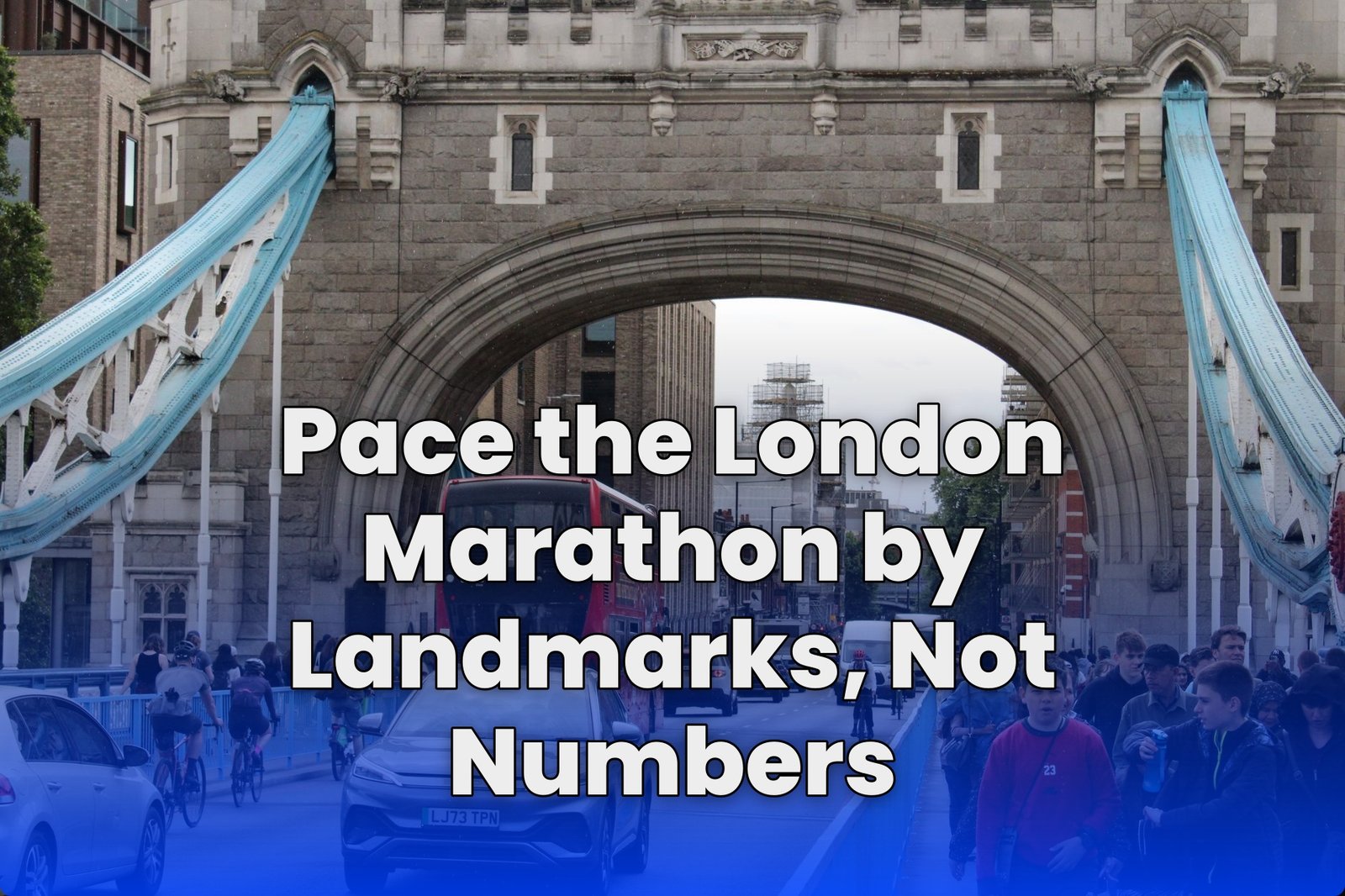
Tower Bridge Is a Test of Self-Control
Tower Bridge is iconic, which means it is emotionally loud. It can pull beginners off their plan because the crowd feels like a green light. But landmarks are not permission to speed up. They are cues to stay focused and avoid letting the crowd push you ahead, especially because the halfway mark is just ahead.
I keep course analysis bookmarked, but the decision is always yours in the moment. If you can hold the same effort at Tower Bridge as you did earlier, you enter the second half with a calmer body and a smarter strategy.
Canary Wharf and the GPS Betrayal
Canary Wharf is where your data can lie. Dense structures can cause signal bounce, jumpy pace readouts, and misleading split numbers. Beginners often treat that as a challenge to “fix” their speed, which creates unnecessary surges when the road is already unpredictable.
Landmark pacing gives you a simple rule for this zone: stop chasing watch numbers. Trust your legs and your breathing. If you must use numbers, use manual splits based on time from a known cue, not the flickering GPS pace that changes when the skyline changes.
Manual Splits Beat Panicked Corrections
Here is what happens when you panic at GPS drift. You run harder to match an expected pace that your watch suggests, then you tire, then your watch drops again, and the cycle repeats. Why reward a measurement error with extra muscle fatigue?
Manual splits break the loop. Choose a time interval you can repeat, then judge effort consistency: smooth breathing, stable cadence, and steady posture. If the course forces a slowdown, you accept it. If the road opens, you resume your controlled build.
Your plan should survive bad signals, not depend on perfect ones.
When the Course Flattens Bring Effort Under Control
After hills and tempo shifts, flattening can tempt you to “make up” lost speed. That is how beginners overshoot and then struggle to hold form later. When the road flattens again, bring your pace back under control. The goal is not to recover everything. The goal is to remain consistent enough to finish strong.
This is the core logic behind landmark pacing. Terrain changes your speed naturally. Your effort should not swing wildly just because the road becomes easier to run on. Landmarks tell you when to stop chasing and when to settle.
Build Toward the Finish With Intentional Acceleration
If pacing has gone well, the middle-to-late race becomes a controlled climb toward the finish. Use landmarks like the Tower of London as your cue to begin a gradual build, then extend that mindset along the long straight Embankment. Steady acceleration is not chaos. It is a planned increase in effort that your legs can actually sustain.
Beginners often mistake “late acceleration” for a sudden sprint. Landmark pacing teaches patience. You start the build when the race offers clear cues, and you stop short of burning yourself out before the final stretch earns a genuine gear.
The Final Two Miles Demand Your Last Gear
In the final two miles, the only question that matters is whether you saved something. If your landmark decisions were disciplined, you should feel the shift when the course begins to ask for commitment. You will still run by effort, but now you can translate effort into a sharper cadence and stronger drive.
Run with whatever “final gear” you have left, guided by the remaining iconic cues and the rhythm you built earlier. Ignore the urge to sprint at the first sign of excitement. You do not need fireworks. You need finishing speed, delivered late, on purpose.
Beginner’s Guide to Pacing by Landmarks, Not Numbers in London
What Does Pacing by Landmarks, Not Numbers, Mean for London Marathon Runners?
Pacing by landmarks means you judge your effort by where you are on the course, like crowds and course changes, instead of chasing a watch pace number that can fluctuate with terrain and turns in London.
How Should You Start Your Effort When the Course Is Congested in London?
Begin conservatively through the early stretch, expect crowding, and avoid weaving, because small detours and surges burn energy that you will need later.
Should You Use the Early Downhill to Build Speed on a London Course?
Treat the early descent as a temporary effort-easier phase, use the downhill to keep your form relaxed, and avoid accelerating faster than your planned effort.
Which London Landmarks Help You Reset Rhythm When the Route Changes?
Use well-known, spectator-heavy areas to reset your rhythm, such as the area near the Royal Naval College and Cutty Sark, then focus when you reach Tower Bridge to keep the crowd from pulling you ahead.
How Can You Pace Around Canary Wharf When GPS Signals Are Unreliable?
Plan for a mentally tricky section by pacing by feel and using manual checkpoints, so you do not chase unstable GPS readings caused by signal bounce near tall buildings.
What Landmark Cues Help Beginners Regain Control and Finish Strong in London?
If your pacing stays steady, gradually build toward the finish by using landmarks as cues, like the Tower of London followed by the long Embankment straight, then run with your best remaining effort in the final stage.
Run By Landmarks Not Numbers In London
Use the beginner’s guide to pacing by landmarks, not numbers, in london as your rule for staying steady when the course changes and your watch lies to you, because effort and cues keep you honest through congestion, descents, and the mentally tricky parts near Canary Wharf. Pace control beats ego every time, so lock your rhythm to what you can see, adjust with purpose, and let the finish come as the reward for smart restraint.

I am Ozan, a London-focused running writer and marathon enthusiast with a passion for helping people discover the city’s best races, running routes, walking trails, and fitness events. I research and write practical, up-to-date guides covering marathons, race preparation, training tips, running gear, and everything related to staying active in London.
My goal is to create reliable, easy-to-follow content that helps runners and walkers of all experience levels explore London with confidence, whether they’re preparing for their first 5K or their next marathon.