If your hips feel tight in the first mile, your warm-up is failing you. The right london marathon warm-up for tight hips: a step-by-step routine is not about stretching harder, it is about waking up the exact tissues that need to move cleanly under fatigue.
Tight hips change everything. Your stride shortens, your pelvis tilts, and your knees and back start doing work they were not built to handle for 26.2 miles. A smart warm-up sequence brings range of motion back first, then activates the glutes and hip flexors that stabilize your movement, so you do not “warm up” by suffering mid-race.
This article argues for a step-by-step approach because chaos is the enemy of warm-ups. You want predictable mobility, controlled activation, and a final rehearsal that matches marathon mechanics. Follow the routine, and you will start faster, move smoother, and feel less like your hips are holding you back.
Why The London Marathon Warm-Up Misses Tight Hips
The London Marathon warm-up for tight hips, a step-by-step routine, fails when runners treat “warm-up” like a single event instead of a targeted sequence. If your hips feel sticky before you even reach pace, generic jogging and random stretching will not fix the problem. They might make you sweat, but do they change how your pelvis moves under load?
Tight hips are a movement-control issue first. Tightness is often your body bracing for uncertainty. When the first mile arrives and your stride gets longer, the hip flexors and glutes have to coordinate immediately. A warm-up that ignores that coordination sets you up for early stiffness, shortened steps, and lost efficiency.
So here is the position: your warm-up should be hip-specific, progressive, and measurable. If it is not, you are buying stress at the start of a 26.2-mile fight.
Outcomes Beat Feelings During Remote-Start Muscles
Many runners judge a warm-up by comfort: “I feel loose, so I am ready.” Comfort is useful, but it can also be misleading. Static stretching can create a temporary sensation of range without improving the ability to use that range while running. Does “loose” mean you can drive your knee forward without your pelvis dumping forward?
Research published in the Journal of Strength and Conditioning Research has repeatedly linked aggressive static stretching before performance to short-term decreases in power output, especially when held long. The practical takeaway is simple: warm-up should earn range, then prove control.
That is why this routine uses short mobility, quick activation, and running-like motions. You are not chasing comfort. You are rehearsing mechanics.
A 60-Second Hip Check Tells You What to Fix
Before you start, ask a better question than “Do I feel tight?” Tight hips can mean different things: dominant hip flexors, underactive glutes, limited hip rotation, or poor pelvic control. You need a quick screen that guides your next choice.
Try this mini-check: stand tall, then perform 5 slow bodyweight hip hinges and 5 forward knee lifts. Watch two cues. First, does your pelvis tip forward and your low back take over? Second, does your knee lift feel restricted at the hip, or does it feel like stiffness in the whole chain?
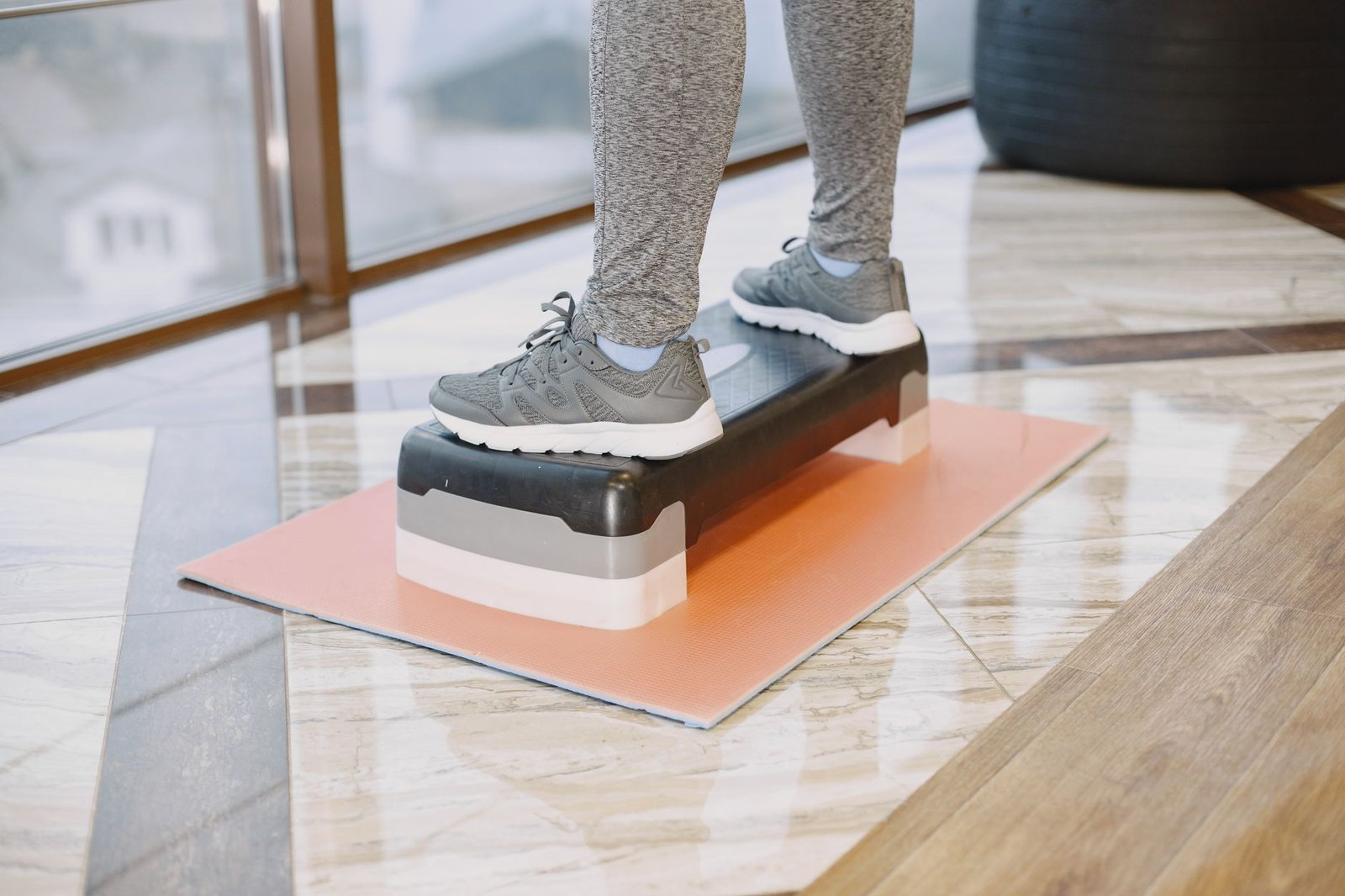
If your knee lift drags or you cannot get the pelvis to stay level, you will emphasize hip flexor mobility and glute activation. If your hinge feels pinchy at the front of the hip, you will bias rotation and controlled mobility. A warm-up without this read is guesswork.
Blood Flow and Control Are Your Two Levers
Warm-up is not a wish. It is a plan. The plan must do two jobs. Job one is raise tissue temperature and circulation so your hips respond quickly. Job two is train control through the exact ranges you will use while running.
Too many routines do only job one, or they try to do both with static stretching. That is backwards. Static holds do not teach running mechanics. They can even distract your nervous system by asking it to relax without preparing for force.
When you combine short mobility with activation and then progress into dynamic drills, you get a hip that moves, and a hip that moves with purpose.
Phase One Get Warm Without Turning Mobility Into Stretching
Start with movement that gradually increases range and rhythm. Keep it easy enough that you could still talk in short sentences. Your goal is to prepare the joint and nervous system, not to test endurance.
Do the following in order. Keep each part controlled, smooth, and repeatable:
- 2 minutes brisk walk or light jog
- 30 seconds marching with tall posture
- 10 hip circles each direction, slow and deliberate
- 10 controlled leg swings forward and back, then side-to-side
When your hips feel warmer but not strained, you are ready for the real work: mobility that matters and activation that lasts.
The Five-Exercise Core That Fixes Tight Hips Fast
This is the backbone of your London Marathon warm-up for tight hips, a step-by-step routine. It is built to restore useful ranges and train the glutes and hip flexors to coordinate. If you do these poorly, you will feel good in the moment and stiff in mile one. If you do them well, your stride opens.
Use this table to time your core sequence. Then execute with clean form, not aggressive stretching.
| Exercise | Time (min) | Hip Target |
|---|---|---|
| 90-90 Hip Switches | 1.5 | External Rotators |
| Couch Stretch | 2.0 | Hip Flexor |
| Glute Bridge | 1.5 | Glute Max |
| World’s Greatest Stretch | 1.0 | Hip and Adductors |
| Standing Knee Raises With Posterior Tilt | 1.0 | Hip Control |
Keep the intensity honest. Couch stretch is there to create front-of-hip length, not pain. Glute bridges should feel like glutes, not low back. If any exercise causes sharp discomfort, reduce range and keep moving smoothly.
Phase Two Activation That Protects Your Stride
Now you convert mobility into performance. Activation means your hips can move through range while your pelvis stays organized. This is where runners often fail. They finish stretching and then jump straight into jogging, hoping their mechanics will magically appear.
Do two rounds, then stop. The volume should be small enough that you arrive at the start line fresh.

- 10 glute bridges with a 1-second squeeze at the top
- 10 quadruped hip extensions each side, slow tempo
- 8 reverse lunges to a controlled knee track each side
Counterargument you will hear: “I just need more stretching.” Stretching may buy range, but activation buys reliability. The marathon will ask you to repeat reliability every step, especially when fatigue changes your posture.
Phase Three Marathon-Specific Drills for Tight Hips
When your hips are warmed and activated, you rehearse running motions. This phase teaches your body how to apply force with less effort from the low back. Think of drills as software updates for your stride pattern.
Choose two drills and do them for short bursts. Stop while you still feel crisp:
- 20 meters A-skip or high-knee drill, focusing on knee lift with level hips
- 20 meters butt-kicks with quick foot turnover, not speed chasing
- 30 seconds wall march with a tall torso and controlled pelvic tilt
Does your knee lift look like it comes from your hip, or does your low back do the heavy lifting? Correct the pattern before you increase speed.
The Mistakes That Turn Warm-Up Into a Stiffening Trap
Two errors dominate. First is long static stretching right before you run. Second is treating the hips like isolated joints. The pelvis, glute, and hamstrings work as a unit. When you stretch one piece hard and ignore the rest, you create mismatch.
Here are common mistakes to eliminate:
- Holding long hip flexor stretches until you feel pain
- Skipping activation and going straight to fast pace
- Doing mobility while your pelvis collapses forward
Your warm-up should make your hips work, not just look looser.
If your hips feel “open” but your stride shortens, you have created range without control. That is the stiffening trap.
Timeline Matters More Than Your Favorite Exercise
The best routine collapses if the timing is wrong. You need enough time for blood flow and nervous system readiness, but not so much time that you cool down or get mentally fatigued.
A strong rule: complete the core sequence about 15 to 25 minutes before the start, then do a shorter top-up. For many runners, that looks like 5 minutes of easy movement plus 1 round of activation and one drill burst. If weather is cold, you add a little more easy movement.
Ask yourself a practical question: do you usually start stiff because you rushed, or because you used the wrong mix? Fix the mix, then protect the timing.
Scale Down When Your Hips Complain During Warm-Up
Some discomfort is normal. Pinching and sharp pain are not. A smart runner adjusts immediately because the marathon punishes stubbornness. If your warm-up reveals a flare-up, you protect the day.

Use this decision logic. If you feel pinching in the front of the hip, reduce couch stretch range and emphasize glute bridges and gentle hip switches. If you feel strain in the glute, back off the drills that demand fast hip extension and keep activation light. If your low back dominates the movement, shorten the range and slow the tempo.
Opposing view: “Just stretch harder and it will loosen.” Harder often means more irritation and less control. Your job is to find the motion you can repeat safely, then move on with confidence.
Finish Line Care That Keeps Tight Hips From Coming Back
Warm-up is only half the story. Post-run recovery controls whether your hips stay mobile tomorrow. If you finish and immediately stop moving, you give tissues no chance to flush and reorganize.
Do a gentle cooldown walk for 5 to 10 minutes. Then spend 3 to 5 minutes on light hip mobility without forcing range. Pair that with slow breathing to calm the nervous system. Your goal is to keep the tissues responsive, not to earn soreness.
If tightness returns quickly on successive days, revisit your routine. Chances are you overreached on mobility intensity, or you did not enough activation before running. Next time, make your hips work harder during the warm-up so they do not demand pain later.
London Marathon Warm-Up for Tight Hips: A Step-by-Step Routine
How Do You Prepare for a London Marathon Warm-Up for Tight Hips?
Start with 5 to 8 minutes of easy jogging or brisk walking to raise your body temperature, then reduce intensity as you move into hip-focused mobility. Keep the range controlled, stay pain-free, and aim for smooth movement rather than stretching hard.
What Is a Step-by-Step Routine for Loosening Tight Hips Before the London Marathon?
After your general warm-up, do 10 leg swings per side (front-to-back and side-to-side), then 5 hip circles per direction per side. Follow with 60 seconds of controlled marching with high knees, 8 to 10 glute bridges, and a 30-second hold in a gentle couch stretch per side, finishing with 2 short strides of 20 to 30 seconds at easy pace.
Which Hip Mobility Exercises Help During a London Marathon Warm-Up for Tight Hips?
Good options include 90/90 hip switches for rotation control, dynamic lunges with an upright torso for hip flexor mobility, and figure-four stretch only if it feels comfortable and not pinchy. Pair mobility with light activation like glute bridges or mini-band side steps to help your hips track well as you start running.
How Long Should You Spend on a Warm-Up for Tight Hips Before the London Marathon?
Plan about 15 to 25 minutes total, with roughly 5 to 8 minutes warming up your whole body, then 8 to 12 minutes dedicated to hip mobility and activation. Keep the last 2 to 4 minutes easy and flowing so you enter the start feeling loose, not fatigued.
What Should You Avoid If You Have Tight Hips on Marathon Day?
Avoid aggressive static stretching right before the start, especially long holds that create sharp discomfort. Skip deep stretches that cause pinching in the front of the hip or numbness in the leg, and do not add heavy strength work the same morning since it can make tight hips feel stiffer.
When Should You Get Help for Hip Pain Before the London Marathon?
If you have persistent pain, pain that changes your stride, or symptoms like catching, numbness, or significant loss of range, consider seeing a physiotherapist or sports medicine clinician. Getting assessed early helps you adjust your warm-up and training plan before race day.
Own The London Marathon Warm-Up
If your hips feel tight, you cannot afford to skip the right prep, and the best option is the london marathon warm-up for tight hips: a step-by-step routine because it gets your range of motion working before you ask for speed. Do the routine before long runs and race day, pay attention to how your hips move, and treat it like a non negotiable part of your training, not a last minute fix.

I am Ozan, a London-focused running writer and marathon enthusiast with a passion for helping people discover the city’s best races, running routes, walking trails, and fitness events. I research and write practical, up-to-date guides covering marathons, race preparation, training tips, running gear, and everything related to staying active in London.
My goal is to create reliable, easy-to-follow content that helps runners and walkers of all experience levels explore London with confidence, whether they’re preparing for their first 5K or their next marathon.