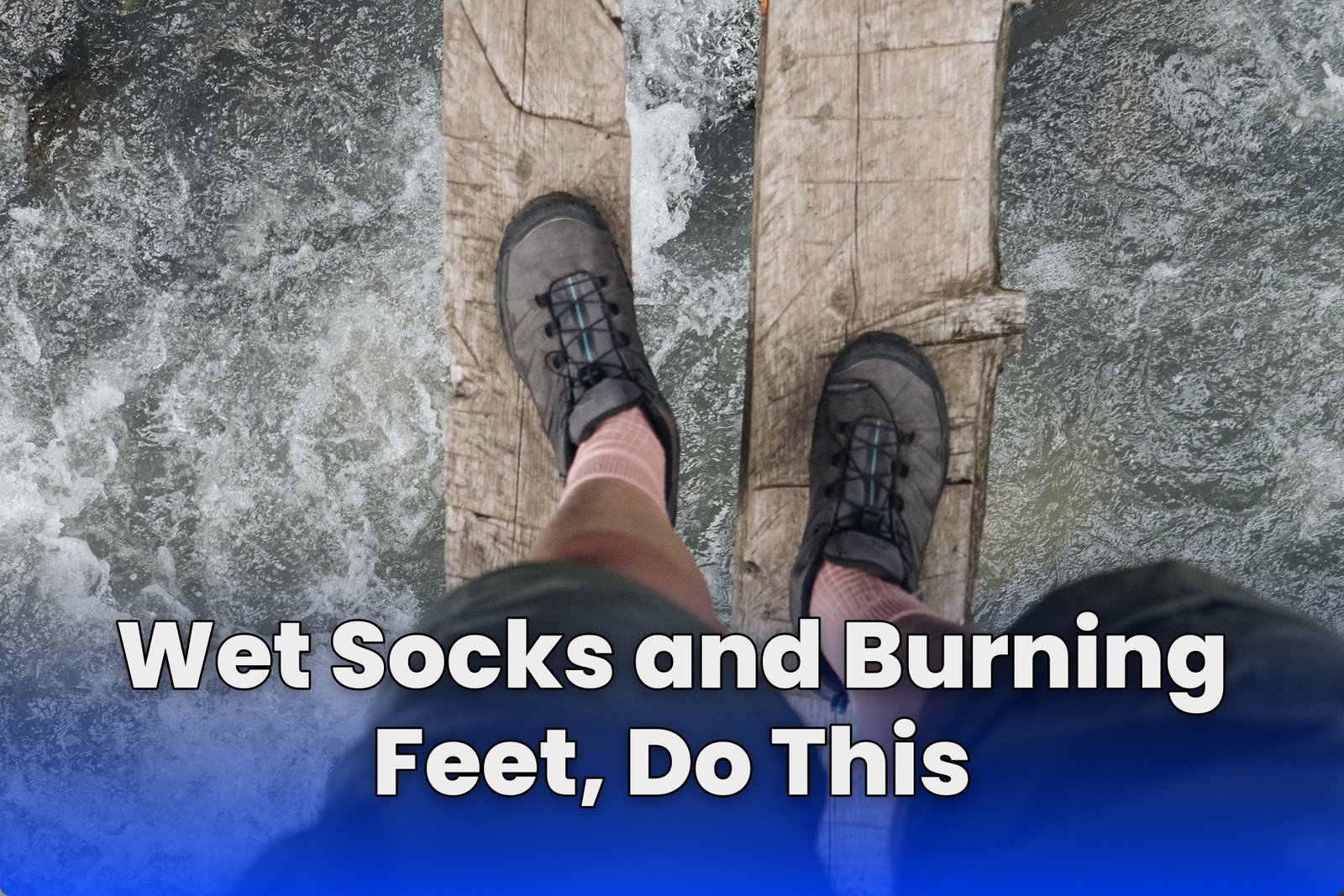
Burning feet after wet socks need action fast. If you are searching for what to do if your socks get wet and your feet start to burn, start with a simple truth: moisture plus rubbing can turn “annoying” into blistering or even more serious skin damage. Don’t treat the burn as something to wait out while you keep your shoes on.
First, get the wet stuff off. Remove or change into dry socks, and if you can, take off your shoes too. Pat your feet dry thoroughly, especially between the toes, then put on clean, dry socks. If you cannot change immediately, loosen tight footwear for airflow, reduce rubbing around hot spots with a blister bandage or tape, and act early before a small problem becomes a real one.
Next, warm and protect your feet without going extreme. In cold or wet conditions, treat it like a “trench foot risk” situation: rest, gently rewarm, keep the area clean, and avoid long exposure to wet and cold. Watch for red flags like spreading redness, increasing warmth, swelling, pus or drainage, worsening pain, fever, numbness or a “wooden” feeling, or skin that looks white, wrinkled, mushy, or peeling. If any of that shows up or you are getting worse, get medical care the same day.
Treat the Burn as a Moisture and Friction Warning
When your socks get wet and your feet start to burn, you should treat it as a skin-moisture plus friction problem that can escalate fast. Wet fabric softens the top layer of skin, sweat raises irritation, and rubbing does the rest. The burn is your cue to act before you get blisters, peeling skin, or worse.
Burning is not a mystery symptom. It is the body’s alarm system for damage at the surface. If you keep walking, the same pressure and moisture repeat the injury cycle. Why wait for a blister you could often prevent in the first minutes?
So start with the simplest truth: moisture control and friction reduction come first. Everything else is secondary.
Change Wet Socks Immediately and Stop the Cycle
The first move should be straightforward: remove the wet socks and put on clean, dry ones as soon as you can. If you cannot fully change right away, loosen tight shoes to improve airflow and reduce rubbing while you look for a safe place to switch.
Moisture does not sit still. It spreads across the skin, keeps the fabric in contact, and increases heat and irritation. In cold or wet conditions, that same moisture can worsen circulation and raise the risk of trench foot-type damage.
Make your plan simple: socks off, socks dry, socks back on. The goal is to end contact with wet material now, not later.
Dry Between the Toes Like It Is the Main Event
Pat your feet dry thoroughly, especially between the toes. That area traps moisture and encourages maceration, where skin becomes white, wrinkled, and fragile. If you only dry the top of the foot, you leave the problem zone untouched.
Give it a focused minute or two. A towel, clean cloth, or even absorbent paper can help. If water is available, rinse out debris that holds moisture. Then dry again.

Think of it this way: the toes are where friction is constant and ventilation is limited. Would you ignore the point where the damage starts?
Cover Hotspots Early to Prevent Blisters
The moment you feel a burn, look for the likely friction point. Blisters do not appear out of nowhere. They form where repeated rubbing lifts or damages the outer skin.
Act early on hotspots, and you can stop a blister from ever getting started.
If you have blister pads, a bandage, or tape, cover the hotspot right away. That small barrier reduces friction and gives irritated skin a chance to calm down. Pair it with dry socks and you cut the risk in half.
Warm Up Carefully When It Is Cold and Wet
If conditions are cold, do not rush into aggressive heat. Cold wet feet plus ongoing moisture can reduce blood flow, and rapid rewarming can irritate damaged tissue. Instead, warm and dry promptly, using gradual warming methods.
Change into dry socks, get into a warmer space if possible, and allow the feet to recover naturally. The point is warmth without more injury. If you can feel numbness or deep pain, treat it as a higher-risk situation, not an inconvenience.
Your objective stays the same: stop wet exposure, reduce friction, and restore comfortable circulation.
Reduce Pressure and Restore Circulation
Wet feet swell slightly and become more sensitive, which increases friction with every step. Loosen laces, remove any tight inserts that pinch, and give your feet brief breaks to reset pressure.
When you can, elevate the feet and shift weight to reduce continuous pressure on the most irritated areas. Circulation matters because inflamed skin needs recovery time.
This is also where smart pacing helps. Why keep walking hard on a foot that is already signaling tissue stress?
Use a Triage checklist When Burning Turns Serious
Not every burn is the same. Your job is to decide whether home care is enough or whether you need urgent evaluation. Use the checklist below to track severity and timing, because risk rises with time in wet conditions and with worsening skin changes.
| Step | Timing | Goal |
|---|---|---|
| Sock change | Within 10 to 15 minutes | Remove moisture |
| Toe drying | 2 to 3 minutes | Stop maceration |
| Hotspot cover | At first burn | Reduce friction |
| Air break | Every 30 to 60 minutes | Restore airflow |
| Rewarm slowly | 10 to 20 minutes | Improve circulation |
If you want a trusted reference on wet-sock damage and trench foot risks, wet-foot guidance can help you understand why time matters. Then use your symptoms, not guesses, to choose the next step.
Watch for Red Flags That Point to Infection
After you act on moisture and friction, monitor the skin closely. Spreading redness, increasing warmth, swelling, pus or drainage, and worsening pain are all signals that the irritation may be moving into infection or deeper tissue injury.
Pay attention to sensation. Numbness, a “wooden” feeling, or loss of normal touch can mean tissue is compromised. Skin that becomes significantly white and wrinkled, mushy, or peeling is also a bad sign in wet and cold exposure.
If symptoms are progressing over hours, the safest move is medical evaluation. Home care is for stabilizing, not for waiting out a decline.
Handle Fungal Flare-ups Without Ignoring the Burn
Wet feet can trigger or worsen fungal issues, especially when skin stays damp for long periods. If you notice persistent itching, scaling, or a rash that keeps returning after you dry up, treat it as a separate skin problem that needs targeted care.
But do not assume every burn is fungus. Early burning after wet exposure often comes from friction and moisture irritation first. That is why drying, changing socks, and reducing rubbing still matter even if fungal risk is present.
If you are unsure, treat the immediate damage first with dryness and friction control, then follow up for skin-specific treatment if symptoms persist.
Pick Footwear That Prevents Wet Contact in the First Place
Prevention starts with fit and materials. Shoes that pinch concentrate pressure and create micro-friction, which turns wetness into burning faster. Breathable or moisture-wicking socks help move sweat away from skin, but they only work if you manage wet episodes quickly.
Consider shoe habits too. Tight shoes trap moisture. Socks that stay damp for hours keep the skin soaked. The right footwear reduces contact time between wet fabric and your skin.
Your goal is simple: less friction, less moisture. If your gear guarantees wet contact, your body pays the price.
Don’t Keep Walking on Damaged Skin
Once your foot shows signs of tissue injury, continuing the same activity usually worsens the problem. The burn tells you that skin integrity is compromised, and every step adds more friction and more moisture retention.
Rest is not weakness. It is damage control. If you must move, reduce impact, loosen footwear, and protect hotspots with a barrier like a blister pad or bandage.
If the symptoms are clearly worsening, pushing through becomes a gamble with your skin and circulation. Why gamble with something that heals slowly once it breaks?
Know When to Seek Same-Day Medical Care
Some symptoms should trigger medical evaluation the same day, especially if you see infection signs or if burning comes with numbness or significant changes in skin color and texture. Fever, spreading redness, pus or drainage, and severe or rapidly worsening pain belong in the urgent category.
Use this decision rule:
- If redness or pain spreads, get seen the same day.
- If you feel numbness or skin turns mushy or mushy-white, get seen the same day.
Home care can stabilize mild irritation. It should not replace care when tissue is clearly deteriorating.

Turn This Into a Personal Protocol for Next Time
After you recover, build a practical routine so this does not repeat. Pack spare socks, carry a small dry cloth, and plan for breaks when you know you might sweat or get wet. The simplest prevention is being ready to act.
Create a personal checklist: socks change, toes dry, hotspots covered, shoes adjusted for airflow, and warmth restored safely if it is cold. That protocol protects skin before friction does its damage.
Next time you feel that first burn, treat it as a prompt, not a shrug. The fastest path to recovery is early control of moisture and friction.
What To Do If Your Socks Get Wet And Your Feet Start To Burn?
What Should You Do First If Your Socks Get Wet And Your Feet Start To Burn?
Get out of the wet socks right away if you can, loosen your shoes for airflow, and move to a warm, dry place so the burning does not get worse.
How Can You Dry Your Feet Properly After Socks Get Wet?
Pat your feet dry thoroughly, especially between the toes, then put on clean, dry socks and dry shoes if you have them.
How Do You Reduce Friction And Prevent Blisters When Your Feet Are Burning?
Check for hotspots and cover them with a blister bandage or tape, keep shoes from rubbing, and avoid walking more than necessary until the burning settles.
When Should Wet Socks And Burning Feet Be Treated As Trench Foot Or Infection?
Seek urgent medical care if redness spreads, the area feels hot or swollen, you see pus or drainage, pain increases, you develop fever, numbness appears, or the skin turns very pale, wrinkled, mushy, or peels.
Should You Rewarm Cold, Wet Feet, And How Do You Do It Safely?
If your feet are cold, rewarm them gently and gradually in a warm environment, avoid rapid heat sources, and keep the feet dry and raised to support circulation.
How Can You Prevent Socks From Getting Wet And Feet From Burning In The Future?
Change socks as soon as they get damp, dry footwear when possible, choose moisture-wicking or breathable shoes, and consider blister-prevention bandages for areas that rub.
Act Fast When Socks Get Wet And Feet Burn
If you are trying to figure out what to do if your socks get wet and your feet start to burn, treat it as a friction and moisture problem and act immediately: get out of wet socks, dry your feet thoroughly (especially between the toes), put on clean dry socks, and reduce rubbing right away if you cannot change instantly. Warm and dry your feet, limit further exposure to wet and cold, and watch closely for red flags like spreading redness, worsening pain, swelling, pus or drainage, fever, numbness, or skin that turns white, mushy, or peels. The real win is speed, because early drying and cushioning prevents the burn from turning into something that needs medical care.

I am Ozan, a London-focused running writer and marathon enthusiast with a passion for helping people discover the city’s best races, running routes, walking trails, and fitness events. I research and write practical, up-to-date guides covering marathons, race preparation, training tips, running gear, and everything related to staying active in London.
My goal is to create reliable, easy-to-follow content that helps runners and walkers of all experience levels explore London with confidence, whether they’re preparing for their first 5K or their next marathon.