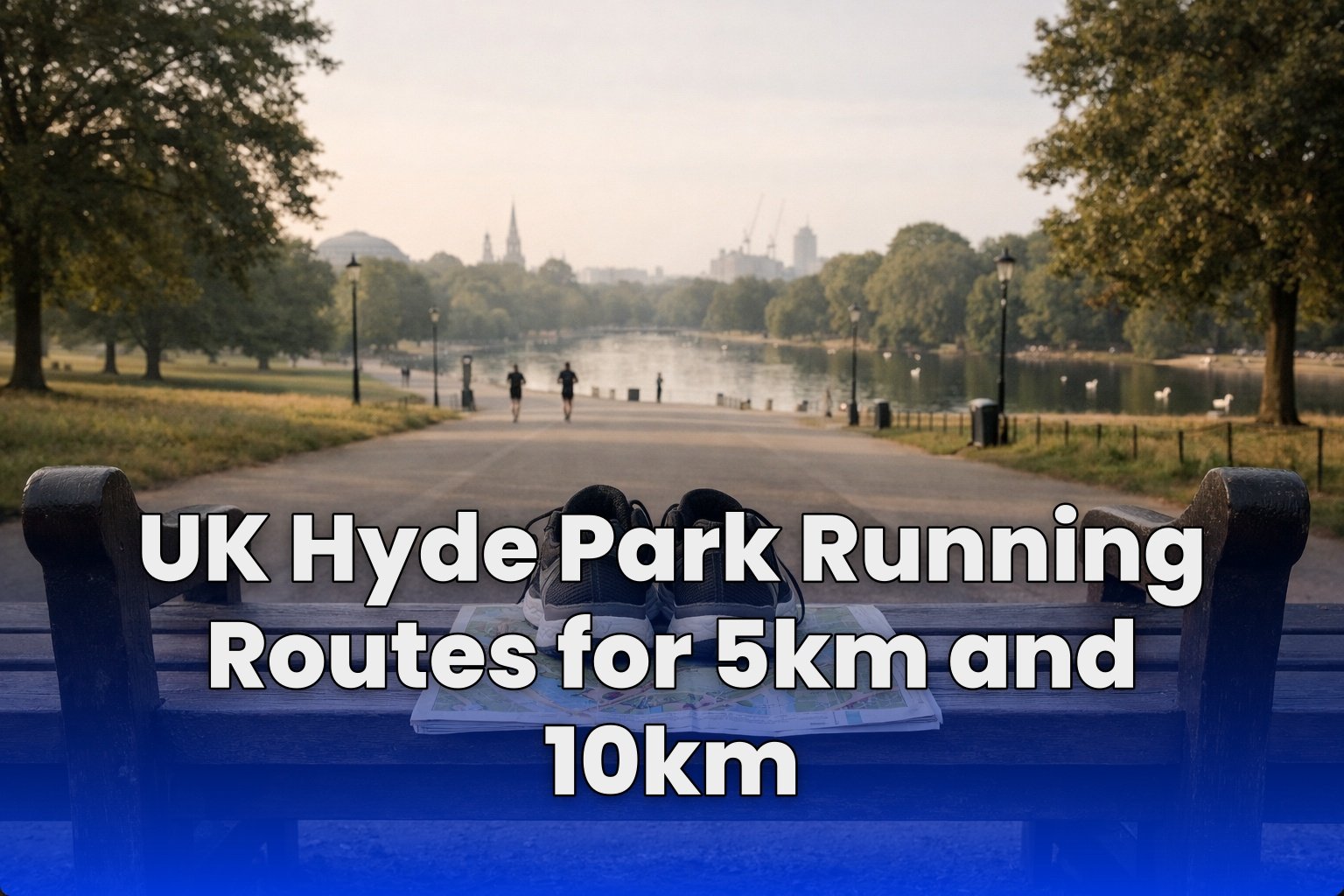
Hyde Park is a great place to run because the perimeter is about 7km, which makes distance planning simple. With one loop you get close to your target, and with a half lap or an extra pass you can land near 5km or about 10km.
If you want something scenic for roughly 5km, try the Serpentine lake loop. Run two laps from anywhere along the Serpentine, and you will pass landmarks like the fountains in the far north section, the Serpentine Swimming Club, and Princess Diana’s Memorial Fountain.
For a longer effort around 10km, you can either build on the perimeter for about 1.5 laps or add a bit of terrain. A common “challenge” option is to include the horse track from around Knightsbridge toward Marble Arch, while a simpler plan stays on the park paths throughout.
Plan Your Loop Distance Using The Perimeter
UK Hyde Park running routes feel simple until you try to nail a specific distance. A common baseline is the park perimeter being roughly 7km, which makes it easy to “steal” accuracy by running a near complete lap and then adjusting your finish.
If you want about 5km, do a ~7km lap and cut the session earlier at a convenient entry point, or aim for a little under the perimeter and add a short connector on the nearest path. For around 10km, think in laps too. About 1.5 laps gives you a solid target, especially if you stay consistent with your line through the same streets and crossings.
Choose A Scenic 5km Serpentine Option
A low stress way to get a scenic 5km is the Serpentine lake loop. Start from anywhere along the Serpentine and complete two laps in either direction, then let the final turn land you close to your desired finish.

This option works well because the route naturally threads past landmarks, so you spend less time checking the distance and more time running. Look out for the fountains in the far north section, the Serpentine Swimming Club, and Princess Diana’s Memorial Fountain. If you like a calmer rhythm, staying with the lake loop keeps turns predictable and reduces the “what now” feeling mid run.
Build A 10km Challenge With Terrain And Edges
If you want a tougher session, add a bit of terrain by weaving onto the horse track across the park. The simplest mental model is to take the horse track as a connector from around Knightsbridge toward Marble Arch, then keep building your loop from there.
Not everyone wants the extra effort though, and that is fine. A simpler ~10km plan is to stay on park paths and perimeter style routing for about 1.5 laps, which still feels like a proper outing without the added strain of sharper terrain changes.
Use Landmarks To Keep Your Route Consistent
When you run Hyde Park often, your biggest challenge is consistency, not motivation. Landmarks make your route repeatable even when crowds, weather, or lighting shift your pace and focus.
Try building your run around fixed “decision points” such as Hyde Park Corner, the Serpentine bridges, and the more distinctive features near your entry and exit. If you have a favourite segment, you can reuse it as a reliable anchor each time you step out.
Clockwise 10km Route From High Street Kensington
One popular clockwise route starts at High Street Kensington and loops through Notting Hill, then heads toward Marble Arch. From there you come through Hyde Park Corner and return via the Knightsbridge side toward High Street Kensington.
This direction tends to feel smooth if you like a steady build because your long stretches are more predictable. It also helps when you are running uk hyde park running routes with friends since you can agree on the same landmark checkpoints and adjust the final few minutes without changing the whole plan.
Anti Clockwise 10km Through Kensington Gardens
An anti-clockwise plan starts at Hyde Park Corner, goes up to Marble Arch, then continues along toward Queensway. After that, it passes through Kensington Gardens before returning to High Street Kensington, and you finish by coming back along the same side to Hyde Park Corner.
If you want to sanity check your turn choices with local route guidance before you commit to the full loop, it helps you avoid awkward reroutes when the paths get busy.

This direction can feel different even when the distance stays similar, because the flow of turns and the way you hit key bridges changes how your legs feel late in the run.
Mix Route Lengths With Point To Point Setups
For point-to-point runs, many people enter around the Seymour Place or Seymour Street area and exit on the east side near Upper Brook St, often by the Animals in War Memorial. Variants for 5, 6, 6.5, and 8 miles usually come down to how you handle turns at Hyde Park Corner and how long you stay along the Serpentine.
Use this quick reference to plan the distance you are after without starting from scratch each time.
| Target Distance | Common Route Adjustments | Key Landmarks |
|---|---|---|
| 5 miles | Shorten after 1 main turn | Hyde Park Corner |
| 6 miles | Add 1 extra Serpentine section | Serpentine bridges |
| 6.5 miles | Use the mid route connector | Silver sphere |
| 8 miles | Extend the loop before exit | Serpentine fountains area |
| 10 miles | Keep to perimeter style paths | Upper Brook St exit |
Once you pick your adjustment style, repeat it for a week or two. Small pattern familiarity reduces decision fatigue, and you get more consistent splits.
Choose A Start Based On Time And Access
Route planning feels easier when you match your start location to your day. If you want a quick loop after work, choose an entry near your nearest transport stop and build backward to your favoured turn points.
If you run in the morning, access matters too. Some entrances feel calmer earlier in the day, which makes it easier to hold form in your first kilometre and settle into pace.
Training Tips For Crowds, Surfaces, And Weather
Hyde Park paths vary, and your legs feel it when the ground changes underfoot. Pavement in some sections can feel faster, while softer or busier areas demand shorter steps and quicker posture fixes.
Use these practical cues to manage the day instead of fighting it:
- Shorten your stride near crossings and bridges to stay steady.
- Plan a slightly slower first mile if you expect bottlenecks.
- Bring a light layer for early wind, then adjust as the run warms you up.
On wet days, watch for slick patches around turn areas and keep your focus on the line you can control.
Pacing Strategy For Lap Runs And Longer Sessions
When your distance comes from lap math, pacing helps you avoid the “too fast early” trap. Aim for even effort across your first lap, then decide whether you want to push or maintain on the second lap and any extra connectors.
For longer runs like around 10km, treat your key turns as natural reset points. If you find your breathing tightening, slow a touch before the turn, then let your speed come back when the path opens.

Safety And Etiquette On Park Paths
Hyde Park is popular, so etiquette matters as much as fitness. Keep an eye on people cutting across paths, and avoid sudden lateral moves when you are passing walkers, cyclists, or groups.
If you run with headphones, keep volume low enough to hear announcements and approaching bikes. The goal is to protect both your pace and other people’s comfort without creating extra friction in busy sections.
Track Your Runs And Improve Next Week
Even when you follow the same UK Hyde Park running routes, conditions change your outcome. Track your distance, total time, and perceived effort so you can see whether your pace is consistent across similar laps.
After a few runs, adjust one variable at a time. Add a small connector for an extra 0.5km, change your start direction, or shift your exit point near Upper Brook St. Tiny edits help you build confidence while keeping your route familiar.
Make The Most of UK Hyde Park Running Routes
With its easy perimeter and scenic lake options, UK Hyde Park running routes help you build a simple 5km or stretch to about 10km by adding a lap or two, using the Serpentine loop for a calmer feel and the park paths or horse track for extra challenge. Start where it suits you, aim for recognizable landmarks, and adjust the distance by adding or cutting loops so your run stays smooth from beginning to end.

I am Ozan, a London-focused running writer and marathon enthusiast with a passion for helping people discover the city’s best races, running routes, walking trails, and fitness events. I research and write practical, up-to-date guides covering marathons, race preparation, training tips, running gear, and everything related to staying active in London.
My goal is to create reliable, easy-to-follow content that helps runners and walkers of all experience levels explore London with confidence, whether they’re preparing for their first 5K or their next marathon.