
Longer strides when you fatigue are a mechanics problem, not a badge of “going longer.” When your legs keep reaching instead of landing stacked, you start braking without meaning to, and every step becomes harder to control. That is why how to stop your stride from getting longer as you fatigue is really about protecting your form under stress, not forcing some heroic stride length.
Here is the uncomfortable truth: if you wait until you feel awful to correct it, the habit has already taken over. Early fatigue is when your hips start drifting forward, your ankle loses its relaxed snap, and your knee bend gets delayed. The fix is to anchor how each step lands so your stride can stay repeatable even as your legs get tired.
In this article, I will argue for a simple, practical approach that runners often avoid: temporarily shorten the stride, prioritize quick turnover, and use cues that keep your midfoot landing under your hips. You will also learn how to pair that with targeted speedwork and strength so fatigue does not steal your posture and turn “efficient” into “reachy.”
Long Steps Are A Fatigue Trap
If your stride keeps getting longer when you’re tired, you’re not “finding your rhythm.” You’re compensating. The long-step pattern stretches your reach, shifts your hips behind your foot, and forces a braking phase that steals speed and makes the next step even harder. Want proof? Watch what happens late in a run when you try to “hold form.” Most people reach. The body then works overtime to recover stability.
How to stop your stride from getting longer as you fatigue starts with a blunt rule: you do not chase distance per step when the body is running out of gas. You protect repeatability. You keep each step coming from the same position, with the same timing, so fatigue shows up as controlled change, not uncontrolled lengthening.
Stack Over The Foot Or You Will Reach
The most reliable anti-reaching cue is positional: stay stacked. “Stacked” means no leaning forward, no collapsing at the ankle, and no falling onto the next step. When you fatigue, the natural response is to extend the leg to find clearance. That extension feels like efficiency, but it is really your body reaching for balance.
So choose a stride length you can repeat while staying stacked. Then enforce it when tired. Ask yourself a simple question each mile: Did my hips move over my landing foot, or did my foot move away from my hips? If it’s the latter, your stride is lengthening and your mechanics are paying interest.

Midfoot Landing Keeps Your Hips Honest
Reaching and braking usually show up as a foot landing too far in front. Midfoot landing does not mean “tiptoe” or “be soft.” It means the foot meets the ground close to where your hips are traveling. When the midfoot lands under the hips, the leg acts like a spring rather than a lever that stops you.
Practice the feel: quick, controlled knee bend and relaxed ankles. If your ankles tighten late, your stride will often lengthen because your body tries to buy time by stretching the distance. Train the opposite habit: shorter step length you can repeat, with the landing still close and your posture still tall.
Shorten Early So You Stay Repeatable
Waiting until you’re fully cooked is a mistake. By then, your form cues arrive late, and your stride length has already drifted. Instead, shorten early by a small amount that you can hold. Think of it as “maintenance mode.” You are not changing your style. You’re keeping the same mechanics while the system is under stress.
Use a pattern cue like replace each step one at a time. That phrase matters because it forces the next footfall to be earned, not guessed. When you’re tired, the brain wants a bigger move. Your job is to make the next move smaller and more repeatable.
Uphill Requires Mini Staircase Cadence
Uphill amplifies the problem because resistance encourages the body to push farther. If you let that happen, the stride length grows and the hips lag behind each landing. The fix is simple and specific: reduce stride length temporarily and increase cadence. Imagine a mini invisible staircase under your feet, where each step is quick and close to the ground beneath you.
Match it to breathing and resistance. If you can feel your lungs tightening and your steps reaching, you need a cadence adjustment, not a motivational pep talk. Shorter cadence-led steps keep you stacked and prevent the uphill “long stride” trap.
Turnover Beats Forcing Stride Length
Late-run performance often hinges on turnover. When you force longer strides at fatigue, you usually replace speed with braking. Faster turnover gives your feet a better chance to land under you before your body gets pulled forward by the stride length you think you need.
That’s why coaches emphasize cadence and fatigue management with run mechanics research suggesting the safest late adjustment is often step frequency, not reach. Cadence can rise while stride length stays stable, which preserves economy when legs feel heavy.
| Fatigue Trigger | Mechanical Adjustment | Metric To Watch |
|---|---|---|
| Legs feel heavy | Shorten step 5 to 10% | Cadence +5% |
| Hips fall behind | Land under hips | Reduced reach |
| Breathing quickens | Mini staircase cadence | Breath synced rhythm |
| Long stride urge | Turnover cue only | Fewer overstrides |
| Arms slow down | Faster relaxed arm cycle | Stable cadence |
Turnover cue should be actionable. Use language like “quick feet” or “light landings” but tie it to rhythm, not ego. If you track anything, track cadence stability and how often you feel the foot land too far ahead.
Use Arm Rhythm To Prevent Braking
Your arms are not decoration. They are timing. When fatigue arrives, arms often slow, shoulders tense, and the body compensates with the lower leg reaching. That’s exactly how stride length balloons. Instead, pump the arms to drive the rhythm of the legs, keeping them relaxed. Relaxation matters because stiffness makes you slow down and reach for clearance.
A practical cue is to make your hands cycle faster while you keep your steps under control. The goal is not sprinting. The goal is to prevent the step length from growing by maintaining a steady cadence you can tolerate late.

Drills And Speedwork For Faster Foot Reactivity
You cannot “think” your way into quicker feet when you are tired. You need the physical ability to respond quickly after contact. That means drills and speedwork that build foot reactivity and reduce the tendency to linger on the ground.
Include short, high-quality efforts where you are forced to keep the mechanics crisp. Examples include:
- Fast cadence pickups with strict form targets
- Short accelerations where you stop before reaching
- Rhythm work that keeps stride length fixed while cadence rises
Keep it honest. If the drill turns into overstriding, you did not build reactivity. You rehearsed the mistake.
Ground Contact Time Is The Hidden Score
Longer strides at fatigue often come with longer or more forceful contacts. That sounds counterintuitive because long strides feel strong, but braking happens when the foot lands too far ahead and you have to scrub speed. Shorter steps done well typically reduce the “time you spend earning stability.”
Use a cue that respects timing: aim for quicker, lighter ground contact. If you use a watch or sensor, compare contact trends across the workout. If you do not, learn the feel. When your contact feels heavy and slow, your stride will soon try to reach longer to compensate.
Hip Mobility And Strength Must Outlast The Run
Fatigue tightens hips. When the hip flexors and glutes cannot move with control, the body looks for range by extending the leg farther. That extension becomes stride length. So “how to stop your stride from getting longer as you fatigue” is partly strength engineering.
Prioritize mobility that preserves hip motion without flaring the low back, and strength that supports stable pelvis control. Think in terms of:
- Hip extension and glute strength for late propulsion
- Core-and-hip coordination so the stride stays stacked
If your hips are locked, your stride will reach. Fix the foundation and the mechanics stay on rails.
Posture And Core Control Fatigue Tightening
When posture breaks, stride length often becomes the escape route. You lean, you lose vertical control, and your landing drifts forward. A tired core also makes it harder to keep the hips over the foot, so your body compensates by extending the next step.
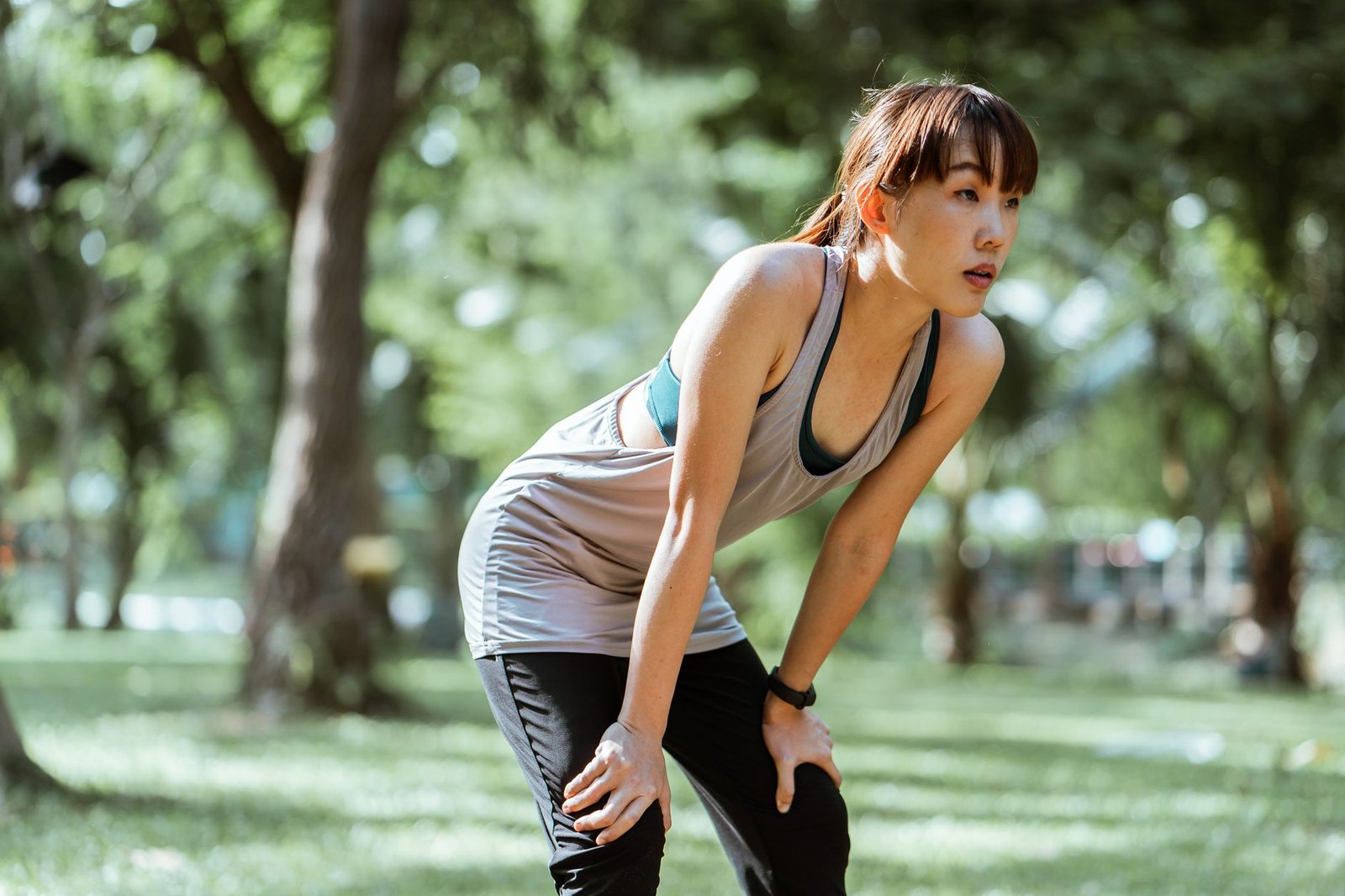
Train posture under fatigue, not just when you feel fresh. During runs, watch for head drop, shoulder tension, and pelvic instability. Use cues that keep your torso tall and your ribcage stacked over your pelvis. You are buying stability, and stability prevents the reach that lengthens the stride.
Test Your Right Stride Under Stress And Track It
The “right” stride is not what looks good on a warm-up lap. It is what you can repeat when you’re tired and the form signals start fading. Test it by running a controlled segment where you enforce your chosen stride length, then evaluate what changes when fatigue hits. Your best stride is the one that still keeps landing under the hips and avoids braking.
Track timing and cadence choices that keep the run economical. Turnover is often the priority over forcing longer strides. Ask one final question after each session: When I got tired, did I protect mechanics or did I trade mechanics for reach? If you protect mechanics, your stride stops getting longer for the wrong reasons.
Make The Fix Automatic With One Clear Cue
You do not need ten cues. You need one cue that you can remember mid-lap. The moment you sense the long-step urge, your attention must snap to a specific correction: keep steps short and fast, land under your hips, and move with relaxed ankles and a controlled knee bend.
Choose a cue that matches the mechanism, not the emotion. For example, “quick under hips” or “replace one step at a time.” Then rehearse it in training so it becomes automatic during fatigue. When the cue is automatic, the stride stays stable, and your run economy holds when your legs would rather reach.
How to Stop Your Stride From Getting Longer as You Fatigue?
Why Does My Stride Lengthen When I Fatigue?
When you fatigue, your mechanics often break down, causing you to reach forward instead of staying stacked, so your stride naturally “lengthens” to cover the same distance with less control.
How Can I Keep My Hips Landing Over My Foot Instead of Overstriding?
Anchor your mechanics by focusing on midfoot landing under your hips, with a relaxed ankle and a quick, controlled knee bend so you avoid leaning, braking, or falling forward when tired.
What Cue Helps Me Choose a Stride Length I Can Repeat While Staying Stacked?
Select a stride length you can repeat smoothly while staying tall and stable, then use a “replace each step one at a time” mental cue to keep every step similar in timing and position.
Should I Shorten My Stride Temporarily During Tired Uphill Running?
Yes—when fatigue hits (especially uphill), temporarily shorten to a quicker cadence, using a “mini invisible staircase” effort so your hips stay over each landing without letting step length grow.
How Do Turnover and Arm Pumping Prevent Long-Step Compensation?
Use turnover cues by taking short, quick steps and letting your arms cycle faster with relaxed shoulders, so you maintain speed without forcing longer strides.
Which Drills and Strength Work Reduce Fatigue-Driven Stride Lengthening?
Build the ability to hold form with stride-and-reactivity drills or short speedwork, plus hip mobility, hip strength, and posture/core work so fatigue doesn’t tighten your hips or slow force production.
Stop the Long-Step Slide for Good
To fix how to stop your stride from getting longer as you fatigue, you need to anchor your mechanics instead of chasing speed, and the key is keeping your hips stacked over a midfoot landing so each step stays repeatable, especially when tired: choose a stride length you can hold while staying upright and relaxed, then temporarily shorten into a quicker, tighter cadence with fast, light turnover cues and relaxed arm drive so the long reach never takes over. Practice this with targeted drills and strength and mobility work that protect your hips and posture under load, because once your form stays consistent when fatigue hits, your stride will stop drifting and your economy will hold.